 | | | 📜 A Note from the Guild Leader |
| It's been quite a week! After a 4am deployment and a few of those good ol' fashioned "but it worked on my machine" I was able to roll out a massive update to Quant Guild - welcome to what I'm calling Quant Guild Season 2. | | | The release of our first course, Quant Coding, the Bazaar, an upgraded mobile experience (including access to courses on the go), the start of another live session of Financial Mathematics, and the launch of our weekly newsletter, it's hard to understate how incredibly stoked I am about this update. With that I will leave you to the Weekly Guild Letter. I hope you enjoy, and I hope you learn something! - Roman | | | 🧮 Quant Model of the Week |
| Arithmetic Brownian Motion |
| Ever wonder where it all started in quantitative finance?
Long before stochastic calculus became the language of Wall Street, Louis Bachelier — a French mathematician — published “Théorie de la Spéculation” in 1900, modeling stock prices as a Brownian motion.
Yes, 1900.
Einstein hadn’t even published his paper on Brownian motion yet.
He assumed prices followed a normal distribution — hence Arithmetic Brownian Motion (ABM) — and that price changes were continuous and symmetric. It’s simple, elegant, and totally wrong by today’s standards … but also foundational. The model looks like this: | | | where μ is the drift (expected return) and σ is the volatility — the same ingredients that every quant still works with 125 years later. 📈 Model applications You can use Arithmetic Brownian Motion (ABM) to model and simulate linear price changes over time — where both gains and losses evolve additively. By specifying a drift (average expected return) and volatility (random fluctuation), you can generate synthetic price paths and translate them directly into profit and loss trajectories for a given position size. This makes ABM a powerful way to visualize expected performance, risk, drawdowns, and of course, derivative prices under controlled, interpretable assumptions before moving to more complex models like Geometric Brownian Motion. 🎓 A little story
A few years back, I had the chance to attend the Bachelier Congress, where Robert Merton — yes, that Merton — spoke about the evolution from Bachelier’s additive world to the multiplicative Geometric Brownian Motion that underpins Black-Scholes-(Merton). Hearing Merton honor Bachelier’s work — was surreal. Even the simplest models can change entire industries. 💡 Takeaway
Arithmetic Brownian Motion may not describe real markets perfectly (it allows negative prices… ouch 😬), but it’s the seed from which modern finance grew. Every model we build — from GBM to stochastic volatility to rough paths — owes a debt to Bachelier. | | | 🏆 Quant Question of the Week |
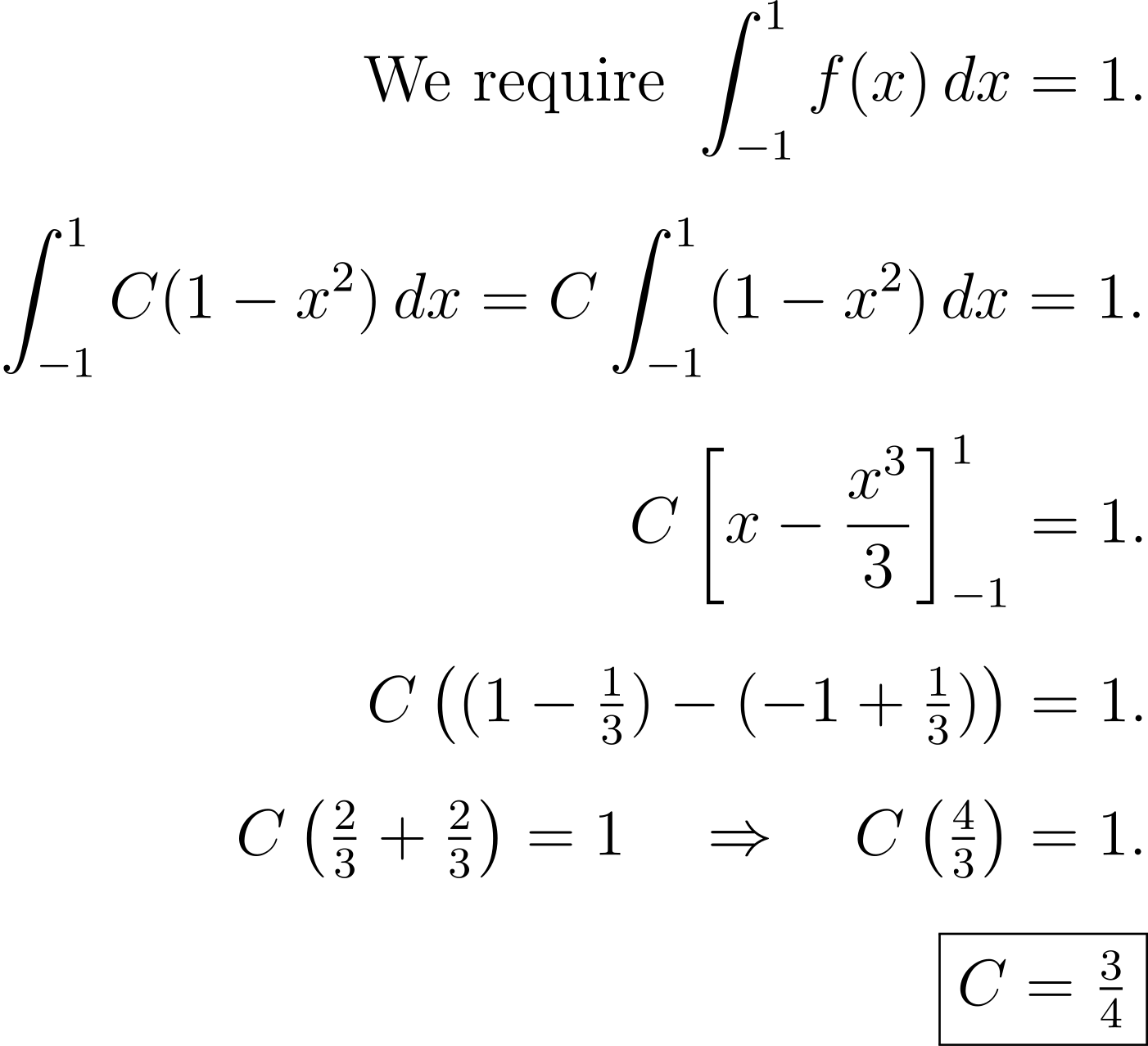
| Solution at the Bottom of this Email 👇 |
| | | | | Need to study up on topics in math, probability, and finance? 👉 Learn to solve problems like this on Quant Guild — the platform I wish I had when I was studying to become a quant. | | | 📅 Quant Guild Week in Review |
| Brownian Motion, Gambling, and Trading |
|
|
|
|---|
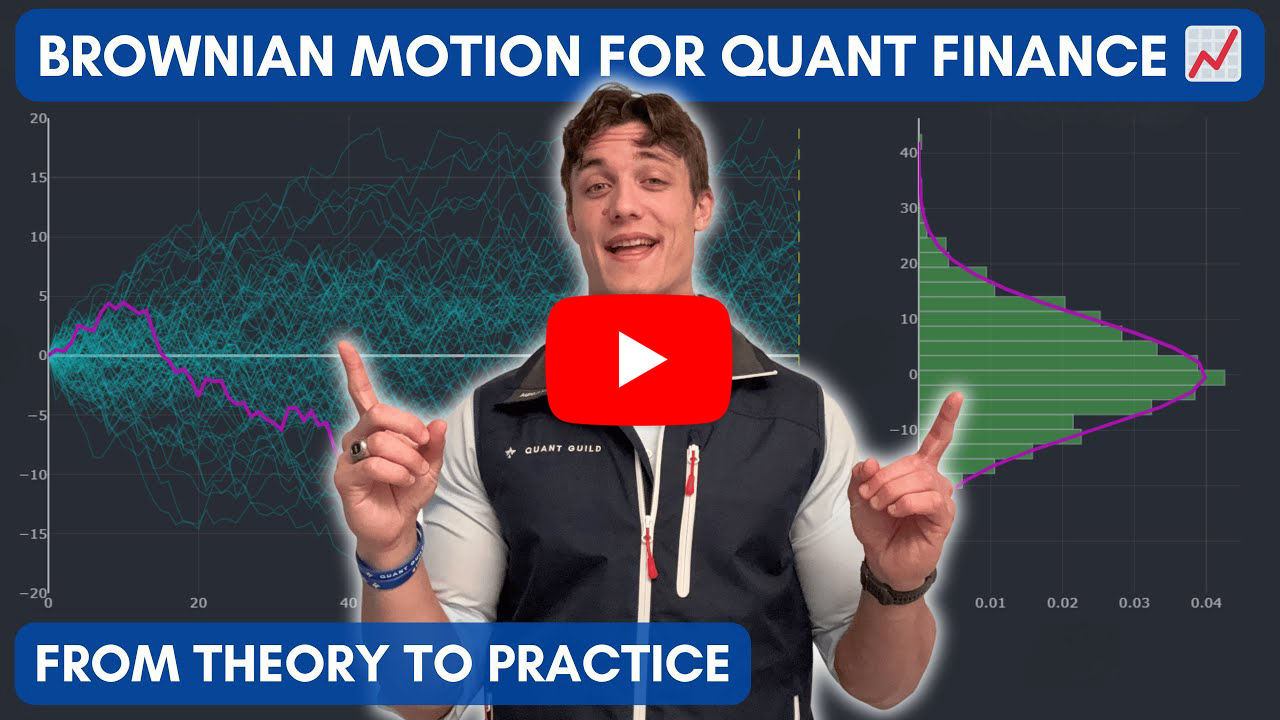
📈 Brownian Motion for Quant Finance | This week, I broke down what I consider the single most important concept in quantitative finance: Brownian motion. I started from the ground up — random variables, normal distributions, and the law of large numbers — to build intuition for stochastic processes and how uncertainty evolves over time. From there, I showed how Brownian motion models that time-varying uncertainty and why it’s so fundamental to every pricing and risk engine on Wall Street.
We wrapped by applying it directly to option pricing, simulating terminal distributions, and seeing convergence between empirical and theoretical results. The big takeaway: in quant finance, we don’t predict — we model uncertainty, and Brownian motion is the mathematical foundation for doing just that
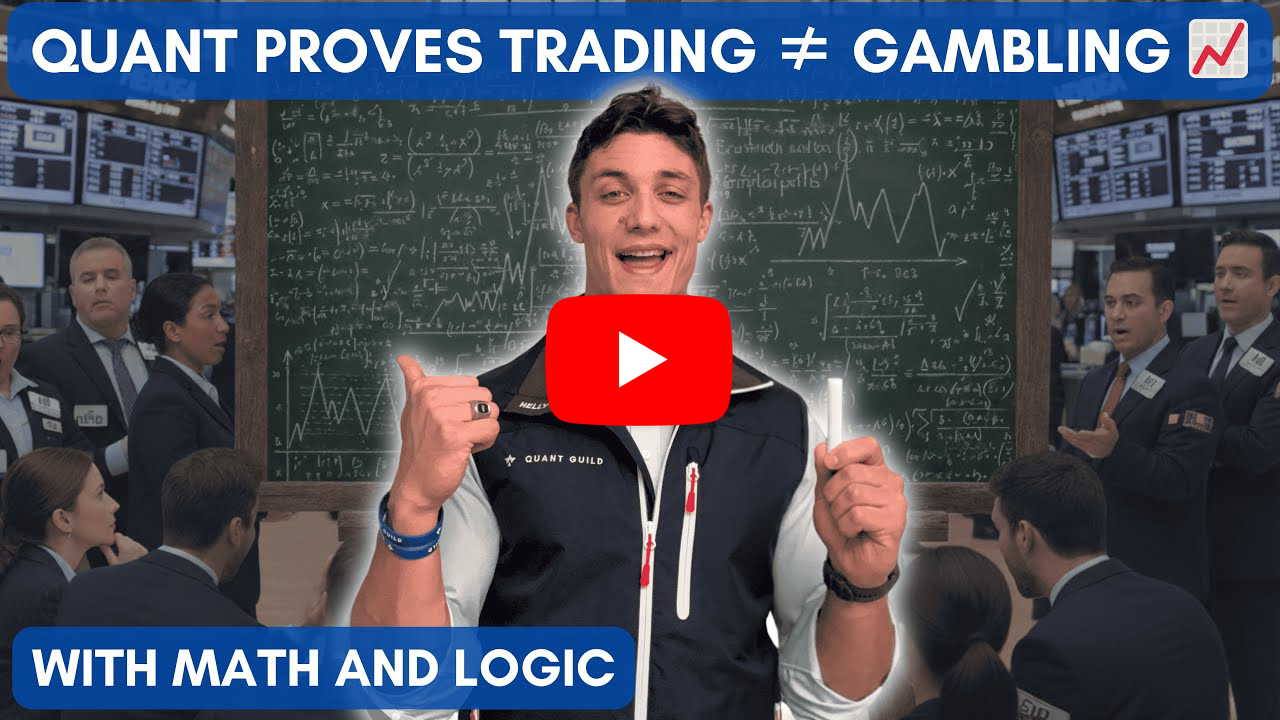
Here's a link to the full video 👇 | | | 🎲 Is Trading Gambling? | In this video, I tackled one of the most common misconceptions: “trading is just gambling.” I showed, mathematically and logically, that this claim is completely wrong. Gambling is a game of chance — a fixed negative edge where no action can change your long-term outcome. Trading, on the other hand, is a game of incomplete information. Your actions — your policy function — directly influence your expected value and wealth path over time.
Through examples ranging from market making on a dice roll to buying groceries, I proved that the difference lies in whether your decisions can change the outcome’s distribution. In trading, they can. That’s not gambling — that’s decision-making under uncertainty
Here's a link to the full video 👇 | | |
|
|
|---|
|
 | 📈 Why 10,000+ Quants Study on Quant Guild | Quant Guild is the one-stop platform for mastering the math that powers modern finance. With 90+ specialized lessons, adaptive practice with gamified progress that scales with your skill level, real interview questions, courses from A - Z in coding, math, probability & statistics, and exclusive live classes with me, it’s built to take you from fundamentals to the front-office. Everything’s designed for how real quants think and work — focused, practical, and deeply technical. That’s why over 10,000+ students and professionals study on Quant Guild to sharpen their edge and make smarter decisions in the face of uncertainty. |  |
|
|
|---|
| | I'm in QR preparing for technical interviews and your practice helped me brush up on probability, thanks | | |
| | |
|
| | | I learned more here in two days than an entire semester of college | | |
| - Guy on Discord Who DM'd Me |
|
|
|
|---|
|
| | ✅ Quant Question of the Week |
| | | | | | |
|
|
|---|
|

 Roman Paolucci