 | | | 📜 A Note from the Guild Leader |
| It would be hard to understate how excited I am about path signatures and rough path theory in general. Instead of trying to put it into words, I created a meme which took me longer to make than a simple Monte Carlo pricing engine. Totally worth it. | | | The ability to capture path information in a series of infinite iterated integrals echoes so many other decompositions we observe in a linear and non-linear sense from the Taylor series to Fourier (deterministic) or Karhunen-Loève (stochastic). I am actively and independently conducting research in this space, I look forward to continuing to share my findings in an academic capacity with the Quant Guild community! In other news, the latest session of Financial Mathematics has come to an end. I want to congratulate my students for the tremendous work and thoughtful discussions throughout the session. Live classes will be back in the new year where I will host a new Master's in Financial Engineering (MFE) prep class covering the necessary quantitative toolkit for tackling a graduate program along with another session of Financial Mathematics. I am looking forward to meeting and working with the next cohort of students! | With that I will leave you to the Weekly Guild Letter. I hope you enjoy, and I hope you learn something! - Roman | | | 🧮 Quant Model of the Week |
| Merton Jump-Diffusion Model (1976) |
| Some movements in markets simply don’t fit the smooth curves we like to draw. A price trades quietly for hours, then gaps five percent in a single print. Liquidity thins, an order sweeps the book, and the mid jumps to a new regime. News hits, positioning flips, and everything reprices before you can finish the sentence. Markets don’t just drift, they break, suddenly and without apology. Continuous models can capture the wandering, but they miss these shock events that dominate real-world P&L. That’s where the Merton Jump-Diffusion Model comes in. It keeps the familiar diffusion you get from standard stochastic models, but overlays it with random, discrete jumps, abrupt shifts that better reflect how information, liquidity, and risk actually propagate through markets. Whenever you need a model that blends everyday volatility with the possibility of sudden discontinuities — in equities, FX, options, credit, or anything exposed to fast information flow — jump diffusion is often the right starting point. The model looks like this: | | | where mu represents the continuous drift, sigma captures the usual day-to-day volatility, and lambda governs how often jumps arrive. Add in the jump size distribution, typically lognormal, with parameters that shape how violent or mild those discontinuities tend to be, and now you have a model that acknowledges something obvious once you’ve lived in markets long enough: not all movement is smooth. 📈 Model applications
The Merton Jump-Diffusion Model is built for the moments when markets stop behaving like diffusions and start behaving like themselves. Most days, prices drift and jitter within normal expectations. But then a number hits, liquidity thins, or someone decides to unwind a position the size of a small country, and the price doesn’t “move”, it teleports. A pure Brownian motion can’t capture that. It has no room for discontinuity, no mechanism for surprise, no way to encode the fact that the world occasionally throws a brick through the window. The jump component fixes that. When you simulate a Merton model calibrated to historical returns, you see something striking: the continuous part captures the grind, the small-ball motion, the friction of daily uncertainty. But the jumps recreate the tail events, the air pockets, the sudden realizations that the distribution you assumed yesterday no longer fits today. It’s the first time you can generate a synthetic path and say, “Yes, this actually feels like the markets.” And just like with volatility clustering or regime shifts, the jump process makes you confront non-stationarity head-on. Jumps aren’t constant through time. Their intensity changes. Their sizes swell and shrink. A lambda estimated from one period can be irrelevant in the next. The model shows you this explicitly: what looks stable is only stable until it isn’t, even in the structure of jumps. 🎓 A little story When I started simulating price paths in university for option pricing and risk management, I wasn’t thinking about jumps. I was just wiring up diffusions and watching them wiggle across the screen. And then COVID hit. Markets gapped down in a single breath, and I watched my calls go from full value to fifty cents on the dollar in a day. No diffusion I had ever coded could even pretend to generate that kind of move. That moment stuck with me (losing 50% of a position's value will do that to you, trading lessons we call them 😅). If your model can’t reproduce the events you’re trying to survive, what good is it? Pricing, hedging, drawdowns, VaR - everything breaks if your simulator lives in a world where reality never goes. That’s why the Merton jump diffusion struck me as elegant: not because it’s complex, but because it’s simple in the right direction. One Poisson clock, one jump-size distribution, and suddenly the model can express something diffusions inherently can’t: discontinuity. Real shocks. Air pockets. Overnight repricing. You start to realize that good models aren’t defined by how many parameters they have, but by whether they capture the behaviors that matter. GARCH(1,1) compresses infinite ARCH memory into two coefficients. The Merton model adds realistic tail behavior with a single clean mechanism. The best models feel parsimonious but alive, minimal machinery, maximum explanatory power. Jumps don’t make markets unmodelable. Ignoring them does. 💡 Takeaway
Jump diffusion doesn’t fully describe markets, no model does, but it gives us a disciplined way to capture one of their defining truths: prices sometimes move continuously… until they don’t. It bridges the smooth world of diffusions and the jagged world of events. It reminds us that markets are mixtures of drift, noise, and surprise, and any model that ignores the third will eventually fail. And even when we replace Merton with more elaborate jump–volatility hybrids, or regime-switching processes, or Lévy flights, we’re still thinking inside its framework:
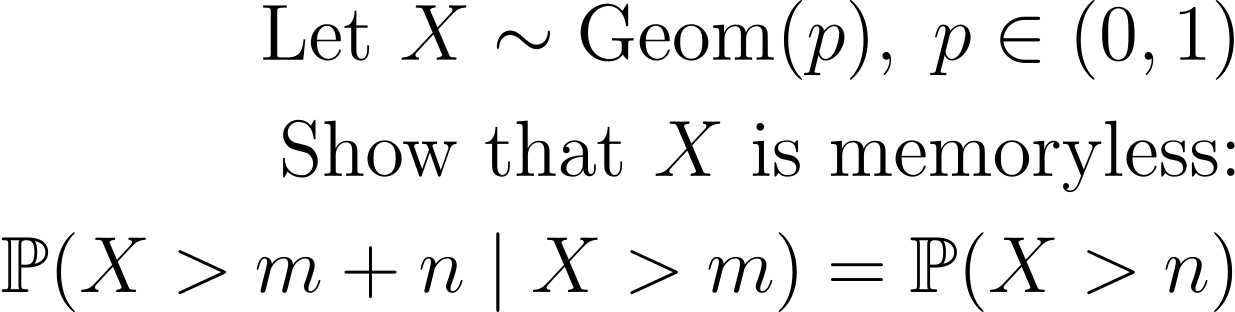
What’s continuous? What’s discontinuous? How often do jumps arrive? How big are they? And how stable are those answers over time? | | | 🏆 Quant Question of the Week |
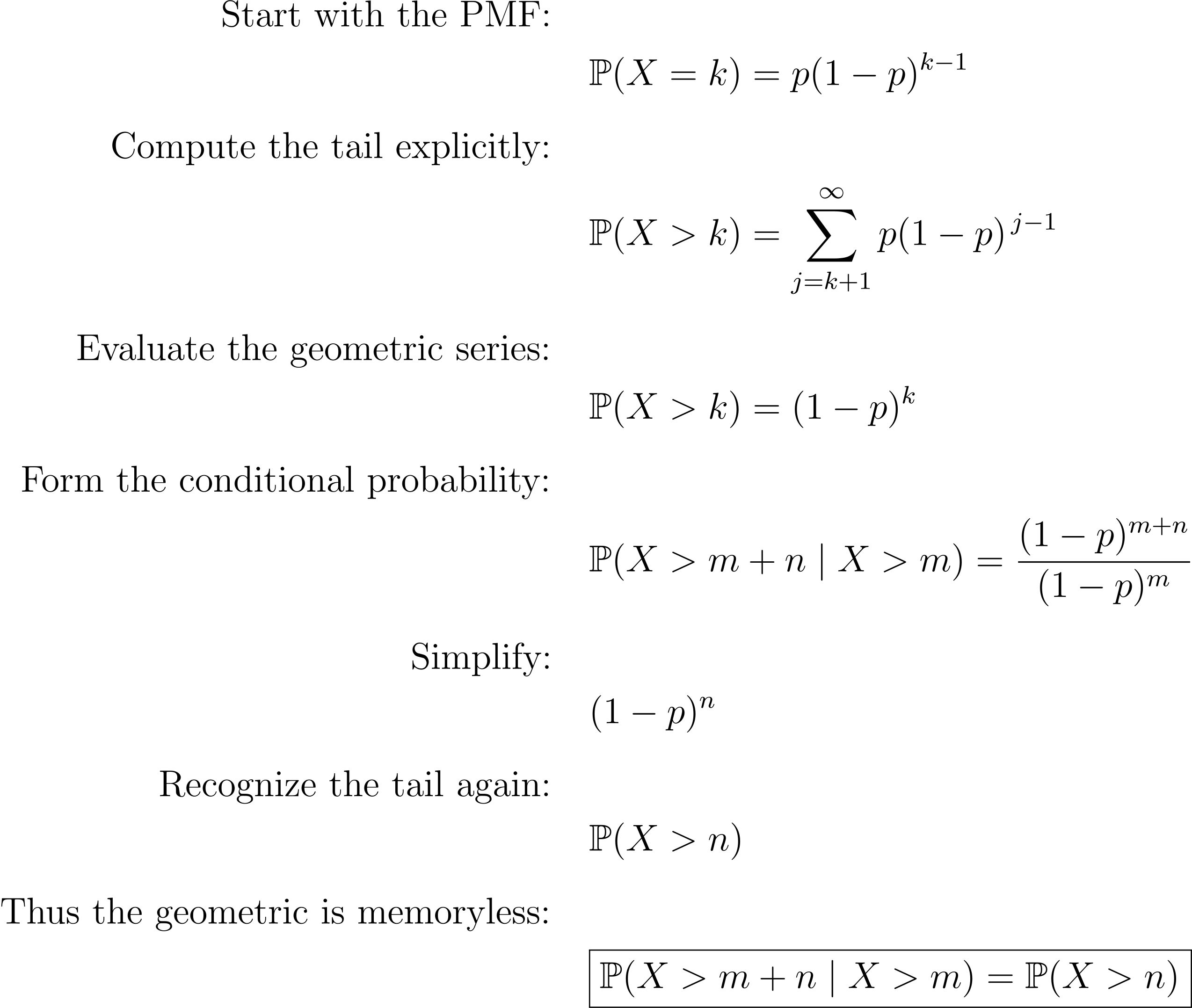
| Solution at the Bottom of this Email 👇 |
| | | Need to study up on topics in math, probability, and finance? 👉 Learn to solve problems like this on Quant Guild — the platform I wish I had when I was studying to become a quant. | | | 📅 Quant Guild Week in Review |
| Feynman-Kac Theorem and the Quant College Major Tier List |
|
|
|
|---|
📈 How Physics Accidentally Proved Black-Scholes | People love to point out that the assumptions don’t hold in practice, which is true, but irrelevant to the evaluation of model efficacy. A model doesn’t have to describe reality perfectly to be useful; but it certainly has to be internally consistent to its own framework. And it turns out physics, by accident, proved that Black-Scholes is internally consistent within its own framework. I walk through the two competing ways to price a European option: The Black-Scholes PDE, derived from a no-arbitrage replication argument. The Fundamental Theorem of Asset Pricing, which says the correct price is the risk-neutral discounted expectation of the payoff.
These look like completely different worlds, one is pure PDEs, the other is probability and simulation, yet they always give the same numerical price. The heart of the video shows how the Feynman–Kac theorem, originally from physics, bridges those worlds and proves that both approaches must produce the same pricing function. That equivalence is what makes Black-Scholes “correct”: it’s the unique no-arbitrage solution compatible with the underlying stochastic process. I also walk through visual simulations, the intuition behind discounted processes, applying Itô’s Lemma, and finally the martingale property that ties the whole argument together. If you’ve ever wondered why the model works, not just how, this video is the full explanation. Here's a link to the full video 👇 | | | 🎲 I Ranked the Best Majors for Becoming a Quant | In this video, I walk through a full tier list of the most common “quantitative” college majors and rank them based on one thing: their expected value for becoming a quant. I break down what each major actually teaches, how relevant it is to the quant market today, and where students tend to go wrong when choosing a major. I cover why statistics is solid but often held back by weak math and coding foundations; why finance just isn’t quantitative enough in most programs; and why true quant majors like operations research, financial engineering, and computational finance give you theory but not enough modern industry application. I also talk about the strengths and weaknesses of data science, computer science, physics, applied math, and economics, and why some of these fields create much more versatile candidates than others. The punchline is simple: mathematics is the strongest major by far. It’s the most versatile, the most scalable, and the only degree on the list that gives you the foundation to understand every other discipline with a bit of self-study. But it’s a double-edged sword, if you study math the wrong way (rote learning, no intuition, no application), it’s useless; if you study it the right way, it’s game-breaking. The entire tier list is meant to give students clarity on where to invest their four years to maximize their future quant EV. Here's a link to the full video 👇 | | |
|
|
|---|
|
 | 📈 Why 10,000+ Quants Study on Quant Guild | Quant Guild is the one-stop platform for mastering the math that powers modern finance. With 90+ specialized lessons, adaptive practice with gamified progress that scales with your skill level, real interview questions, courses from A - Z in coding, math, probability & statistics, and exclusive live classes with me, it’s built to take you from fundamentals to the front-office. Everything’s designed for how real quants think and work — focused, practical, and deeply technical. That’s why over 10,000+ students and professionals study on Quant Guild to sharpen their edge and make smarter decisions in the face of uncertainty. |  |
|
|
|---|
| | I'm in QR preparing for technical interviews and your practice helped me brush up on probability, thanks | | |
| | |
|
| | | I learned more here in two days than an entire semester of college | | |
| - Guy on Discord Who DM'd Me |
|
|
|
|---|
|
| | ✅ Quant Question of the Week |
| | | | | | |
|
|
|---|
|

 Roman Paolucci