 | | | 📜 A Note from the Guild Leader |
| A new offering has arrived to the Quant Guild Bazaar! Stochastic Model Calibration is available to all Quant Guild Members, or for 15 guild tokens. | 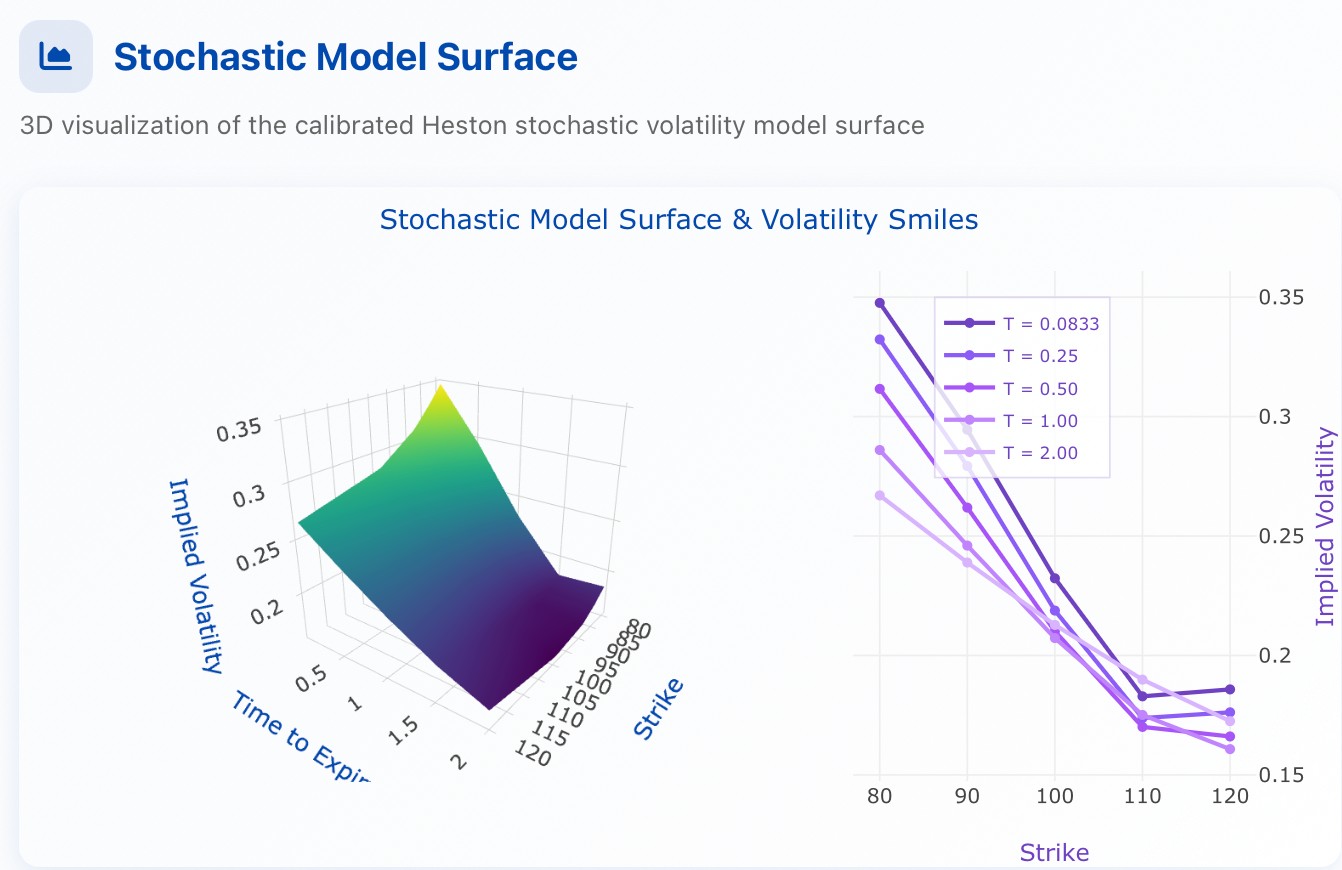 | | | This Guild Offering includes a 1 hour video lecture discussing the Black-Scholes portfolio replication argument, market-making, and of course, calibrating a model to liquid exchange traded instruments. In addition to the lecture, you will have full access to my efficient calibration scheme for the stochastic variance model, code and implementation scheme documentation, and a real-world problem set where you can implement the calibration engine to price exotic options. | 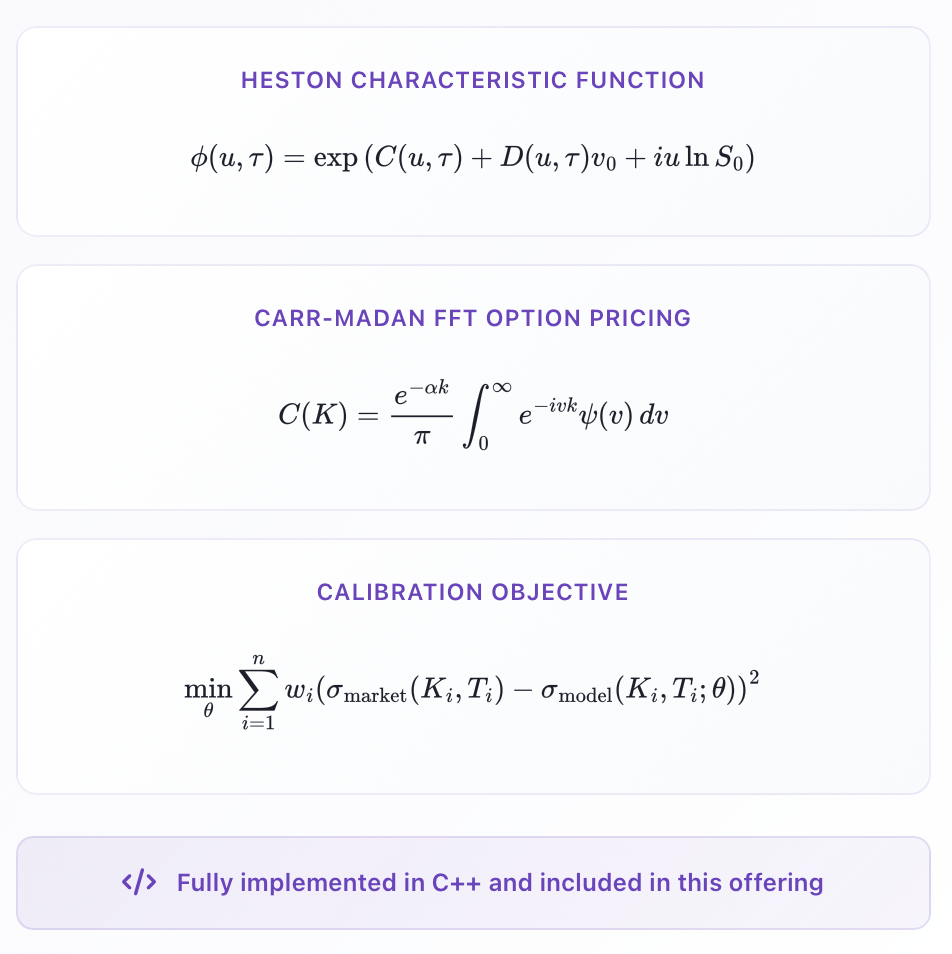 | The coolest part about this offering? You can integrate the C++ code with the live volatility surface build from last week [How to Build a Live Volatility Surface in Python (Interactive Brokers)] to calibrate your stochastic model in real time for extrapolating exotic prices, managing risk, and of course, trading! | With that I will leave you to the Weekly Guild Letter. I hope you enjoy, and I hope you learn something! - Roman | | | 🧮 Quant Model of the Week |
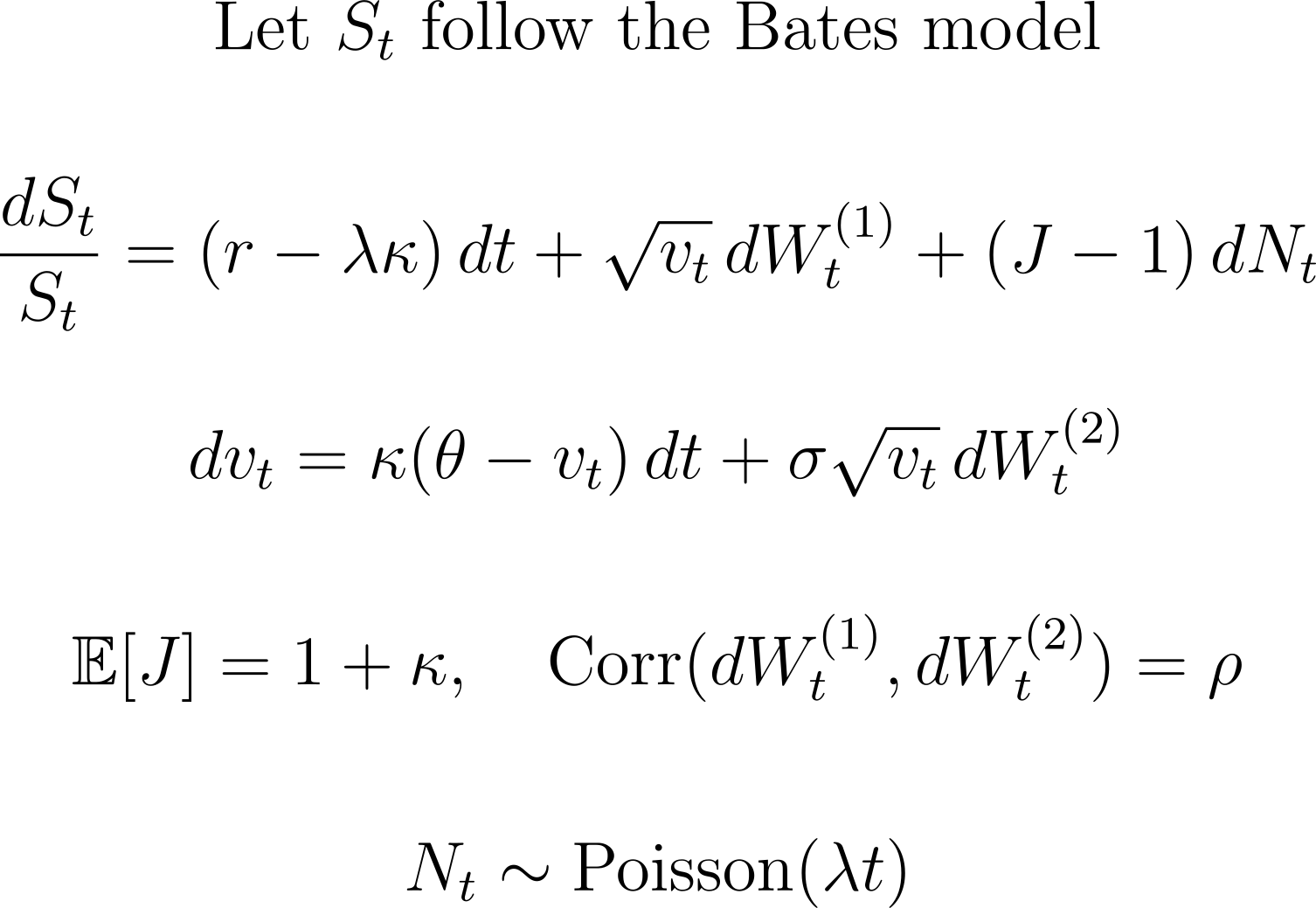
| | | Markets don’t just move randomly, they change how they move. Volatility rises and falls. Calm periods stretch on, then suddenly everything reprices at once. Prices drift, then gap. Smooth dynamics get interrupted by shocks, and those shocks tend to show up precisely when volatility is already elevated. Treating these features separately turns out to miss something important: they interact. That’s where the Bates model comes in. If Black–Scholes gives you smooth diffusion and Heston adds stochastic volatility, the Bates model is what happens when you admit that markets also jump. It combines continuous price motion, a volatility process that evolves through time, and a jump component that injects sudden discontinuities. In other words, it merges two realities traders know well: volatility isn’t constant, and neither is the path. You can think of the Bates model as Heston with a memory of crisis moments. Volatility ebbs and flows in the background, but when jumps arrive, they don’t arrive gently, they punch holes in the diffusion. This makes the model especially effective for capturing skew, kurtosis, and the way option markets price tail risk. If you’ve already seen jump-diffusion models or stochastic volatility models on their own, Bates is the natural next step: same building blocks, finally allowed to coexist. I’ll be covering the Bates model more formally on the YouTube channel down the line, but for now the intuition is straightforward: markets aren’t just noisy, and they’re not just volatile, they’re volatile and discontinuous, often at the same time. Here’s what the Bates structure looks like: | | | A Bates model takes the next logical step and applies it to price dynamics themselves. Instead of choosing between smooth diffusion or sudden jumps, the Bates model says markets do both, continuously and violently, often at the same time. Prices wander under a stochastic volatility process, but occasionally they don’t wander at all, they gap. A shock doesn’t just show up as a large diffusion move; it arrives as a discrete jump layered on top of an already-evolving volatility state. At its core, the Bates model blends two ideas traders intuitively understand. Volatility isn’t constant, it rises, falls, clusters, and mean-reverts. And extreme moves don’t come from scaling up Gaussian noise; they come from events. The stochastic volatility component governs how noisy the market feels day to day, while the jump component injects discontinuities that punch through the diffusion. Unlike pure jump-diffusion models, those jumps arrive into a volatility environment that already matters, which is exactly how real markets behave during stress. In one line, the Bates model captures a different truth about markets: tails and volatility are inseparable. Crashes don’t happen in calm regimes, and calm regimes don’t price crashes cheaply by accident. That’s why Bates models show up naturally in equity options, index derivatives, and any product sensitive to skew and kurtosis. And just like with other models, the challenge isn’t writing it down, it’s knowing when jumps matter, when volatility dominates, and when the interaction between the two breaks your assumptions. That’s where modeling stops being about fitting prices and starts being about understanding structure. | 📈 Model applications Bates models are used when how prices move matters just as much as how violently they can move. They’re especially effective in markets where volatility is clearly time-varying and extreme moves show up as discrete events rather than scaled-up noise. Equity indices, single-name equities, and options markets live in this world. Most of the time prices diffuse under a changing volatility environment, and then, suddenly, they gap. A Bates model says: both dynamics are real, and both need to be modeled together. What the Bates model does particularly well is separate background uncertainty from tail risk. The stochastic volatility component captures the slow evolution of market nervousness, the grind, the clustering, the leverage effect. The jump component captures the rare but consequential shocks: earnings surprises, macro announcements, crashes, policy shifts. Instead of forcing extreme moves to come from extreme volatility alone, the model gives them their own channel. That distinction matters enormously for option pricing, skew formation, and risk management. In practice, Bates models are a staple in equity derivatives desks because they explain features vanilla diffusions can’t: steep implied volatility skews, heavy tails, and the way crash risk stays priced even when realized volatility is low. They’re also used in stress testing and scenario analysis, where diffusion-only models dramatically understate drawdowns. When calibrated well, the model tells you not just how volatile the market is, but how jumpy it’s likely to be. Like Hawkes models, the real value of Bates models isn’t that they’re “true,” but that their assumptions are explicit. They assume volatility evolves continuously and jumps arrive discretely, and when that separation stops making sense, the model breaks in ways you can diagnose. In practice, Bates models aren’t endpoints; they’re components. They sit inside larger pricing frameworks, risk engines, and calibration pipelines. They work as long as markets behave like a mix of diffusion and shock, and when that balance shifts, the model tells you something fundamental has changed. 🎓 A little story The first time I learned of the Heston stochastic volatility model, my professor paused on the so called "vol-of-vol" parameter and said: “This controls the volatility of variance." One of my friends in my cohort (he was a pretty crazy dude, considered himself "the riskiest asset" claiming he made CCC look like solid gold) raised his hand and asked: “Okay… but what if the volatility of variance has volatility?” That question detonated the room. The discussion to follow was, for lack of a better word, epic. How many layers deep are we supposed to go? If we keep adding randomness to explain randomness, are we modeling reality more accurately, or just building an infinite tower of parameters that no one can estimate, hedge, or explain? That moment stuck with me because it surfaced the real tension in quantitative modeling: complexity versus purpose. Models aren’t meant to be perfect mirrors of the world. They’re meant to be useful abstractions. That’s why models like Bates resonated with me later on. Instead of endlessly nesting volatility inside volatility, Bates makes a clean, intentional move: it adds jumps explicitly, alongside stochastic variance. It doesn’t pretend extreme moves are just very large diffusive shocks, and it doesn’t bury tail risk inside ever-more volatile parameters. It says, plainly: markets have continuous uncertainty and discontinuous events, and both deserve their own representation. That discussion back in class framed how I think about models to this day. Good parameterization isn’t about explaining everything, it’s about choosing which behaviors to explain explicitly. Bates does that well. It doesn’t chase infinite regress; it draws a boundary around the dynamics that actually matter for pricing and risk. And that’s usually where the best models live: not at the edge of maximal complexity, but at the point where structure meets restraint. 💡 Takeaway The Bates model is a reminder that good modeling isn’t about piling on complexity, it’s about choosing the right complexity. Markets don’t just diffuse smoothly, and they don’t just fluctuate in volatility; they jump, and they jump in environments where volatility already matters. Bates captures that reality directly by separating continuous uncertainty from discrete shocks, instead of forcing one to masquerade as the other. The lesson from both the applications and that classroom discussion is the same: every parameter you add should earn its place. Stochastic volatility explains how risk evolves through time. Jumps explain why tails exist at all. Together, they strike a balance between realism and tractability that pure diffusion or pure jump models miss. Bates doesn’t pretend to explain everything, but it explains the things that break simpler models first. In practice, that makes it valuable. It gives traders and risk managers a framework that prices skew honestly, respects tail risk, and fails loudly when regimes shift. And that’s ultimately the goal of model specification: not perfection, but structure you can reason about, calibrate, hedge, and trust, until the market tells you it’s time to move on. | | | 🏆 Quant Question of the Week |
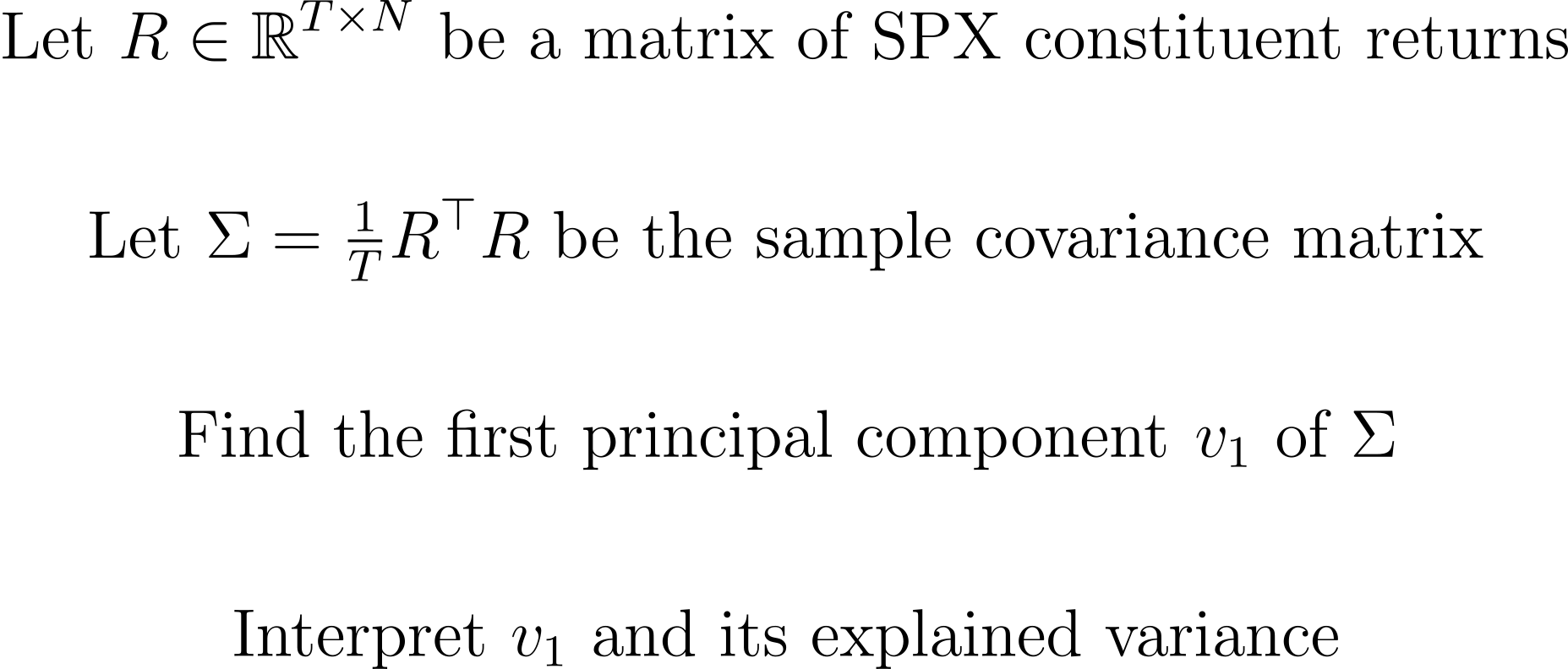
| Solution at the Bottom of this Email 👇 |
| | | Need to study up on topics in math, probability, and finance? 👉 Learn to solve problems like this on Quant Guild — the platform I wish I had when I was studying to become a quant. | | | 📅 Quant Guild Week in Review |
| Volterra Processes and Quant Projects |
|
|
|
|---|
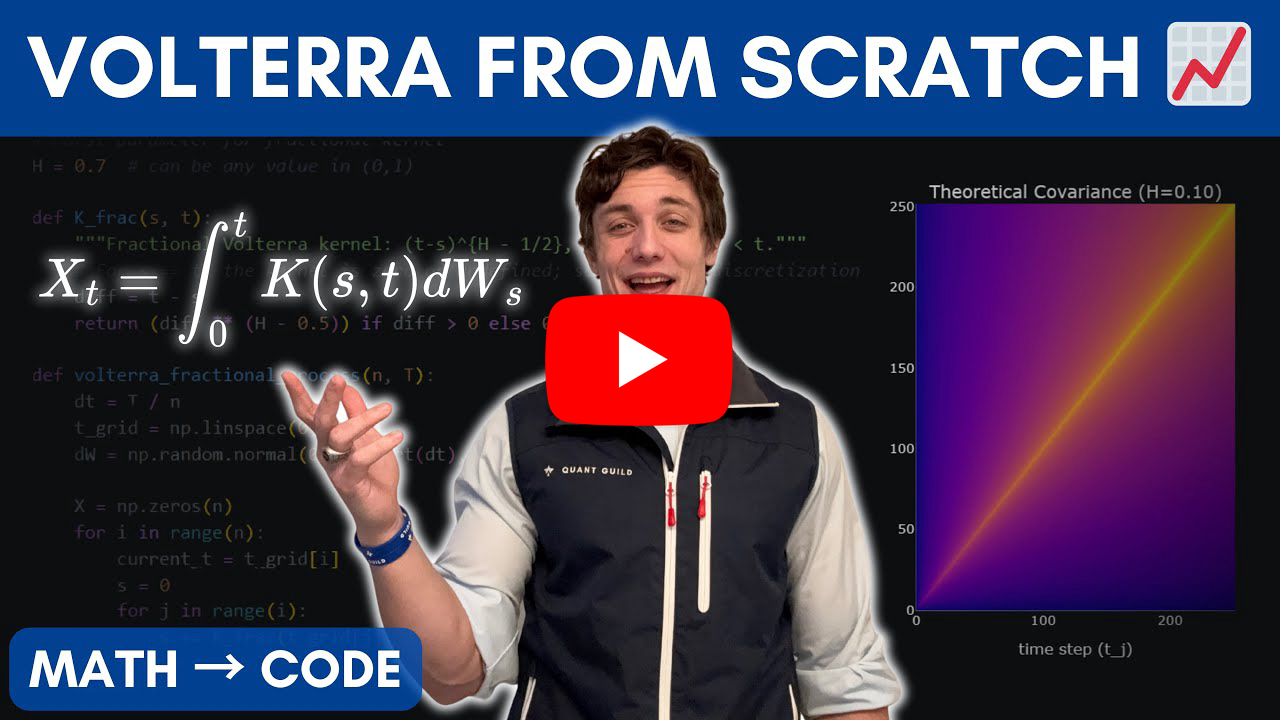
📈 Volterra Process Discretization and Simulation | In this video I break down why Volterra processes have become central to modern quantitative finance, especially in the context of rough volatility models that fit the implied volatility skew far better than classical frameworks. The rough model family relies on Gaussian processes with long memory, and Volterra processes are the key subclass that makes these models usable in practice because they admit a causal representation. That single property changes everything. I start by explaining what a Volterra process actually is and why causality matters. Traditional methods for simulating fractional Brownian motion require global path knowledge, which makes them unsuitable for pricing and hedging path-dependent derivatives. Volterra processes solve this problem. By representing the process as a stochastic integral against Brownian motion with a carefully chosen kernel, we can induce any desired covariance structure while only using information from the past. This allows us to model long-range dependence without violating causality. I then derive the covariance structure of the Volterra process from first principles using Itô isometry and show explicitly how the choice of kernel determines the dependence structure of the process. This makes it clear that Brownian motion, mean-reverting processes, and rough fractional dynamics all live inside the same unified framework. The difference is not the noise itself, but how past noise is weighted through time. From there, I explain how discretization works conceptually. The process is built iteratively on a time grid, accumulating weighted Brownian increments. Unlike Markovian models, the next state depends on the entire path history, which is exactly what gives rough models their realism and also what makes them computationally expensive. This is the fundamental tradeoff behind non-Markovian modeling. I close by connecting this theory back to practice. Volterra processes give us a mathematically consistent and computationally viable way to simulate rough volatility dynamics, which are now widely used to model short-dated options and volatility surfaces. They bridge the gap between cutting-edge financial mathematics and real pricing systems. Understanding this framework is essential if you want to move beyond toy stochastic models and work with the types of dynamics institutions actually care about today. Here's a link to the full video 👇 | | | 🎲 5 Projects that Made me a Quant | In this video I walk through the five projects I built as a student that ultimately shaped the way I think as a quant and helped me stand out during interviews for quant research and market making roles. These were not class assignments or Kaggle-style exercises. Each project was built to answer a real modeling or systems question and forced me to confront the same problems professionals face: model choice, parameterization, non-stationarity, computational constraints, and risk. I start with QFin, a Python library for stochastic process simulation and option pricing. Building and maintaining an open-source package taught me far more than just coding. It forced me to think about numerical methods, API design, documentation, and what it actually means to contribute to a technical ecosystem. That alone sparked deep interview conversations and immediately differentiated me from candidates who had only solved problem sets. Next, I discuss a Markov chain credit risk model built using real Fannie Mae mortgage data. This project was about taking clean classroom theory and forcing it to survive contact with reality. Parameter estimation, absorbing states, non-stationarity, and model risk were no longer abstract concepts. They became unavoidable design decisions. This project taught me that modeling is never about finding “the right model,” but about choosing reasonable assumptions and understanding exactly where they fail. The third project is the Gaussian Cookbook, a collection of simulation recipes for Gaussian processes including Brownian motion, mean-reverting processes, fractional Brownian motion, and Volterra processes. This project pushed me deep into stochastic process theory and modern volatility modeling. It also exposed the real tradeoff between mathematical elegance and computational feasibility, a theme that shows up constantly in institutional work. The fourth project is my technical writing, specifically my long-running blog. Writing forced me to confront gaps in my understanding and articulate complex ideas clearly. Over time, those articles led to conversations, interviews, and opportunities I never would have gotten by quietly studying alone. Teaching and explaining became part of my learning process. The final project is my volatility trading system, the most difficult thing I’ve ever built. It required solving real software engineering problems, designing risk controls, and integrating models into a live execution environment. More than anything, this project shaped how I think about risk, position sizing, and uncertainty. It cemented the idea that quant work is not about prediction. It is about structuring uncertainty and managing exposure over time. The core takeaway is simple. These projects worked because they were real. They connected theory to practice, forced hard tradeoffs, and demonstrated depth rather than surface-level knowledge. Here's a link to the full video 👇 | | |
|
|
|---|
|
 | 📈 Why 10,000+ Quants Study on Quant Guild | Quant Guild is the one-stop platform for mastering the math that powers modern finance. With 90+ specialized lessons, adaptive practice with gamified progress that scales with your skill level, real interview questions, courses from A - Z in coding, math, probability & statistics, and exclusive live classes with me, it’s built to take you from fundamentals to the front-office. Everything’s designed for how real quants think and work — focused, practical, and deeply technical. That’s why over 10,000+ students and professionals study on Quant Guild to sharpen their edge and make smarter decisions in the face of uncertainty. | 🏛️ See How Pol Became a Market-Maker with Quant Guild |  |  |
|
|
|---|
| | I'm in QR preparing for technical interviews and your practice helped me brush up on probability, thanks | | |
| | |
|
| | | I learned more here in two days than an entire semester of college | | |
| - Guy on Discord Who DM'd Me |
|
|
|
|---|
|
| | ✅ Quant Question of the Week |
| | | | | | |
|
|
|---|
|

 Roman Paolucci