 | | | 📜 A Note from the Guild Leader |
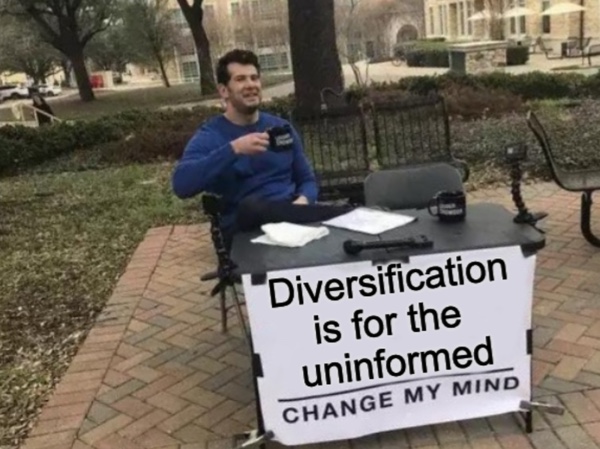
| This is your reminder that nobody prices risk correctly. That is not an invitation to blindly trade arbitrarily risky products, rather, an invitation to master your quantitative skills to develop the ability to take advantage of misplaced risk opportunities and/or build concentrated portfolios to scale your wealth. | | | Diversification makes a lot of sense if you have clients you need to appease, have no idea how to follow markets, size bets, and build models, or if you just don't care enough to look. However, if you are an investment professional your job quite literally is to estimate forward looking returns; if you're any good at all you likely shouldn't diversify - not even just in financial instruments but even in the private equity or VC sense. More on this to come, I have a lot to say on this topic of risk assumption. | With that I will leave you to the Weekly Guild Letter. I hope you enjoy, and I hope you learn something! - Roman | | | 🧮 Quant Model of the Week |
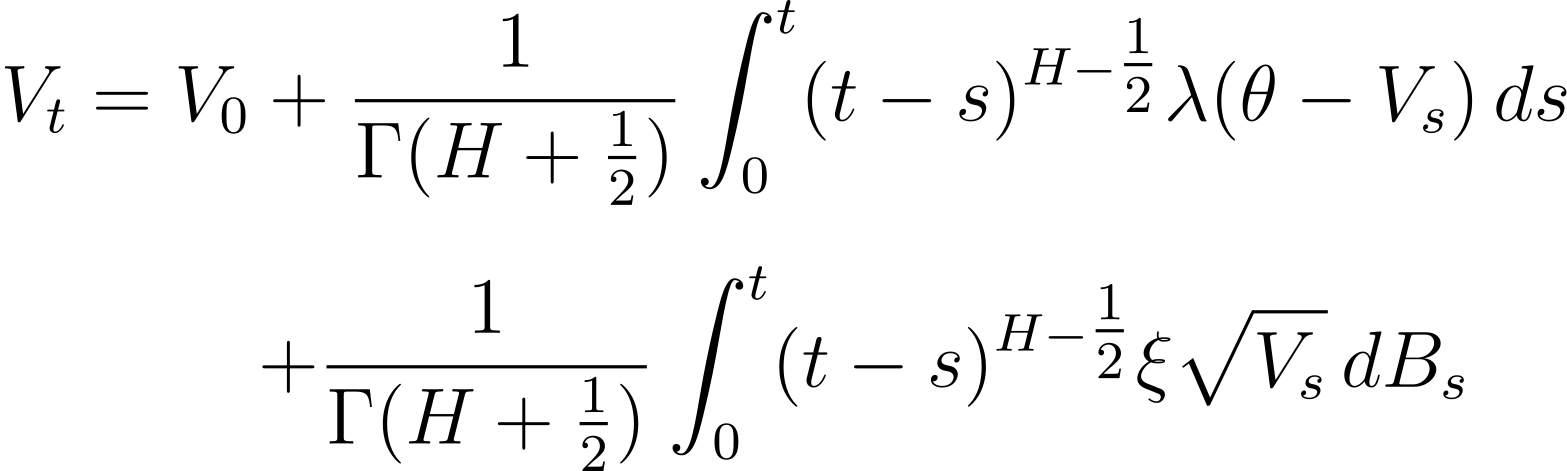
| | | Volatility in markets has two very different personalities. On one hand, we have the classic Heston intuition. Volatility moves, it mean reverts, and it is correlated with the underlying, giving us skew. That framework is tractable and works well in practice. On the other hand, the data tells a different story. Volatility is rough. It has memory. Shocks persist across time scales and decay slowly. The smooth, Markovian assumptions of classical models miss this entirely. The rough Heston model brings these two worlds together. It keeps the structure that makes Heston usable, but replaces the variance dynamics with a fractional, rough process that matches what we actually observe. Same intuition. Better reality. | 🧮 Model Definition | This is what the rough Heston model looks like... | | | What you’re looking at is a model for how volatility evolves when it is both stochastic and rough, capturing the dynamics we actually observe in markets. In the classical Heston model, volatility mean reverts with exponentially decaying shocks. That means the impact of past events fades quickly, and the system is Markovian. But empirically, volatility does not behave that way. It exhibits clustering, persistence, and roughness across time scales that exponential decay cannot capture. The rough Heston model fixes this by replacing exponential decay with a power law kernel. Instead of shocks disappearing quickly, their influence decays slowly over time. Recent shocks dominate, but past shocks never fully vanish. They continue to affect the process across many horizons. This introduces fractional behavior into volatility. The variance process is now driven by a Volterra-type integral with a kernel that scales like a power law. That structure embeds long memory directly into the model, making volatility both path dependent and non-Markovian. The result is a model that reproduces the steep implied volatility skews and short-term dynamics we see in real markets. It bridges the gap between classical stochastic volatility models and the empirical reality of rough, persistent volatility. | 📈 Model Applications | Rough Heston is used where both realistic volatility dynamics and tractable pricing matter. On derivatives desks, it improves the fit to implied volatility surfaces, especially for short maturities where classical Heston struggles. The rough component captures steep skews and term structure more accurately, while the Heston backbone keeps the model usable for pricing and hedging. It is also valuable for risk management and simulation. By incorporating rough volatility, the model generates more realistic paths with persistent shocks and clustering, leading to better scenario analysis and tail risk estimates. In short, Rough Heston helps bridge theory and practice. It retains the usability of Heston while aligning the model with the rough, memory-driven behavior of volatility observed in real markets. | 🎓 A Little Story | The first time I really tried to understand rough volatility, there was no shortcut. No ChatGPT. No Gemini. Just papers, Stack Overflow threads, and a lot of trial and error. I remember reading the literature and thinking I understood it, fractional kernels, power laws, Hurst parameters, it all made sense conceptually. Then I tried to simulate it. That is when things got painful. Standard tricks stopped working. You could not just discretize and move on. The memory was everywhere. Every step depended on the entire past. My code was slow, unstable, and wrong more often than it was right. I spent hours rewriting kernels, debugging numerical issues, and questioning whether I actually understood what I had read. But that process was the point. At some point, after enough iterations, it clicked. Roughness is not just a parameter. It is a structural shift. You are not simulating a process with short memory anymore. You are simulating something that carries its entire history forward. Once you see that, the implementation starts to make sense. It was frustrating, inefficient, and honestly kind of brutal. But it was also one of the most valuable learning experiences I have had. | 💡 Takeaway | Rough volatility is not just a refinement. It is a change in how you think about time and memory in markets. Classical models assume the past fades quickly. Rough models say the past lingers, across scales, in ways that materially affect pricing and risk. That one shift explains why volatility behaves the way it does and why smooth models struggle, especially at short horizons. But the real lesson is not just about roughness. It is about respecting the structure of the problem. Some dynamics cannot be approximated with simple, memoryless processes without losing what matters. At the same time, not every model needs to capture every detail. Rough Heston works because it balances realism with tractability. The goal is not to build the most complex model. It is to capture the dominant behavior in a way that is usable. Rough dynamics remind you that markets remember, and that ignoring that memory comes at a cost. | | | 🏆 Quant Question of the Week |
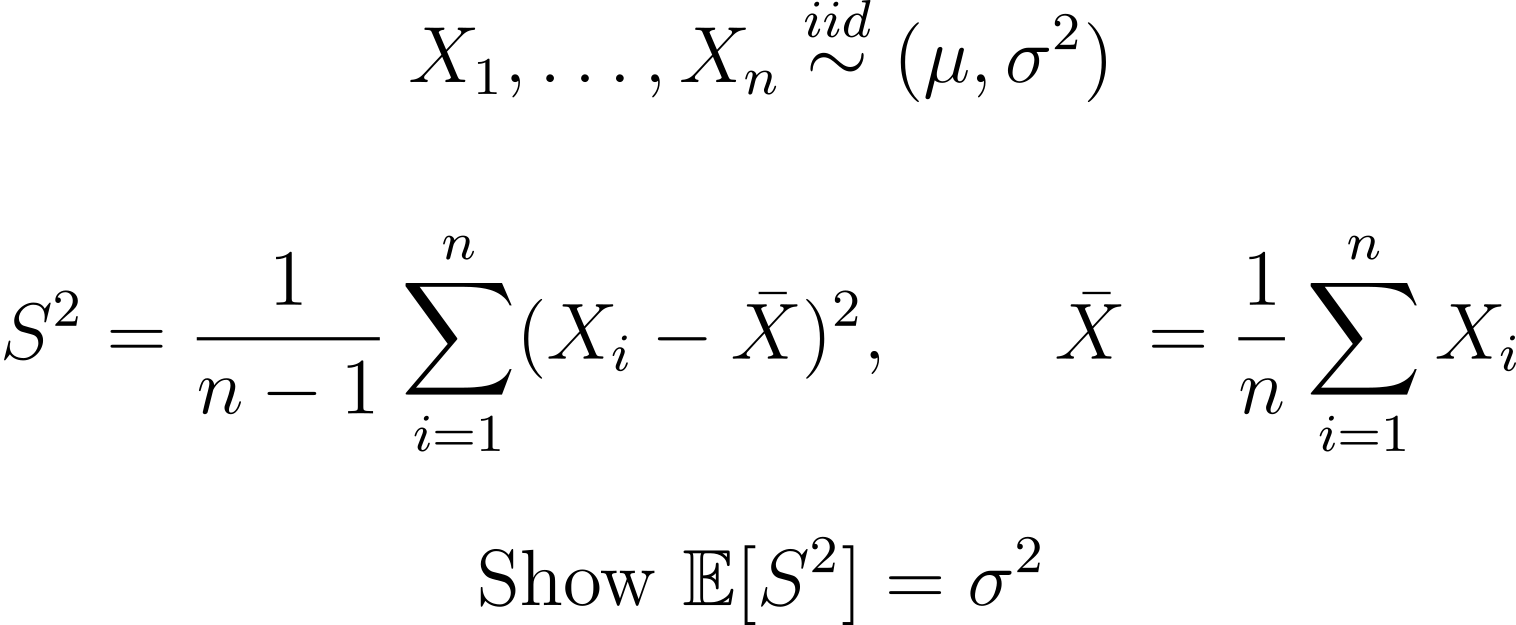
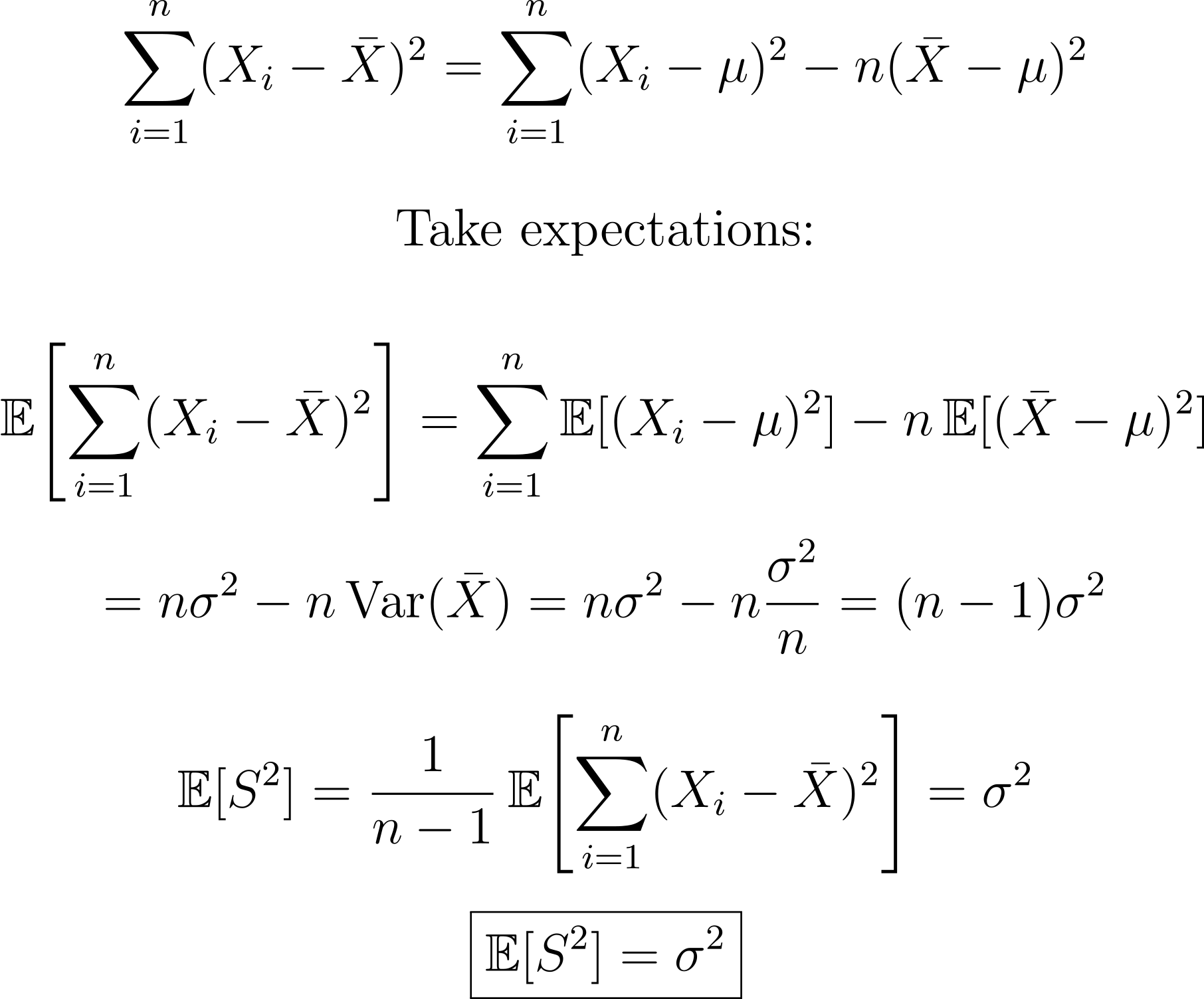
| Solution at the Bottom of this Email 👇 |
| | | Need to study up on topics in math, probability, and finance? 👉 Learn to solve problems like this on Quant Guild — the platform I wish I had when I was studying to become a quant. | | | 📅 Quant Guild Week in Review |
| Quant Finance in 3 Minutes, Gaussian Cookbook, Life Math |
|
|
|
|---|
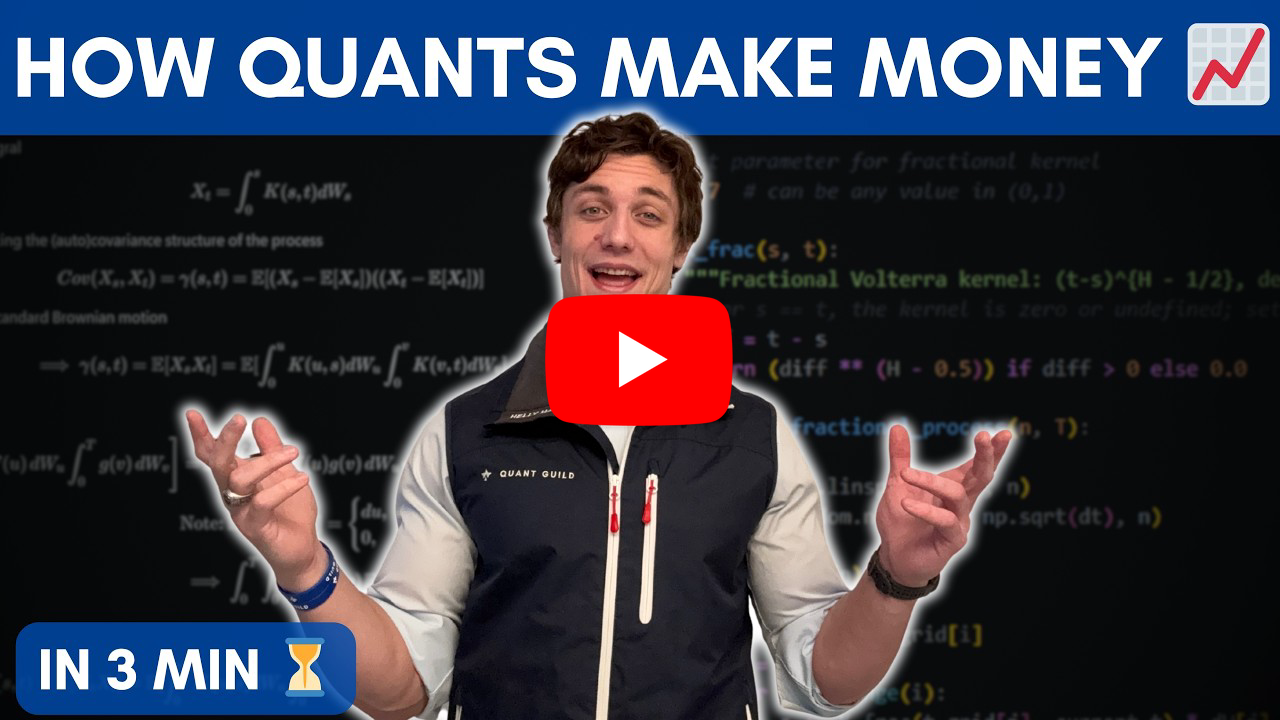
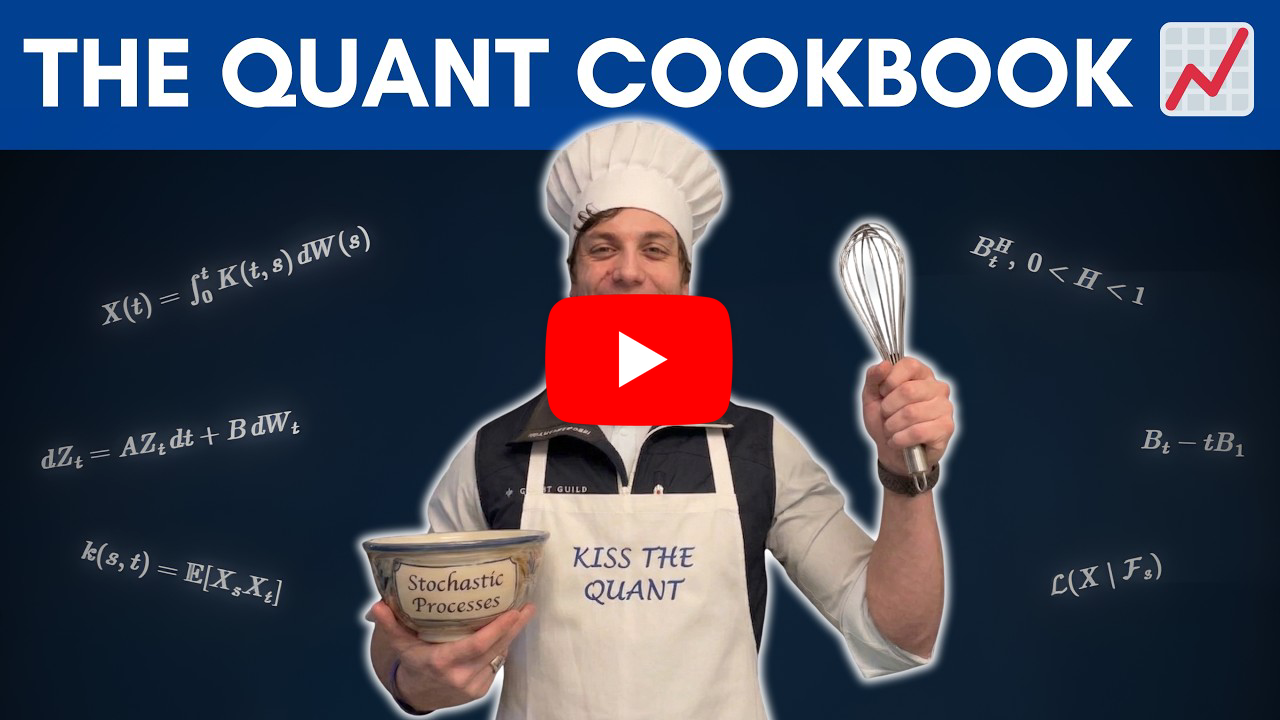
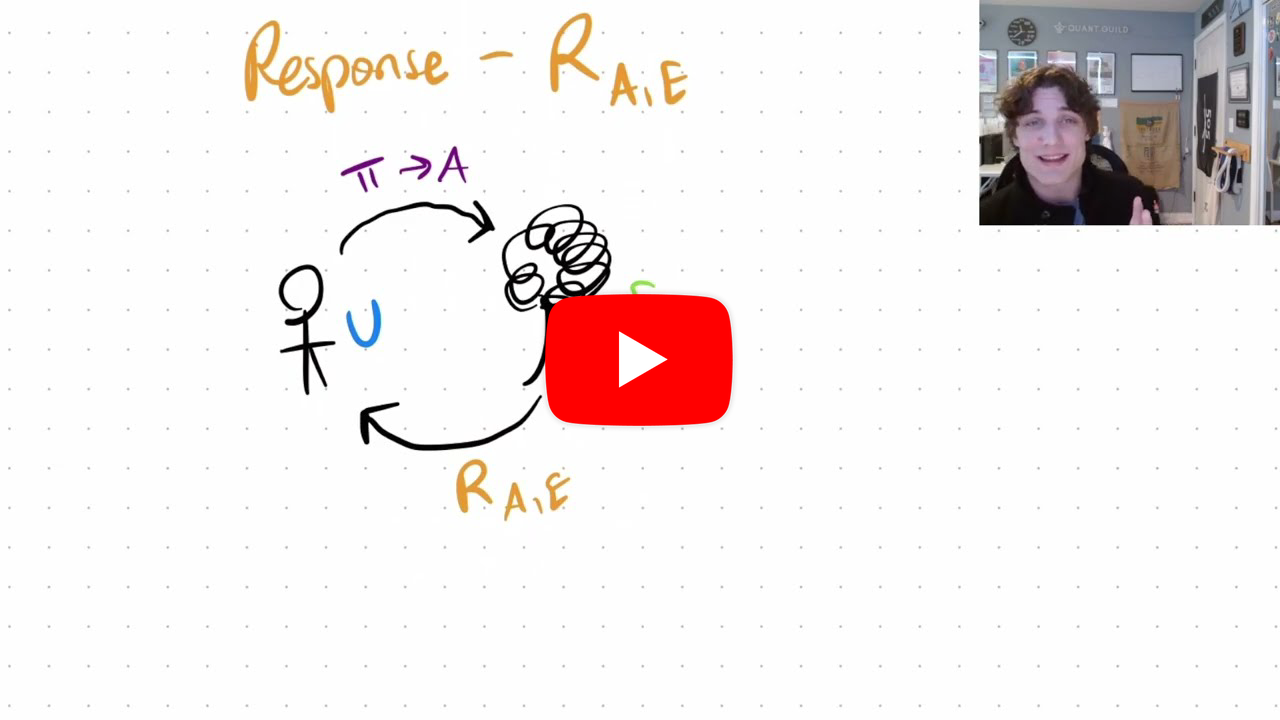
📈 Quant Finance in 3 Minutes | In this video I explain quantitative finance through two core questions. The first is how much should I pay for an asset, and the second is what is the optimal decision to make under uncertainty. Everything in quant finance ultimately comes back to these two problems. For pricing, I start with a simple analogy to roulette. If we know the expected value of a game, we can price it so that, on average, neither side gains or loses wealth. In markets, this idea extends to instruments like options. Using frameworks like Black-Scholes, we construct hedging strategies that allow us to determine a fair price under no-arbitrage. If we consistently trade around that fair value, we accumulate edge through the spread. For decision-making, I explain that there is no single correct answer. Choosing between assets or strategies is not about certainty, but about making informed decisions in the face of uncertainty. Outcomes alone do not validate decisions. A bad process can produce good outcomes, and a good process can produce bad ones. What matters is whether your decisions are consistently grounded in sound reasoning. The key takeaway is that quant finance is not about prediction. It is about pricing uncertainty correctly and making decisions that are statistically sound over time. If you do that consistently, the edge compounds. Here's a link to the full video 👇 | | | 🎲 The Gaussian Cookbook for Aspiring Quants | In this video I walk through an open source resource I built called the Gaussian Cookbook, which is designed to help aspiring quants bridge the gap between theory and implementation. The goal is to take core stochastic processes and show you exactly how to simulate them step by step, both in continuous and discrete time, with accompanying intuition, derivations, and Python code. I start with foundational processes like Brownian motion and Brownian bridges, which form the backbone of modern financial modeling. From there, I extend into more advanced topics like fractional Brownian motion and Volterra processes, highlighting the tradeoff between realism and computational efficiency. These models capture richer dynamics but often require full path dependence, which makes them harder to use in practice. That leads into more modern techniques like Markovian lifting, where we approximate these complex processes using a finite set of simpler, mean-reverting components. This allows us to retain realistic behavior while making simulation and calibration far more efficient. The key idea behind the cookbook is not just to present formulas, but to give you a structured, practical workflow for building and understanding these models from scratch. It is meant to be a hands-on resource that connects stochastic calculus, numerical methods, and real applications in quantitative finance. Here's a link to the full video 👇 | | | 🌱 How to Live According to Math | In this video I step away from quant finance and use a mathematical framework to explain how people make decisions and why some end up successful, unhappy, or stuck. I model life using ideas from reinforcement learning. We have a policy function that dictates our actions based on our environment, and we act to optimize a utility function that represents our preferences. Every action we take produces a response from the environment, and that response either increases or decreases our utility. The key layer most people miss is principles. Your utility function is not fixed in isolation. It is defined by what you actually value. If your principles prioritize money, your entire decision-making process looks different than if you prioritize time, freedom, or relationships. Two people can live in the exact same environment and take similar actions, but experience completely different outcomes because they are optimizing different utility functions. I then explain why people get stuck. Most people operate at a local maximum. They exploit what they know works and avoid risk, even if it keeps them in a state they do not actually want. Real growth requires exploration. That means doing things you have never done before, which temporarily decreases your utility. You have to move down before you can move higher. That is the natural cycle of progress, and most people resist it because it is uncomfortable. The hardest part is not the exploration itself. It is defining your principles. If your principles are constantly changing, your utility function is unstable and you cannot optimize anything. This is why many people feel lost or inconsistent. They are not operating under a fixed objective. The main takeaway is that a better life is not about blindly optimizing outcomes. It is about clearly defining your principles, understanding that growth requires temporary discomfort, and consistently making decisions that align with what you actually value. Here's a link to the full video 👇 | | |
|
|
|---|
|
 | 📈 Why 10,000+ Quants Study on Quant Guild | Quant Guild is the one-stop platform for mastering the math that powers modern finance. With 90+ specialized lessons, adaptive practice with gamified progress that scales with your skill level, real interview questions, courses from A - Z in coding, math, probability & statistics, and exclusive live classes with me, it’s built to take you from fundamentals to the front-office. Everything’s designed for how real quants think and work — focused, practical, and deeply technical. That’s why over 10,000+ students and professionals study on Quant Guild to sharpen their edge and make smarter decisions in the face of uncertainty. | 🏛️ See How Pol Became a Market-Maker with Quant Guild |  |  |
|
|
|---|
| | I'm in QR preparing for technical interviews and your practice helped me brush up on probability, thanks | | |
| | |
|
| | | I learned more here in two days than an entire semester of college | | |
| - Guy on Discord Who DM'd Me |
|
|
|
|---|
|
| | ✅ Quant Question of the Week |
| | | | | | |
|
|
|---|
|

 Roman Paolucci