 | 📜 A Note from the Guild Leader |
| The volatility risk premium, far from a secret, a structure that plenty of institutional funds exploit in the context of generating trading profits. Easier said than done? Absolutely, when are you risk-on, when do you lever up, how much can you lose and will it blow your account? All necessary questions with answers that are ever evolving.
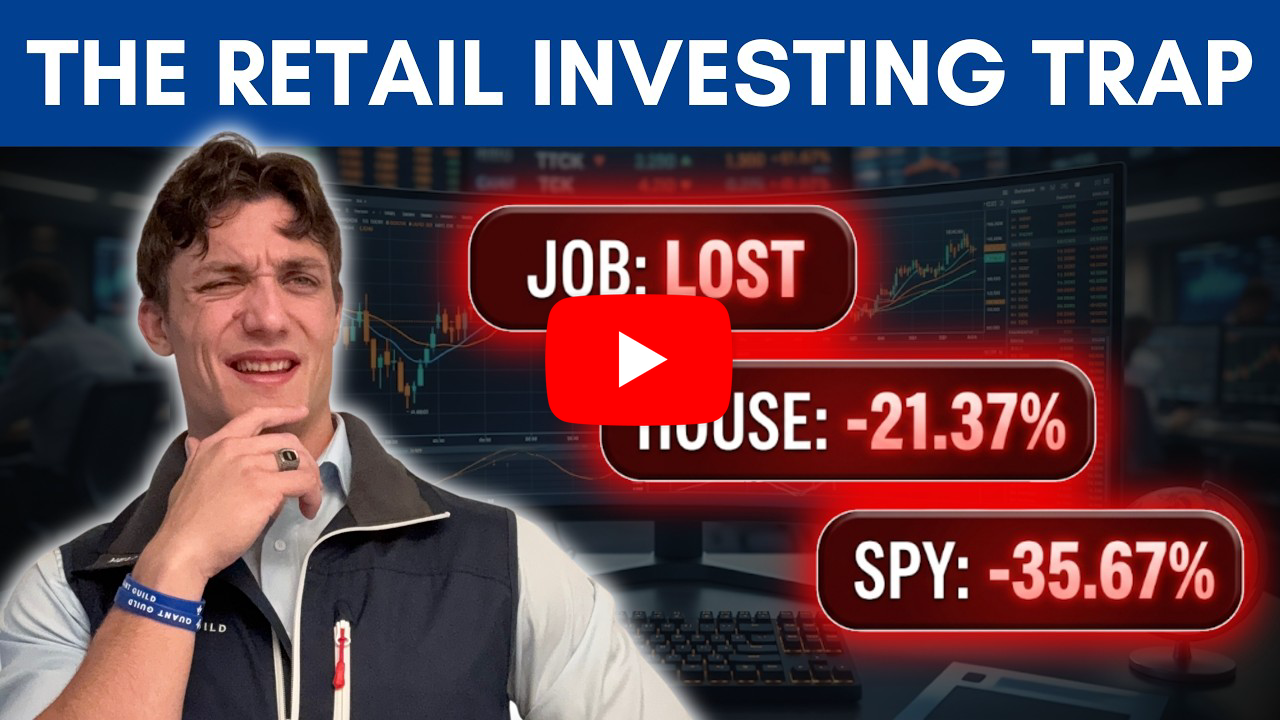
But recently, long volatility has caught my attention and it's something I can't seem to take my mind off of especially watching the VIX rocket to 21 when "nothing happens"... | | | This week I discussed the idea of quantitative portfolio construction, what it is you are exposing yourself to when it comes to economic distress or recessions in a typical retail portfolio: short volatility. Whether market distress coincides with recession 1:1 is not the point, the point is implicitly we take extremely long positions on our house, job, and brokerage account and volatility arbitrarily decreases this value.
The price for protection is overpriced - right? It depends on what you're buying, and that's where the strategy comes into play. More to come. | With that I will leave you to the Weekly Guild Letter. I hope you enjoy, and I hope you learn something! - Roman | | |
|
|
|---|
|
📅 Quant Guild Week in Review |
| Leaving the Quant World, Portfolio Engineering, SPY Trap |
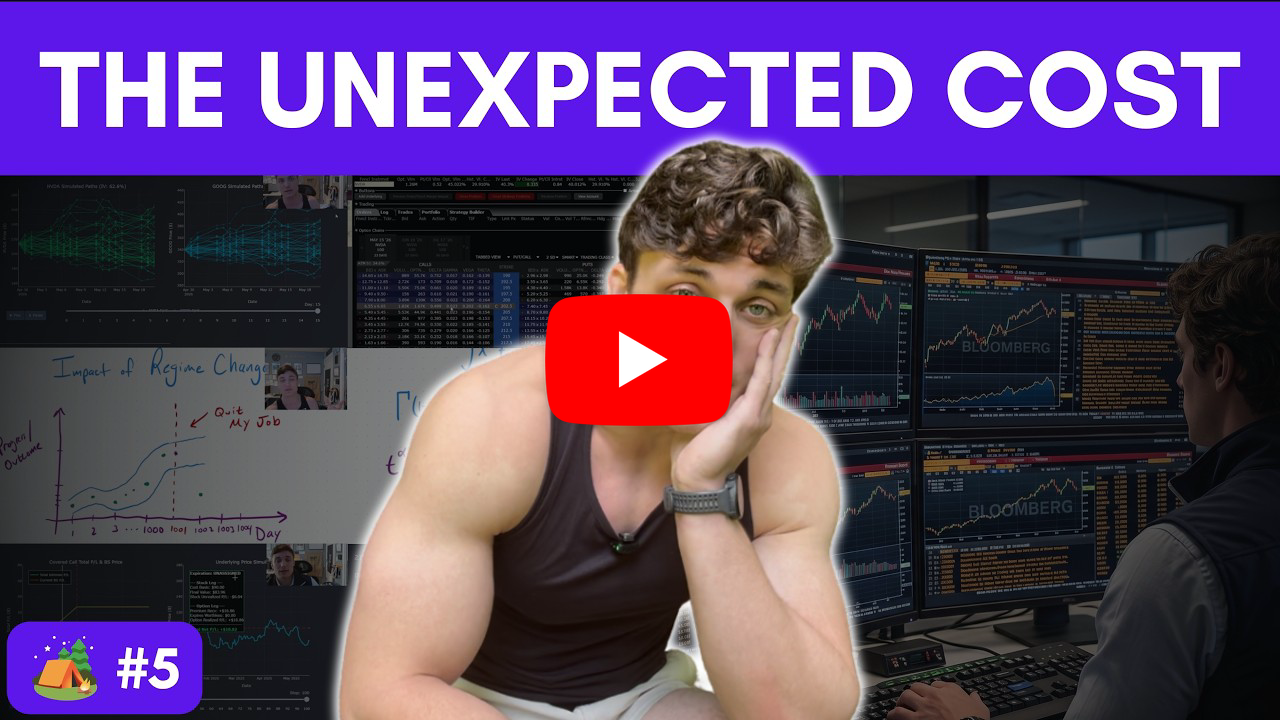
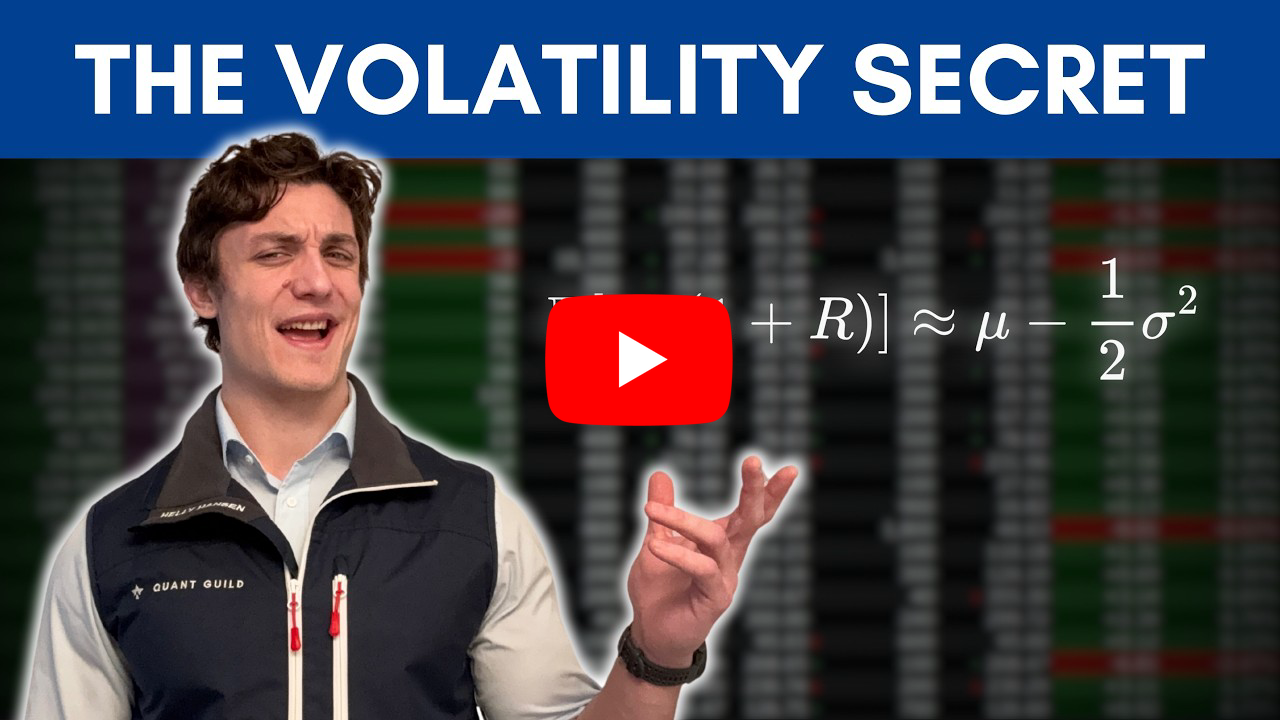
| 🏕️ Why I Quit Being a Quant Researcher | In this video I share why I left quantitative research and the path that eventually led me to Quant Guild. Although I loved the math and the work itself, I struggled with isolation, burnout, and a lack of connection, which ultimately forced me to confront the importance of mental health and being honest about what I was going through. I talk about the difficult years that followed, from leaving Bloomberg to trying entrepreneurship, pursuing a PhD, attending Columbia, and dealing with financial and personal hardships. Through all of it, I realized that ignoring problems only compounds them over time. Here's a link to the full video 👇 | | | 🎲 How Quants Engineer Portfolios | In this video I explain how quants engineer portfolios rather than simply hold market exposure. The key idea is that maximizing returns is not enough. What really matters is reducing volatility drag and improving the geometric compounding of wealth over time. I show how combining structurally uncorrelated strategies and using leverage intelligently can create portfolios with lower drawdowns, better risk-adjusted returns, and even higher long-term returns than passive investing alone. Here's a link to the full video 👇 | | | 💻 The Mathematical Trap of "Just by SPY" | In this video I explain why "just buy SPY" is not the complete answer most people think it is. While broad market exposure works over long horizons, there are important mechanics that investors often ignore, especially around liquidity, volatility drag, and sequence risk. I show how your wealth trajectory depends heavily on when capital is deployed and what happens during periods of market stress. Simply holding equities can leave you exposed when you need liquidity the most. The key idea is that good risk allocation is not about timing the market. It is about engineering portfolios with convexity and diversification so that you can reduce drawdowns, deploy capital more efficiently, and compound wealth more effectively over time. Here's a link to the full video 👇 | | |
|
|
|---|
|
| | 🧮 Quant Model of the Week |
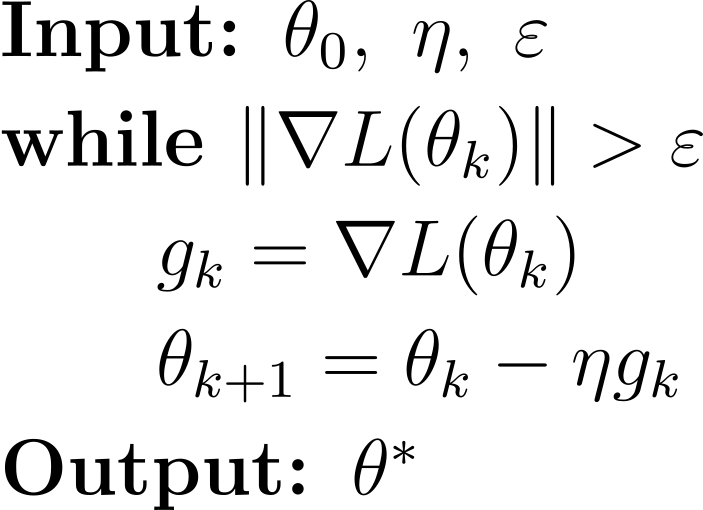
| | | Finding the best parameters for a model sounds straightforward. In practice, it rarely is.The moment you move beyond simple problems, closed-form solutions disappear and the landscape becomes high-dimensional. What was once a neat equation turns into an optimization problem with countless directions to explore.Gradient descent is one of the simplest and most powerful ways to handle this complexity. Rather than solving the problem all at once, it improves the solution iteratively, following the slope of the objective function step by step toward a minimum.From regression to neural networks, this simple idea sits underneath an enormous amount of modern quantitative modeling and machine learning. | 🧮 Model Definition | The following is an outline of the algorithm... | | | At a high level, gradient descent works by measuring the error first and improving the parameters second. It starts with an initial guess for the parameters and computes the value of a loss function, which quantifies how far the model is from the desired outcome. The gradient of that loss is then calculated, telling us the direction in which the error increases most rapidly. Next, the algorithm moves the parameters a small amount in the opposite direction of the gradient. This step reduces the loss, ideally bringing the model closer to an optimal solution. The size of these updates is controlled by the learning rate. Finally, the process repeats. Compute the gradient, update the parameters, and iterate until the changes become sufficiently small or the loss stops improving. In other words, gradient descent first measures how wrong the model is, then continuously adjusts itself until it reaches a satisfactory solution. | 📈 Model Applications | In practice, gradient descent is used anywhere we need to estimate parameters in models too complex for closed-form solutions. In statistics, it is used to fit regression models and maximum likelihood estimators. In quantitative finance, it appears in calibration problems, portfolio optimization, and risk models. In machine learning, it is the engine behind neural networks, where millions or even billions of parameters are adjusted iteratively to minimize prediction error. The power of gradient descent is not that it magically finds the perfect answer. It is that it provides a scalable way to navigate high-dimensional problems where analytical solutions are impossible. From simple regressions to large language models, much of modern modeling is ultimately powered by repeatedly asking one question: "Which direction reduces the error the fastest?" | 🎓 A Little Story | The first time I really understood gradient descent was when I visualized it. Up until then, it was just an algorithm. Take derivatives, update parameters, repeat.
Fine. But then I saw it on a paraboloid. A simple convex surface. You could literally watch the point roll downhill toward the minimum. Suddenly the equations had geometry. And then I saw a non-convex problem. That was crazy. Instead of one nice bowl, the landscape became a mountain range. Valleys, ridges, plateaus, local minima. Now the path mattered. Initialization mattered. Learning rates mattered. The optimizer could get stuck, overshoot, or wander around before finding something useful. That was when it clicked for me. Optimization is not about solving equations. It is about navigating landscapes. And once you see that, a huge amount of machine learning, calibration, and quantitative modeling starts looking less like algebra and more like geometry. | 💡 Takeaway |
Gradient descent is a reminder that many problems are too complicated to solve directly. Instead of demanding a closed-form answer, we improve iteratively. Measure the error, move downhill, repeat. That simple idea powers everything from linear regression to modern deep learning. But the deeper lesson is geometric. Optimization is not about memorizing formulas. It is about understanding landscapes. Some are smooth and convex. Others are rugged and chaotic. The goal is not to find perfection. It is to find solutions that are good enough to accomplish the task at hand. And surprisingly often, following the slope gets you there. | | | 🏆 Quant Question of the Week |
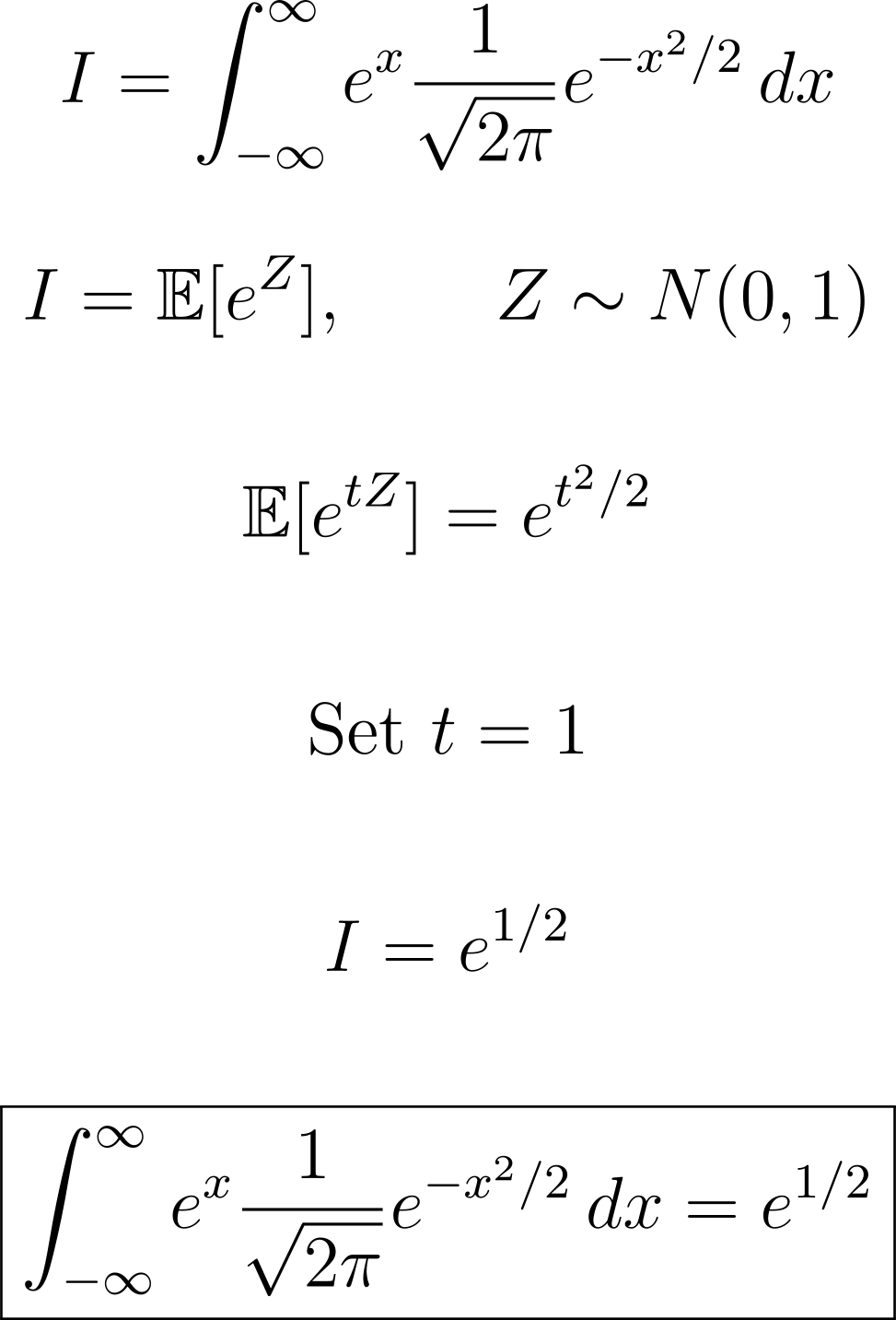
| Solution at the Bottom of this Email 👇 |
| | | Need to study up on topics in math, probability, and finance? 👉 Learn to solve problems like this on Quant Guild — the platform I wish I had when I was studying to become a quant. |
|
|
|---|
| |  | 📈 Why 10,000+ Quants Study on Quant Guild | Quant Guild is the one-stop platform for mastering the math that powers modern finance. With 90+ specialized lessons, adaptive practice with gamified progress that scales with your skill level, real interview questions, courses from A - Z in coding, math, probability & statistics, and exclusive live classes with me, it’s built to take you from fundamentals to the front-office. Everything’s designed for how real quants think and work — focused, practical, and deeply technical. That’s why over 10,000+ students and professionals study on Quant Guild to sharpen their edge and make smarter decisions in the face of uncertainty. | 🏛️ See How Pol Became a Market-Maker with Quant Guild | 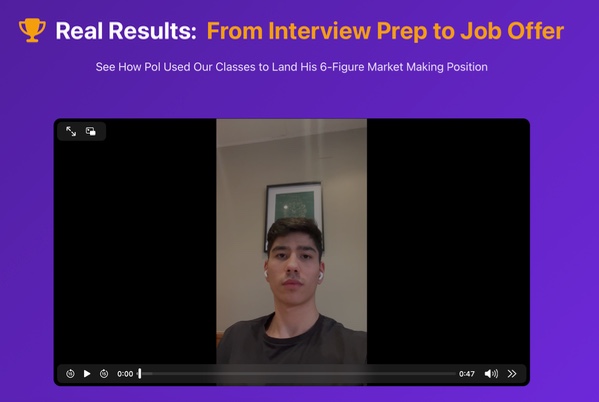 |  |
|
|
|---|
| | I'm in QR preparing for technical interviews and your practice helped me brush up on probability, thanks | | |
| | |
|
| | | I learned more here in two days than an entire semester of college | | |
| - Guy on Discord Who DM'd Me |
|
|
|
|---|
|
| | ✅ Quant Question of the Week |
| | | | | | |
|
|
|---|
|

 Roman Paolucci