 | 📜 A Note from the Guild Leader |
| | | "When's this AI bubble going to burst?" "It's just like the Dot Com bubble all over again." "The guy who predicted the housing crash predicts an AI crash!" Rhetoric, particularly in finance, possesses words that have always troubled me. Primarily the notion of a bubble. These words are a cop-out (of learning the necessary math, probability, and statistics required to understand the amorphous statistical reality of the real world) to fear monger and doomsay. In other words, either everything is a bubble or no bubbles exist. They can't both be true. Let me explain why. | | | Forget bubbles, look through the lens of a quant. The reason I dislike the word bubble so much is due to the fact that it demands confirmation bias to realize what the word was intended contemporaneously; relative to the word expectation which will always be true. For example, AI is not a bubble and it never pops - now everyone was just doomsaying for the sake of doomsaying. BUT if it does "pop" we get the "I told you it was going to happen!", which of course they didn't otherwise there would be no risk in taking out a second mortgage and putting it on a short position. The word expectation is a far better way to discuss the environment. For example, expectations for AI are extremely high - expectations are met and there is no cry for doomsaying. Otherwise, expectations are not met, and we see the repercussions in new equilibrium prices and the cycle begins anew. If you argue that the difference is not subtle (it's not), go on X. Bubble is used to fear monger and doomsday, it is a word being used intentionally and tactically. These are not conversations suggesting that expectations for AI are too high for XYZ reason, here is the opposing view, etc... Of course that wouldn't get nearly as much attention which is what they are after. In my empirical quantitative research I've seen this effect in both news and social sentiment. The distribution of attention is vastly skewed to negative sentiment (shocker) as we have psychological bias toward negativity. In other words, a bubble does not exist until it pops demanding a particular outcome to serve the initial classification (this is literally confirmation bias), where in reality expectations always exist. There's a reason literally all of statistics is built around the expectation... | | | With that I will leave you to the Weekly Guild Letter. I hope you enjoy, and I hope you learn something! - Roman | | |
|
|
|---|
|
📅 Quant Guild Week in Review |
| Don't Be a Quant, A $1,000,000 Question, Trading Secrets |
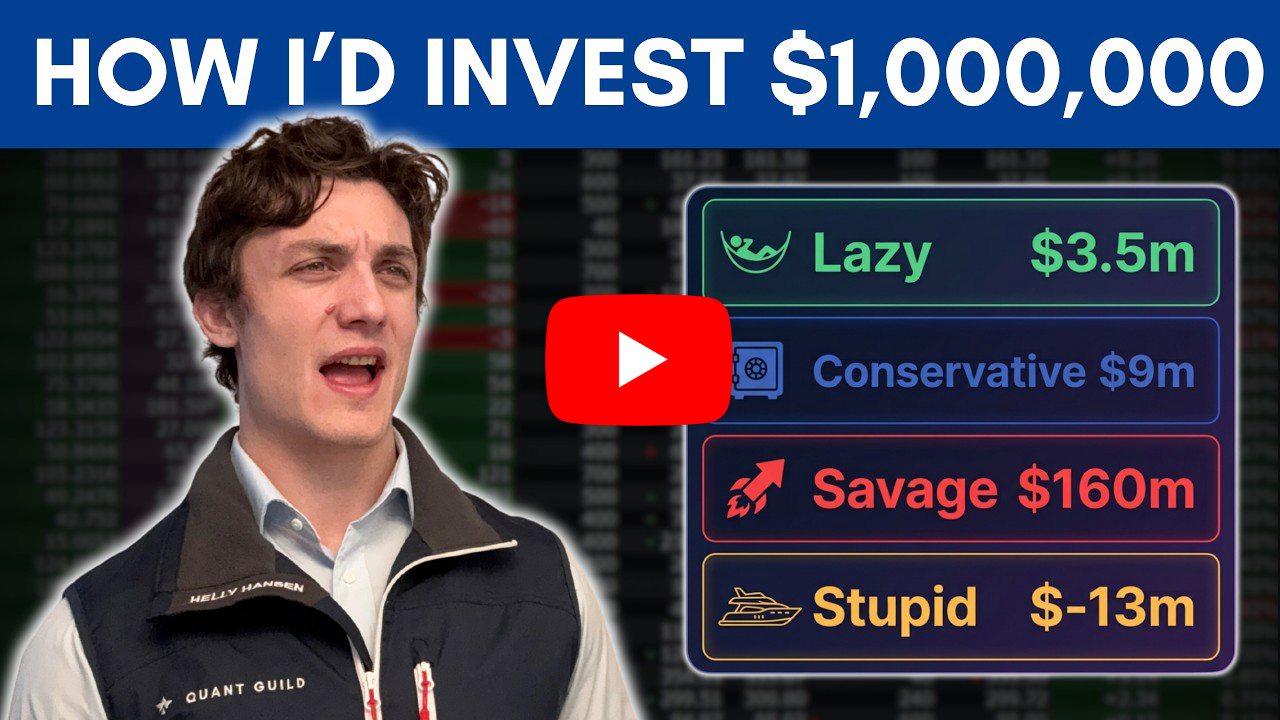
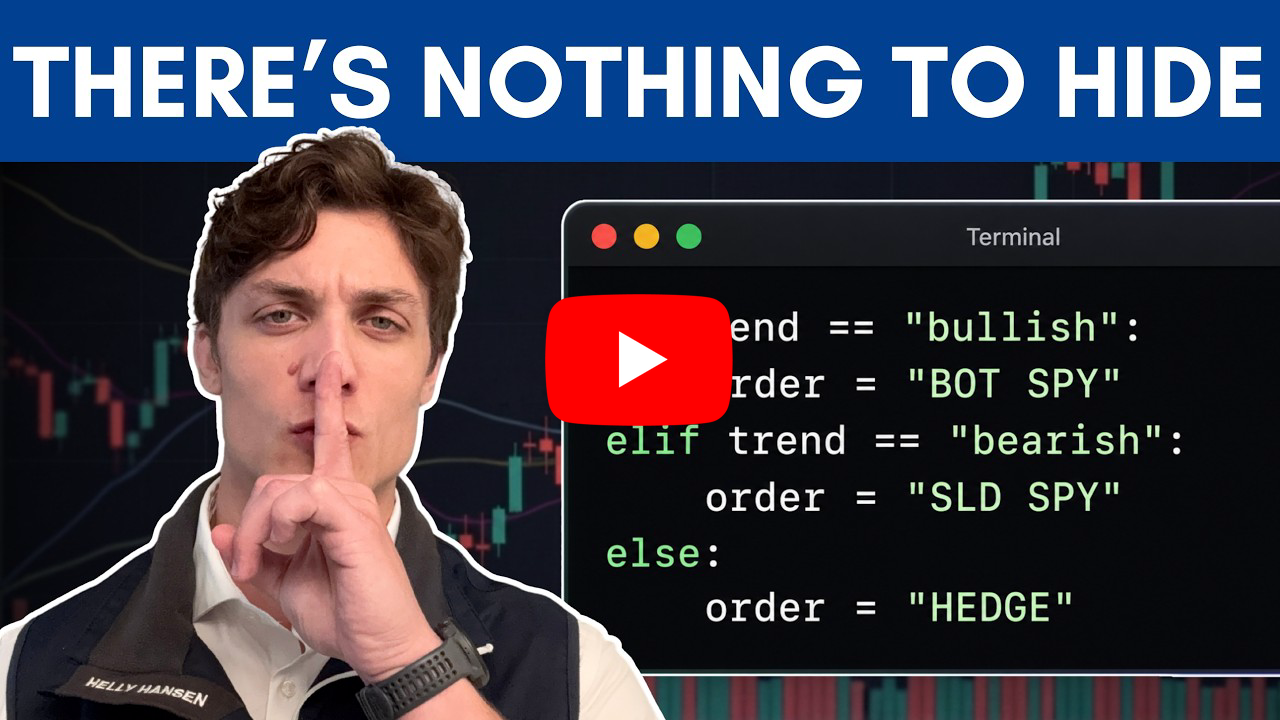
| | | 🏕️ Why You Shouldn't Be a Quant (Unfiltered) | In this video I give the unfiltered reality of what it's actually like to become a quantitative researcher. The work is intellectually rewarding if you genuinely love math, statistics, finance, and programming, but it is far less glamorous than most people imagine. I talk about the realities of the industry: long hours, tedious research, countless failed ideas, and a culture heavily influenced by prestige and gatekeeping. Most of your time is spent cleaning data, testing ideas that never work, and slowly accumulating experience rather than making groundbreaking discoveries. Here's a link to the full video 👇 | | | | | 🎲 How a Quant Would Invest $1,000,000 | In this video I walk through how I would think about allocating a $1 million portfolio depending on an investor's goals and risk tolerance. I compare everything from the safety of U.S. Treasuries, to passive equity investing, to starting a business, highlighting the tradeoff between risk and long-term compound growth. The central idea is that higher returns are never free. Every investment comes with a different source of risk, and understanding those risks is far more important than simply chasing the highest expected return. Here's a link to the full video 👇 | | | | | 💻 When Does a Trading Strategy Actually Need to be Secret? | In this video I explain why most trading strategies do not actually need to be secret. Simply exposing yourself to well-known sources of return, like market beta or other risk premia, is portfolio allocation, not proprietary alpha. The distinction is between positioning and genuine inefficiency. Positioning your portfolio for different market regimes can generate strong performance, but that is very different from discovering a unique signal or market inefficiency that consistently produces returns independent of the broader market. Here's a link to the full video 👇 | | |
|
|
|---|
|
| | 🧮 Quant Model of the Week |
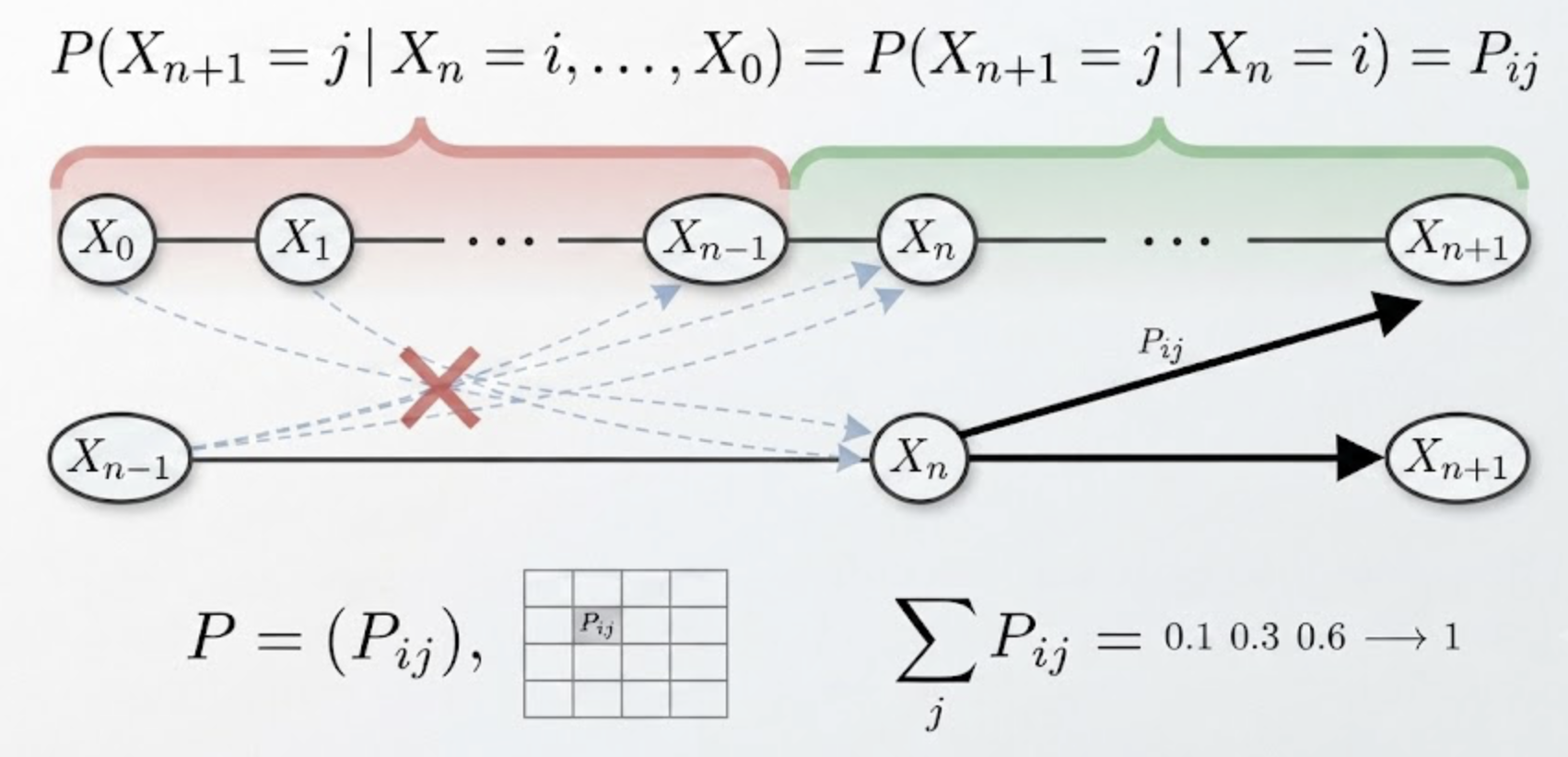
| | | Markets have memory, but sometimes that memory is surprisingly short. Many systems can be approximated by assuming that the future depends only on the current state, not the entire history that led there. While this is rarely exact, it is often a useful simplification that makes otherwise intractable problems manageable. Markov chains are built on this idea. They model a system as a collection of states connected by transition probabilities, where the next state depends only on the present one. | 📚 Model Definition | This following structure is an example of a Markov chain... | | | At the heart of a Markov chain is the Markov property: the future depends only on the present. Instead of conditioning on the entire history of the process, the model assumes that once the current state is known, the past provides no additional information about the next transition. The probability of moving to the next state is therefore determined solely by the current state. These transition probabilities are collected into a transition matrix. Each entry gives the probability of moving from one state to another in a single step, and each row sums to one because the process must transition somewhere. Put together, a Markov chain compresses an entire history into the current state. It replaces long-term memory with a simple probabilistic rule governing how states evolve over time. | 📈 Model Applications | In practice, Markov chains are used anywhere a system can be represented as transitions between discrete states. In finance, they are widely used for market regime modeling, where markets switch between states such as bull, bear, or high-volatility regimes. Rather than forecasting prices directly, the model estimates the probability of transitioning from one regime to another. They are also central to credit risk, where agencies model the migration of credit ratings over time using transition matrices. Similar ideas appear in queueing systems, inventory models, reinforcement learning, and hidden Markov models for time-series analysis. The strength of a Markov chain is its simplicity. It replaces a complex history with the current state, making probabilistic forecasting and decision-making computationally tractable while often capturing the dominant dynamics of the system. | 🎓 A Little Story |
One idea in probability always bothered me: stochastic independence.We almost never know that two random variables are truly independent. Unless there is some physical reason they cannot influence each other, independence feels like an assumption of convenience rather than a fact. In markets especially, hidden variables, changing regimes, and countless confounding effects mean that almost everything has the potential to be related. That is why conditional distributions immediately made more sense to me. Instead of pretending variables are unrelated, we simply ask: given what I know now, how should my beliefs change? That felt much closer to how real decision-making works. When I eventually learned about Markov chains, they fit naturally into that way of thinking. A Markov chain is not claiming the world is independent. It is making a modeling decision: once I know the current state, I will summarize everything relevant from the past through that state. The entire history is compressed into the present. That distinction clicked for me. It is not about denying history. It is about deciding that the current state is a sufficient summary for the next decision. In a world full of confounding variables, that is often a remarkably practical approximation. | 💡 Takeaway |
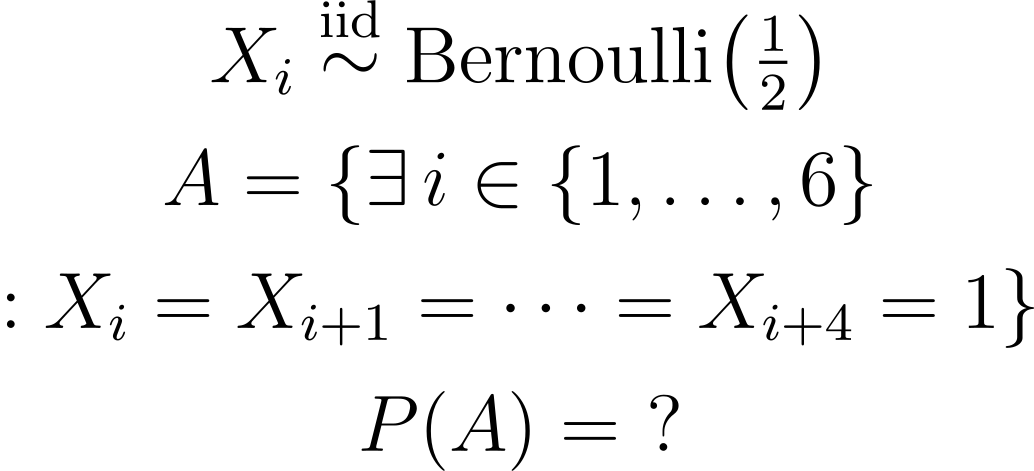
Markov chains are powerful because they trade memory for tractability. Rather than modeling an entire history, they compress the past into the current state and use transition probabilities to describe what happens next. That assumption is rarely perfect, but it is often good enough to capture the dominant dynamics of a system. The lesson extends far beyond Markov chains. Good models are not those that remember everything. They are those that remember what matters. | | | 🏆 Quant Question of the Week |
| Solution at the Bottom of this Email 👇 |
| | | Need to study up on topics in math, probability, and finance? 👉 Learn to solve problems like this on Quant Guild — the platform I wish I had when I was studying to become a quant. |
|
|
|---|
| | I'm in QR preparing for technical interviews and your practice helped me brush up on probability, thanks | | |
| | |
|
| | | I learned more here in two days than an entire semester of college | | |
| - Guy on Discord Who DM'd Me |
|
|
|
|---|
|
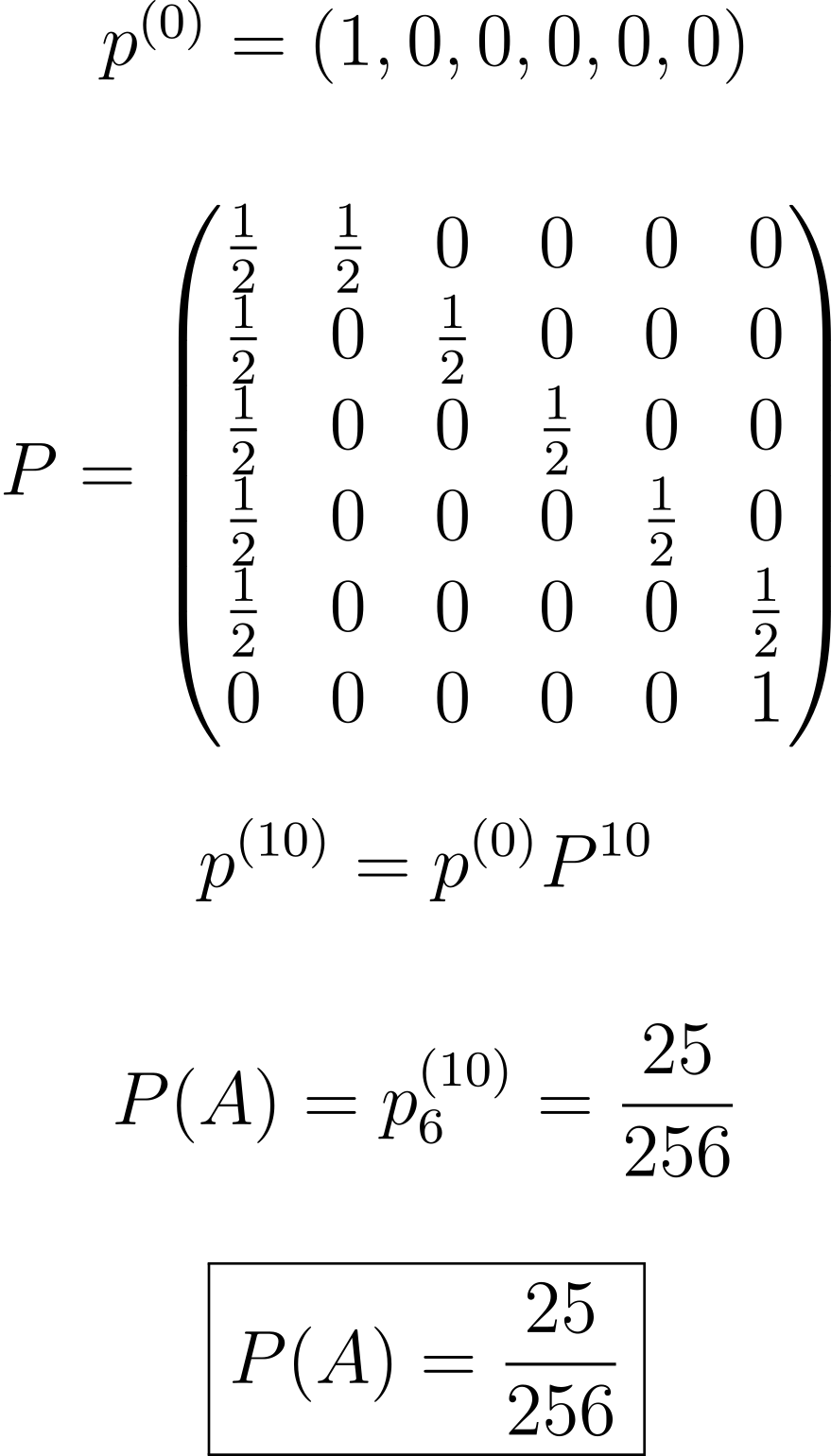
| | ✅ Quant Question of the Week |
| | | The following Markov chain is constructed with an absorbing state and the probability is observed applying the Chapman-Kolmogorov result. | | | | |
|
|
|---|
|

 Roman Paolucci