 | | | 📜 A Note from the Guild Leader |
| | | I just generated some right tail returns with Pokémon cards. 08/02/26 at roughly 2AM: I wake up in full blown panic for some reason realizing now that the Pokemon cards I, erm, "invested" in years ago may have appreciated significantly in value. Why this thought now? Why decade(s) later? I have literally no idea, but seems I've been warehousing risk on the books for quite some time, I think I'll be needing some liquidity... | | | I want to make it clear that I didn't know anything about the grading process or what I was looking at in terms of price or a counterparty for a transaction. I know nothing about the collectibles space. I had a lot to learn, and this is where all of the fun lies for me. Needless to say, I was excited, but I needed to find them first. Two search efforts were launched, the second being successful and I found the fabled blue box that contained the cards in my dream (or nightmare?)... They weren't ever played with (how many of us actually played the games?), they were in sleeves and shelved almost as quickly as I opened them years ago. It was time to go to a dealer to see what I was looking at. I walk into the card store that same day. Immediately I'm offered cash for them. "Bro you want to just get rid of these? We'll give you cash right away if you want" Hahahahahahahahahahaha. No. Turns out I had some pretty valuable cards, I learned about the grading system and holy shit is it a deep sea. You know the PSA grading efforts are backed up until the end of the year? If there was ever a time to concentrate some risk in the grading space for these "alternative assets" or "non-securities" now is the time. I see why GameStop wants to get in bed with Ebay... I didn't end up selling to the highest bidder. Instead I built an app to display the prices of my cards in real-time. Holy fuck it's cool, and I think I just found a new hobby. Though I must admit, I don't get the same utility buying cards or acquiring them now as I do looking at the ones I have now with nostalgia. I think I'll ride this feeling out while I can and give props to my old man back in the day for not saying no to those Pokémon card packs (thanks Dad). Here's the app that pulls trades live and interpolates a price series: | 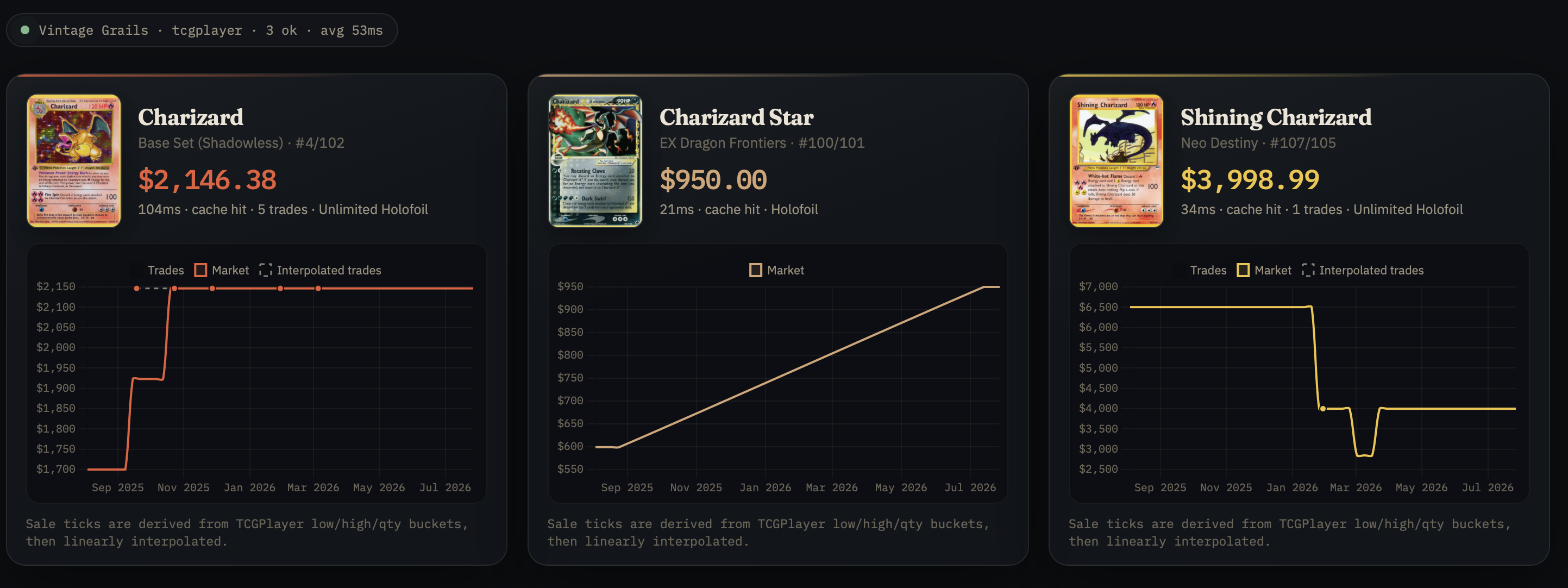 | | | With that I will leave you to the Weekly Guild Letter. I hope you enjoy, and I hope you learn something! - Roman | | |
|
|
|---|
|
📅 Quant Guild Week in Review |
| Risk is Always Mispriced, Free ABM and GBM Masterclass, Good and Bad Volatility Drag, Deriving Black-Scholes, Protecting Against Market Crashes, and Advanced Projects |
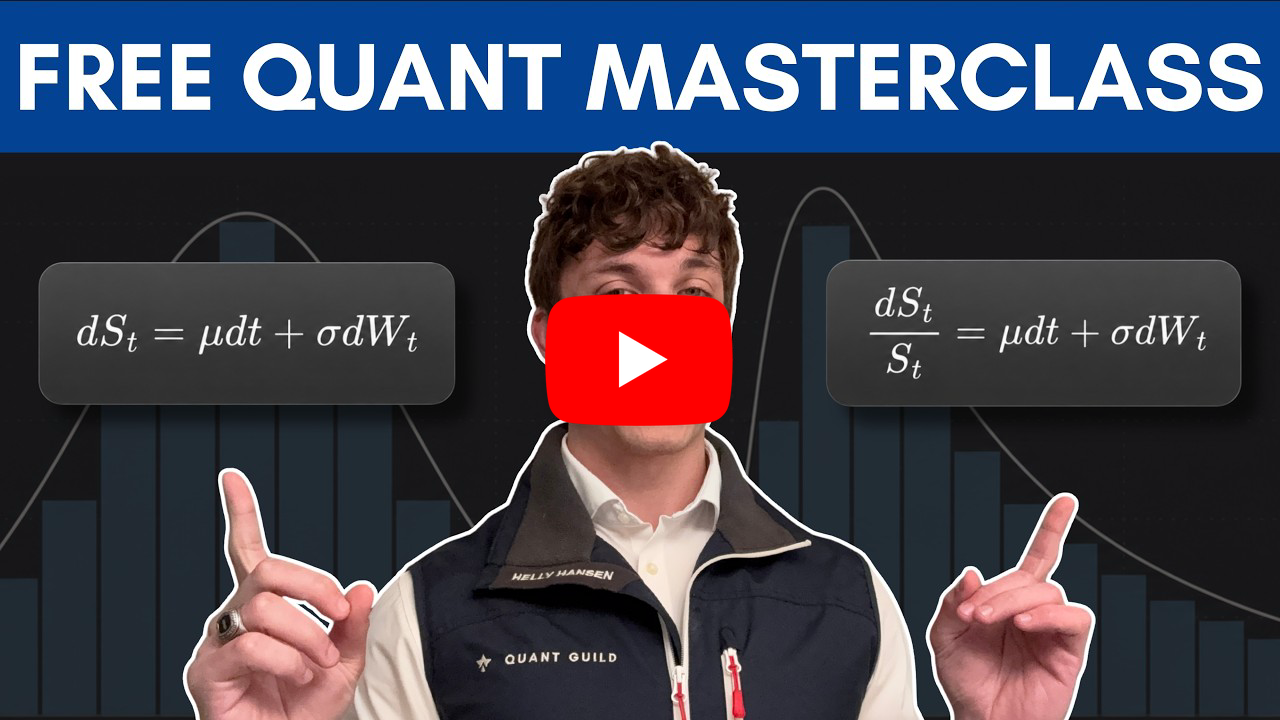
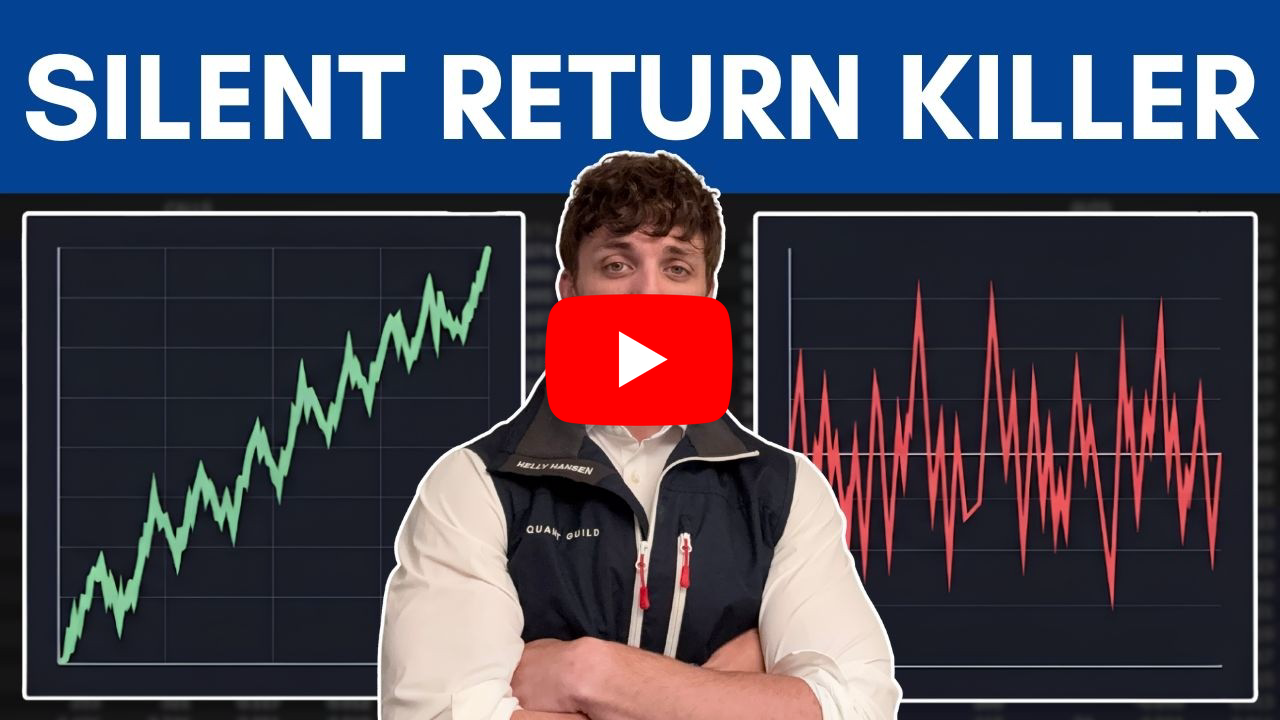
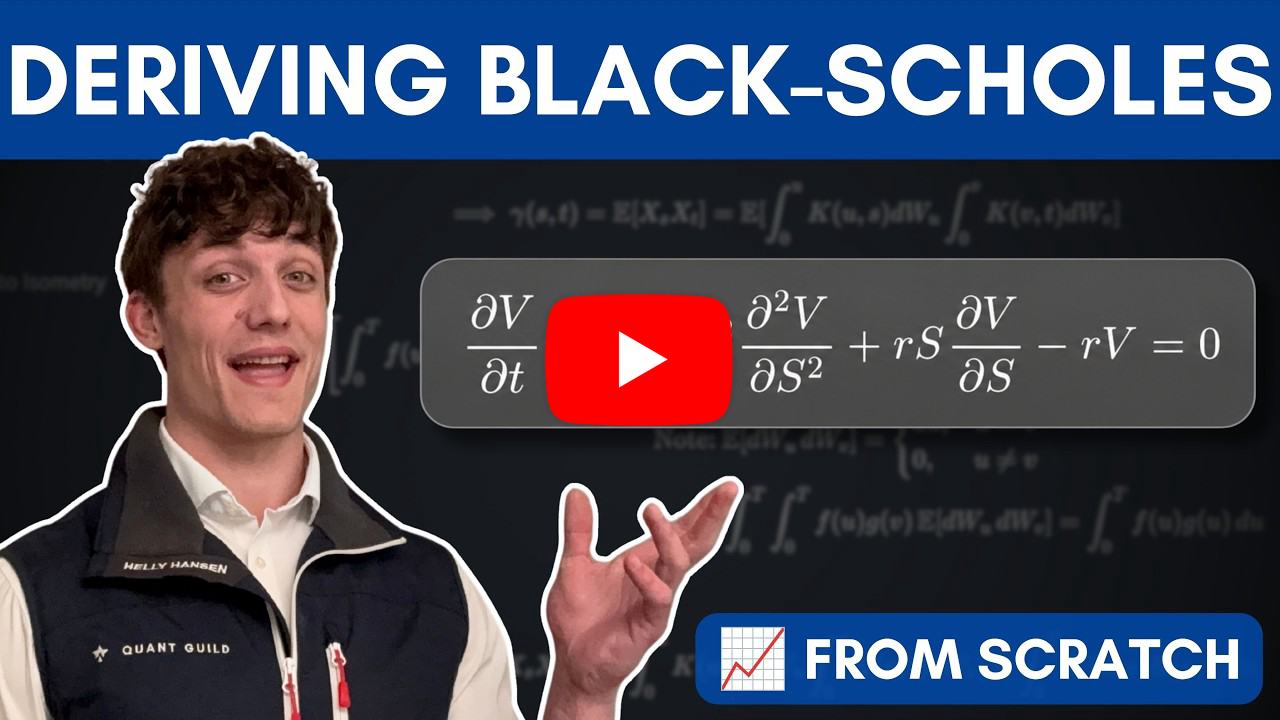
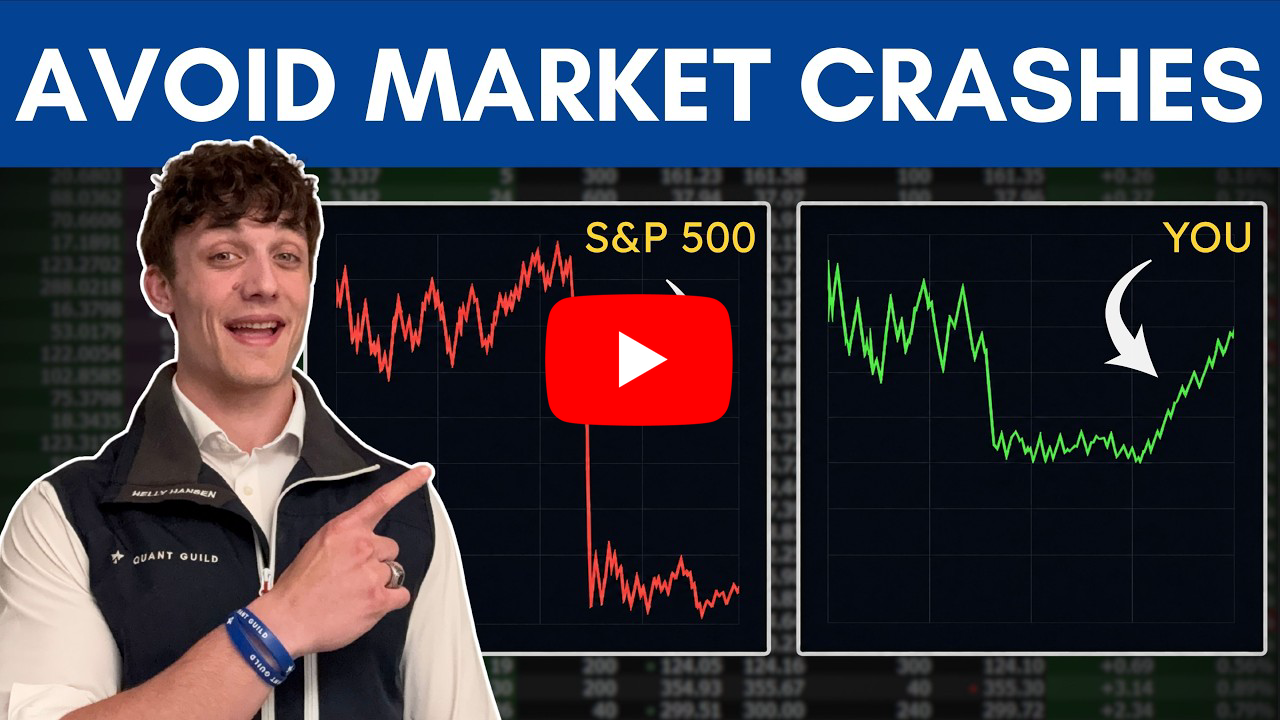
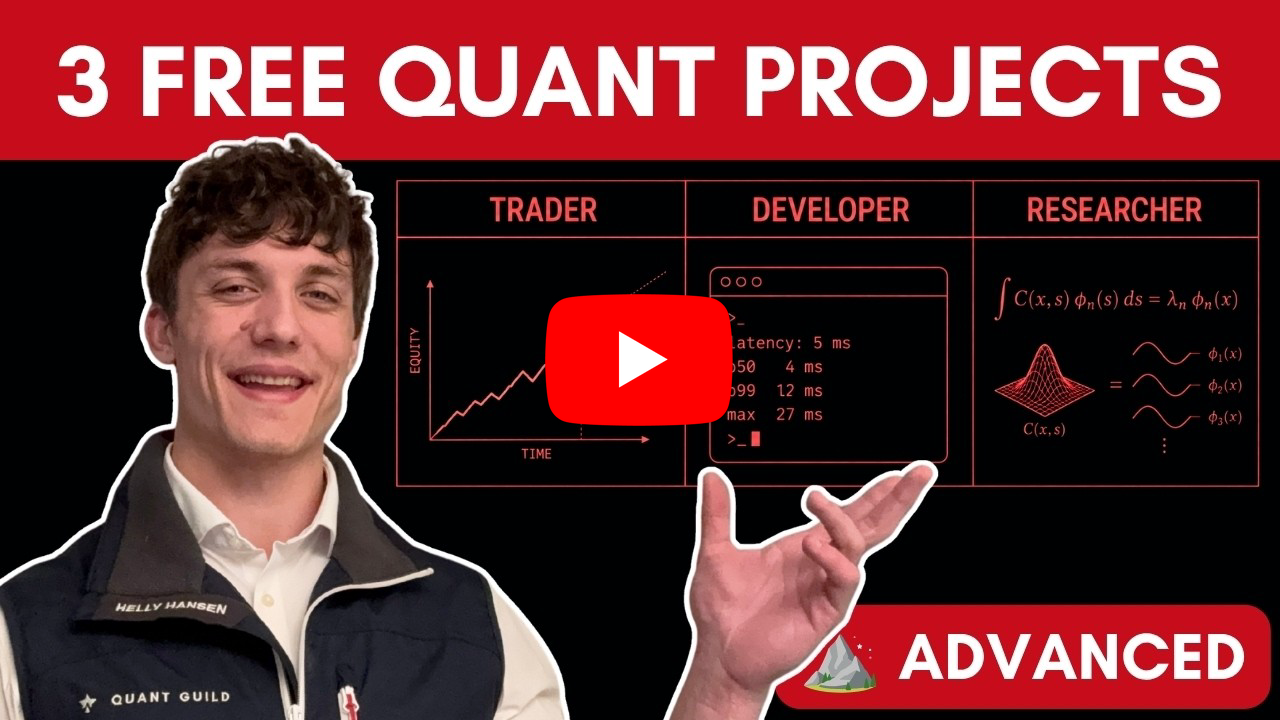
| | | 🏕️ Risk is Always Mispriced | In this video I argue that risk is always mispriced because no one truly knows the future. Every investment decision ultimately comes down to allocating capital under uncertainty, and the quality of that decision depends on how well you understand the underlying sources of risk, not how well you can backtest or extrapolate the past. I explain why experienced investors develop an edge through depth rather than breadth. Instead of relying on charts or market consensus, they study businesses, industries, and the fundamental drivers of cash flows to identify opportunities where the market has misjudged risk. Here's a link to the full video 👇 | | | | | 🎲 Arithmetic and Geometric Brownian Motion Masterclass | In this video I provide a free and complete masterclass on arithmetic and geometric Brownian motion, the two foundational stochastic processes that underpin much of quantitative finance and modern derivatives pricing. I build the intuition visually before deriving each process from first principles, solving the stochastic differential equations, and connecting the mathematics back to simulation. I explain the key distinction between additive and multiplicative dynamics, why arithmetic Brownian motion produces normally distributed asset prices while geometric Brownian motion produces lognormally distributed prices, and how concepts like volatility drag, compound growth, and asymptotic convergence naturally emerge from the mathematics. Here's a link to the full video 👇 | | | | | 💻 How Volatility Drag Destroys (and Creates) Wealth | In this video I explain why volatility drag is the hidden force that determines how efficiently your portfolio compounds over time. While higher expected returns may look attractive on paper, excessive volatility erodes geometric growth, making long-term wealth creation far less reliable than most investors realize. I also explore why volatility drag is not inherently bad. Professional investors may willingly accept it when pursuing rare, high-conviction opportunities, but for most investors, reducing volatility through diversification, hedging, and disciplined portfolio construction leads to a much higher probability of long-term success. Here's a link to the full video 👇 | | | | | 🧮 How to Derive the Black-Scholes Equation | In this video I derive the Black Scholes equation from first principles, showing how one of the most influential models in quantitative finance emerges from a simple hedging argument. Starting with the assumption that the underlying asset follows geometric Brownian motion, I apply Itô's lemma, construct a delta hedged portfolio, and eliminate all sources of randomness. The key insight is that once risk has been perfectly hedged, the resulting portfolio must earn the risk free rate, transforming a stochastic differential equation into a deterministic partial differential equation. That PDE is the Black Scholes equation, whose solution gives the fair value of European options. Here's a link to the full video 👇 | | | | | 📉 How to Protect your Stock Portfolio from Market Crashes | In this video I explain why traditional stock diversification often fails during market crashes. While individual companies may appear uncorrelated in normal markets, they become increasingly correlated during periods of stress because they share the same underlying sources of systematic risk. I then introduce the idea of portfolio insurance using long put options. Rather than trying to predict market crashes, the objective is to hedge against them, monetize the convex payoff during severe drawdowns, and use that liquidity to reinvest when assets are deeply discounted. Here's a link to the full video 👇 | | | | | 🛠️ Projects to Help you Become a Quant (Advanced) | In this video I outline three advanced projects that I believe best prepare you for a career in quantitative finance. Rather than building projects for a résumé, the goal is to use them as vehicles for learning, forcing yourself to acquire the mathematical, financial, and engineering skills required to solve real problems. I walk through an algorithmic trading system for understanding portfolio construction and risk allocation, a derivatives pricing library that explores modern topics like rough volatility and path signatures, and a latency optimization lab focused on improving the performance of numerical algorithms using tools like NumPy, Cython, and Numba. Here's a link to the full video 👇 | | |
|
|
|---|
|
| | 🧮 Quant Model of the Week |
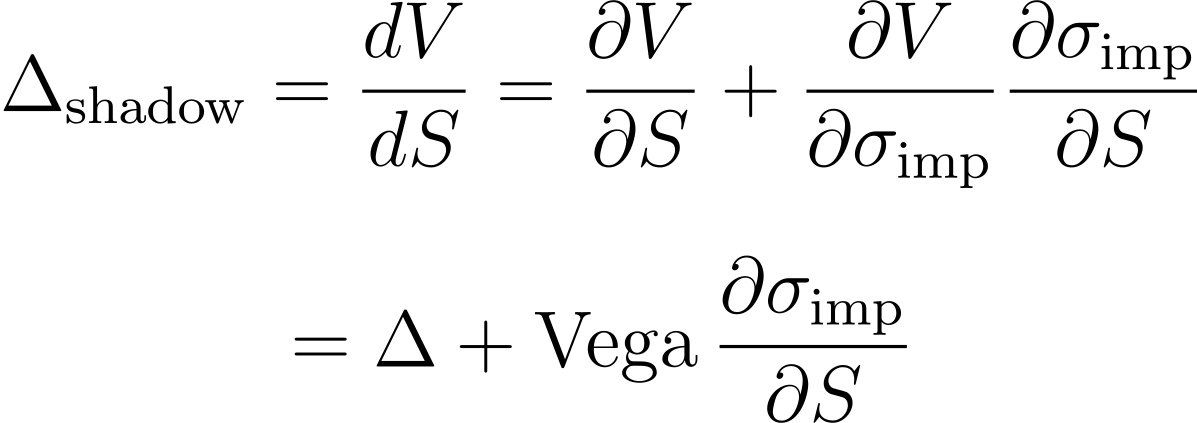
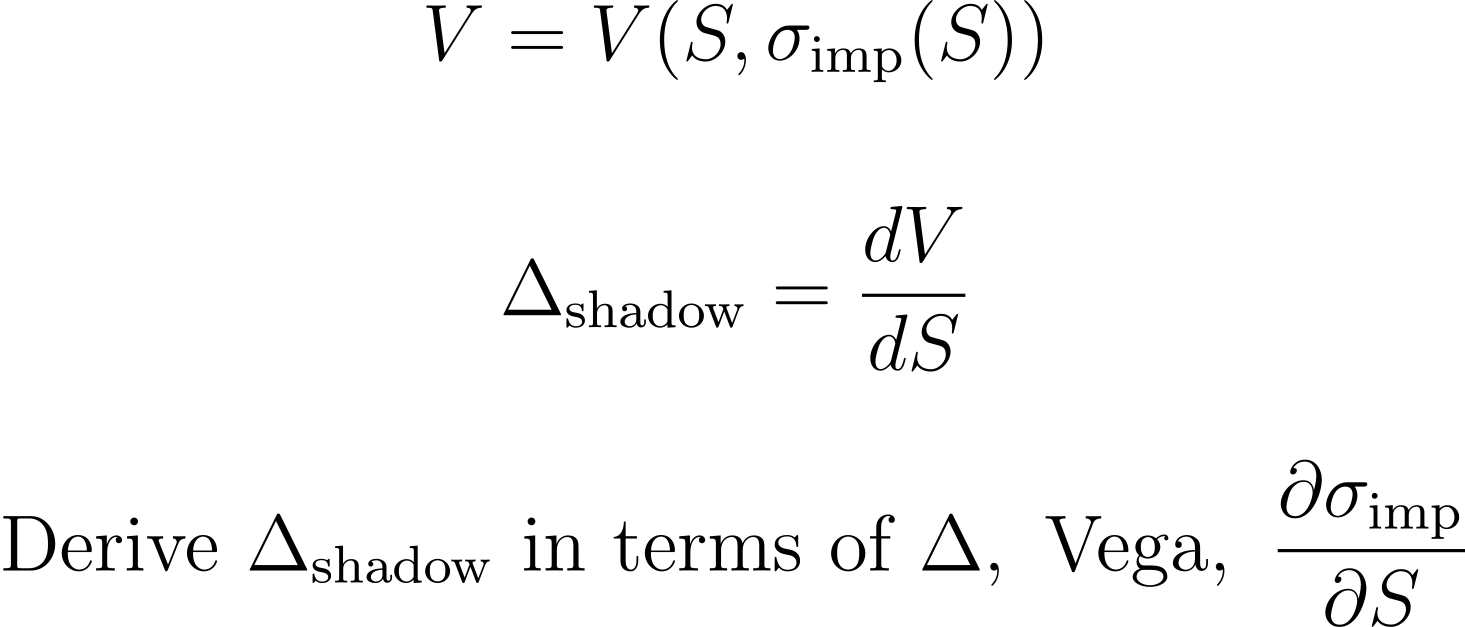
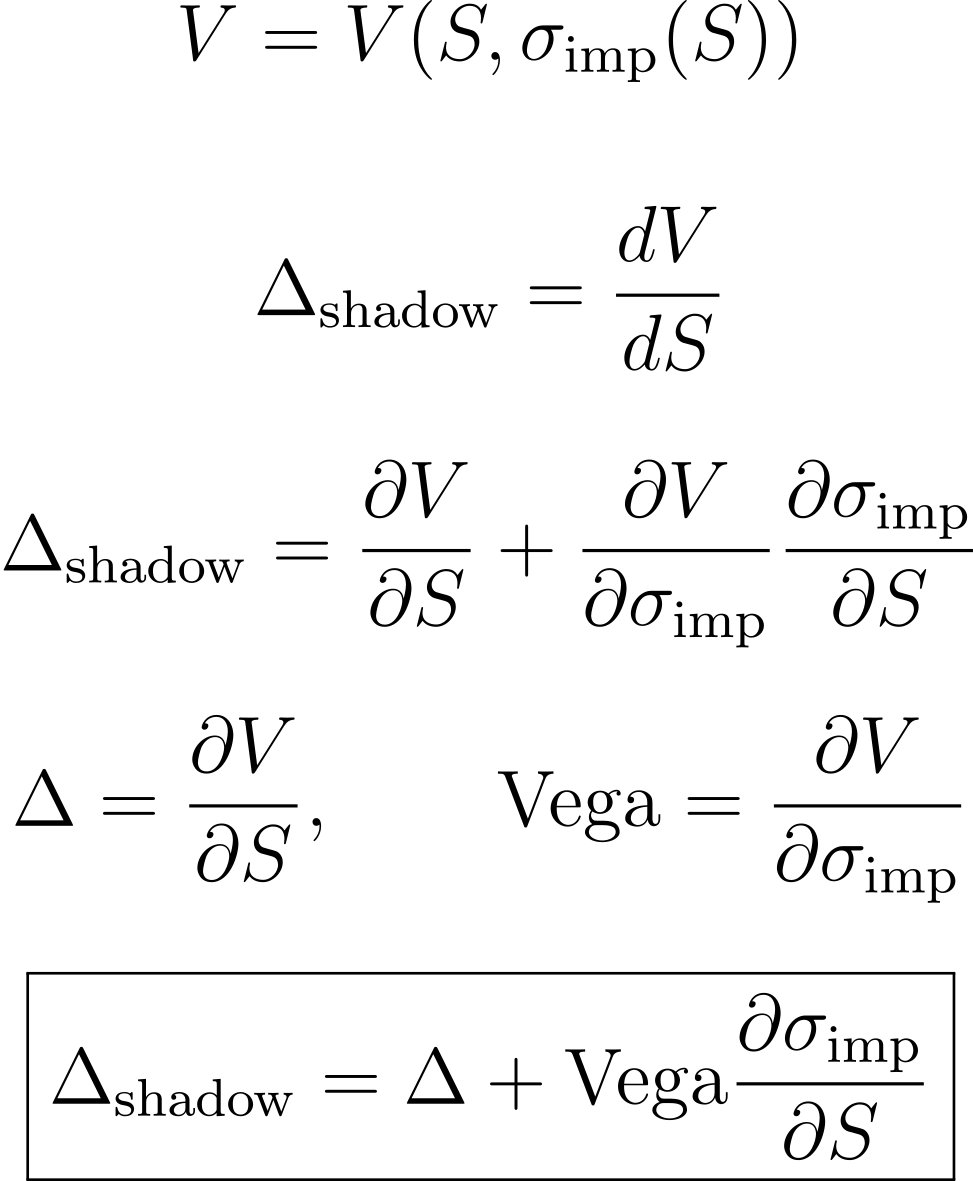
| | | | | Black–Scholes assumes volatility is fixed. Real markets do not. When the underlying moves, the implied volatility surface moves with it. Skews steepen, smiles shift, and volatility itself reprices as market participants adjust their expectations. A standard Greek assumes this surface is frozen, often understating real exposure. Shadow Greeks account for this reality. Rather than measuring sensitivity on a static volatility surface, they incorporate the expected movement of the surface itself, producing hedges that better reflect how options behave in actual markets. | 📚 Model Definition | Let's take a look at this idea of the shadow greeks using shadow delta... | | | Shadow Delta, for example, extends the traditional delta by recognizing that implied volatility is itself a function of the underlying price. The first term is the familiar Delta, measuring the direct change in the option value as the underlying moves while holding implied volatility fixed. This is the standard Black–Scholes sensitivity. The second term introduces reality. As the underlying price changes, the implied volatility surface moves as well. The option's Vega measures its sensitivity to those volatility changes, while the quantity ∂σᵢₘₚ/∂S captures how the implied volatility surface shifts as the underlying moves. The result is a total sensitivity that includes both effects: the direct impact of the price move and the indirect impact of the changing volatility surface. In other words, Shadow Delta replaces the unrealistic assumption of a frozen volatility surface with a more realistic one: markets reprice volatility as prices move, and your hedge should account for both. | 📈 Model Applications | In practice, Shadow Greeks are used on options trading desks to hedge portfolios in a way that reflects how markets actually move. Rather than assuming implied volatility is fixed, traders account for the fact that the volatility surface shifts as the underlying price changes. A sell-off may lift implied volatility, steepen the skew, and alter an option's effective delta long before a standard Black–Scholes hedge would recognize it. This is particularly important for equity index options, exotics, and large books with significant vega exposure, where changes in the volatility surface can contribute as much to P&L as the underlying price move itself. The result is more realistic hedging. Shadow Greeks help traders anticipate the combined effects of price movements and volatility repricing, reducing hedge slippage and producing risk measures that better match the exposures experienced on real trading desks. | 🎓 A Little Story | The first time I heard about charm my brain immediately went back to a video game I played growing up where you could equip your character with charms that gave you little buffs—more strength, more defense, better abilities. They didn't change the character fundamentally; they just made them better suited for the fight. And then it hit me, what a fun connection. That is basically what we are doing to the Greeks. Black–Scholes gives us the base character. Delta, gamma, vega—they are all computed under a beautifully clean but unrealistic world. Shadow Greeks, charm, and the higher-order Greeks are the buffs. They acknowledge that markets are messier than the model and adjust the sensitivities to better reflect reality. I always found that analogy a nostalgic throwback to simpler times. We're not throwing away the original Greeks. We're just equipping them with a few charms so they survive in the real world a little better. | 💡 Takeaway | Shadow Greeks are a reminder that models should evolve with the markets they are trying to describe. Classical Greeks assume a frozen volatility surface. Real markets reprice volatility continuously as the underlying moves. By incorporating those dynamics, Shadow Greeks produce sensitivities that are closer to the risks traders actually hedge. The broader lesson is simple: the best models are not always those with the cleanest mathematics. They are the ones that acknowledge how markets really behave. | | | 🏆 Quant Question of the Week |
| Solution at the Bottom of this Email 👇 |
| | | | | Need to study up on topics in math, probability, and finance? 👉 Learn to solve problems like this on Quant Guild — the platform I wish I had when I was studying to become a quant. |
|
|
|---|
| | I'm in QR preparing for technical interviews and your practice helped me brush up on probability, thanks | | |
| | |
|
| | | I learned more here in two days than an entire semester of college | | |
| - Guy on Discord Who DM'd Me |
|
|
|
|---|
|
| | ✅ Quant Question of the Week |
| | | | | | | | |
|
|
|---|
|

 Roman Paolucci