 | | 📜 A Note from the Guild Leader |
| | Everything is a bet, everything. Bets are only as good as the information you have. You have perfect information about yourself, literally nobody can bet on you in the same way you can bet on yourself. I'll use myself herein as an example. I'll reveal a lot of my struggles, and how I got to where I am now. This isn't motivation, it's math. | | 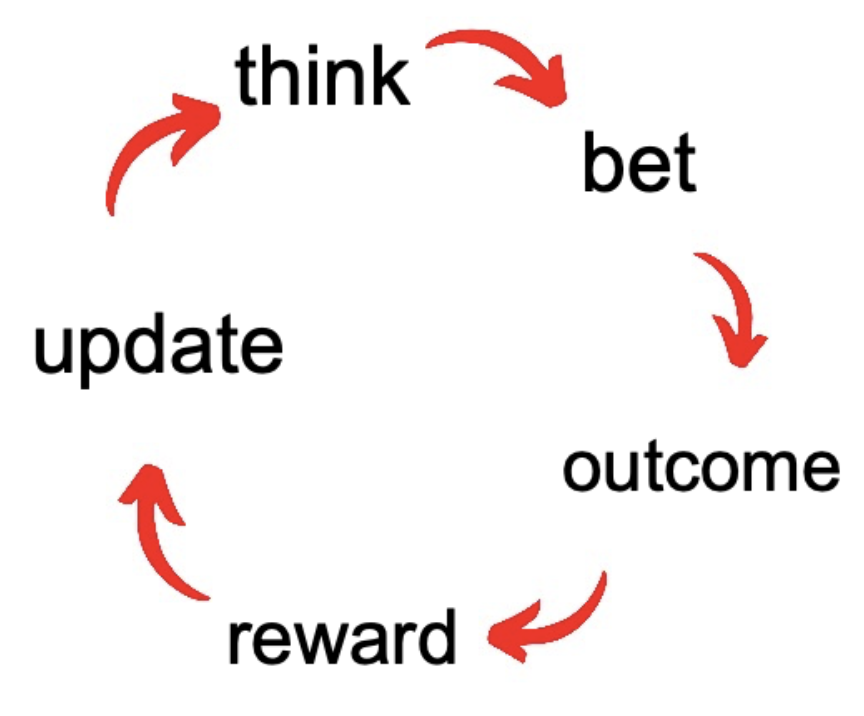 | | Roman, why aren't you an industry quant, why bother found Quant Guild. I've gotten thousands of flavors of that over the years. I'm an extremely risk averse person, why would I leave a high paying job in the industry (twice) to go out on my own and risk complete failure? I know something that everyone else doesn't. Egotistical? No. A game of incomplete information, and I had more than everyone else. | | When I was young I received some of the worst unsolicited advice in my life from bosses, mentors, and friends. There was no ChatGPT, there were relationships with people (and Google). Every decision I made as a young man was a bet conditioned on my information and their noise. The decisions to make were far from trivial. I've recently begun to classify this as the snow globe effect in my mind. That is, when I know the right decision to make but it's polluted by the noise of others. Here's some of the words of my old bosses, mentors, girlfriend, and friends: Roman, you'll never hold a job if you can't learn to get along with disrespectful colleagues or clients, they are in every workplace. Roman, you'll never find another job if you leave here, do you know what the market looks like? You would do that to me and our future kids? Look at the life you can give me and them, you would risk all of that? Roman, you really think you can run a business? What could you possibly build that hasn't been built before? Real conversations with people that "had my back"... Clearly there's a problem here, right? I know the cards that I'm holding and they don't. They folded before the flop and now they're the peanut gallery. Doesn't make it any less painful, these are people I placed a tremendous amount of trust in, but it's learned experience, you have to stand on your own. Having people in your corner is wonderful. Friends, family, it's a better part of life. But don't think for one second they exist to play your hand with or for you. | | I've recently read Annie Duke's Thinking in Bets, a great read that fits into my model of the world (agents in an environment with policy and reward functions driving one realization of an n-dimensional system of stochastic differential equations) But I'll prioritize the former here. Every decision is a bet on an expected reward. If we knew the outcome of every decision deterministically, there would be no point in doing anything. For example, do I quit my job and start a business is a decision, that decision is a bet on an expected reward. The reward doesn't have to be monetary, it can be time, a better environment, better colleagues, the list goes on. The book aligns well with the broader statistical notion of Bayesian updating. In other words, to make better decisions you have to make a lot of good decisions and realize a lot of bad outcomes. It's the only way to learn. You never intentionally make a bade decision. You do not control the outcome. Implicitly, we are updating our parameter estimates (at least, in our heads) every time we experience anything, any outcome, all the way from success to failure. But there's a catch, it's difficult to separate signal and noise contributing to the decision making process and the outcomes that are realized. Was it a bad decision? Or was it just an unlucky outcome? It's possible you made a great decision, and the outcome was unlucky. It's possible you made a terrible decision and the outcome was lucky. You never have the probabilities, and you can never know for sure. Sounds fun? Exactly. | | Real World Example of Thinking in Bets: I quit my job as the youngest quantitative researcher at Bloomberg. I didn't like the bets I was forced to take as an employee, I believed I had better information. I made a bet on myself to start a business at 21 years old. I was the gunslinging quarterback, nobody wanted me to leave the desk, nobody thought I could make it out there on my own. They were right, but purely incidentally. I made a good decision, with an unlucky outcome. One month into running Quant Guild after quitting my job as a quant I made $1,017. I could not afford rent, I could not afford a car, I could not afford anything. People love to hate me for selling my pre-packaged educational resources online, but I am, to this day, not a rich man. I refuse to defraud my audience and sell trading advice, the haters say I deserve to die in poverty for what I do (thanks Reddit). I say I exist for my own sake and those that value my work. That is all. In any case, I was scared. So what did I do one month into not being able to pay the bills? I quit Quant Guild. They were right after all, I couldn't make it on my own. Now that, was my only terrible decision. Not just yielding more terrible outcomes, but the decision itself was ill founded. I thought I was acting optimally at the time sure, but it was out of fear, and fear is one hell of a drug. Instead of looking at it as creating $1,017 from nothing, I looked at everything I couldn't pay for. I looked at it as if that was the best it could ever be. Quitting there objectively was one of the worst decisions I've ever made. I needed something fast, I had nothing. I got a job as a research assistant in Tennessee on a Ph.D. track making ~$20k. What a pay cut from my time as a quant. And guess what happened? I was right back to where I started, forced to take bets as an employee living in a dirt cheap apartment in Tennessee. I was losing my mind, this time living in poverty, I still believed I had better information, I made another bet. I quit my job, again, and was planning to get a masters degree from Columbia. I had been admitted into their Financial Engineering program where they kindly informed me I could pay them roughly $100k USD...great. I couldn't afford a program like that. I got a job as a high school teacher to pay the bills, including my tuition, as I began to work through my masters degree. I could only afford one class a semester so I was planning to complete it in roughly three or four years. I'd work all day and go to school all night. Man people loved to watch me suffer, the fall of the mighty Roman. Quant, to Ph.D. student, to high school teacher and masters student. Friends, girlfriends, bosses, mentors, loved it. They told me. Then guess what? Radio silence from them for years and when I hit 50k subscribers on YouTube one by one I get LinkedIn messages, emails, texts... "Hey how's it going man?!" "Hey, can we meet up and talk?" Who's going to stand up for you? Stand up for yourself. I want to tell these people to go fuck themselves, it's "that's not nice Roman you shouldn't say that". Well I'm not trying to be nice, they can go fuck themselves. The world will take everything from you if you let it. Nobody will stand up for you in the way you need or deserve other than yourself. They'll laugh at you on the floor building the table they'll ask for a seat at. Why do we preach altruism to our children in schools? It's vile. Bullies bully, good kids get rolled over, it's a tale as old as time. Then the good kid has the courage to take a swing at the bully and he's at fault? He get's suspended? Are you fucking kidding me? Don't think for a second we don't bring that to adulthood, that's Freudian shit right there. How many people avoid confrontation like the plague but deserve to stand up for themselves? A tale as old as time, and it starts young. We should be teaching the famous words of James Dalton... "You're gonna be nice, until it's time not to be nice" | | Two years into my high school teaching experience I couldn't take it anymore. My colleagues were violently inappropriate, yelling at me in the office, fat ugly women making sexual remarks toward me, and I took all of it on the chin. Some of the most miserable human beings I've met in my entire life. Don't be mean Roman. Don't bring it up to HR again Roman. So I did the unthinkable. I made another bet. I acknowledged that when I left it all the first time the only reason I failed was because I quit. I figured if I never stopped I could never fail, so this time I was leaving everything for good. No quant job. No Ph.D. No masters degree from an Ivy League school. Just me, teaching as much Quant Finance as I possibly can. Fast forward, I've been standing on my own for roughly 1.5 years. This is not a sob story, or a story of victory, this is evidence. Evidence that my framework for the world is correct as I write to you today. Do with it whatever you want, use it if it's useful, use it to double down on how much you hate me, I do not care. I've given you all my insecurities, my actions, that was me trying my best this is me trying my best. People continue to take and twist everything I say to try to harm me to the best words can accomplish, but it doesn't work anymore. There's only one person on this planet I will listen to. You know who sat with me crying in my NYC apartment, broke, while I dragged my mattress out and strapped it to the roof of my car? Myself. You know who sat there crying with me when my girlfriend said I'll never be enough for her? Myself. You know who sat with me crying in my TN apartment, broke, while I dragged my mattress out and strapped it to the roof of my car (again)? Myself. I learned that every decision I made was conditioned on the noise of the world. I learned that I was right the first time. Good decision. Unlucky outcome. A quant? A Ph.D.? A masters degree from Columbia University? All arbitrarily good by society's standards, but not mine, the only standards that actually matter. Roman? He's egotistical, a laughing stock, a loser, cringe. No. He's free. Free from everything and everyone. He supports and is supported by his community alone. Don't like me or my story? Well it's my story, and I don't need you. I exist only for a community that wants to learn of my story and works. A captive community holds no value, one that has every opportunity to leave but chooses to stay? One where both parties are trying their absolute best? Now those are people that have each others back. I reveal what's behind the curtain to give you more information and less noise. I am not a YouTube guru, I hold no tremendous wealth. I sell no $15,000 high ticket coaching program. I fight to the death to survive...teaching math, trading and investing on my own. I am playing heads up poker here. You can infer the probabilities for yourself. But I wouldn't bet against me or the Quant Guild community. Past performance isn't indicative of future performance, but the odds are not in your favor. | | With that I will leave you to the Weekly Guild Letter. I hope you enjoy, and I hope you learn something! - Roman | |
|
|
|---|
|
📅 Quant Guild Week in Review |
| Quant Resumes and Making a Market on a 1 Mile Run |
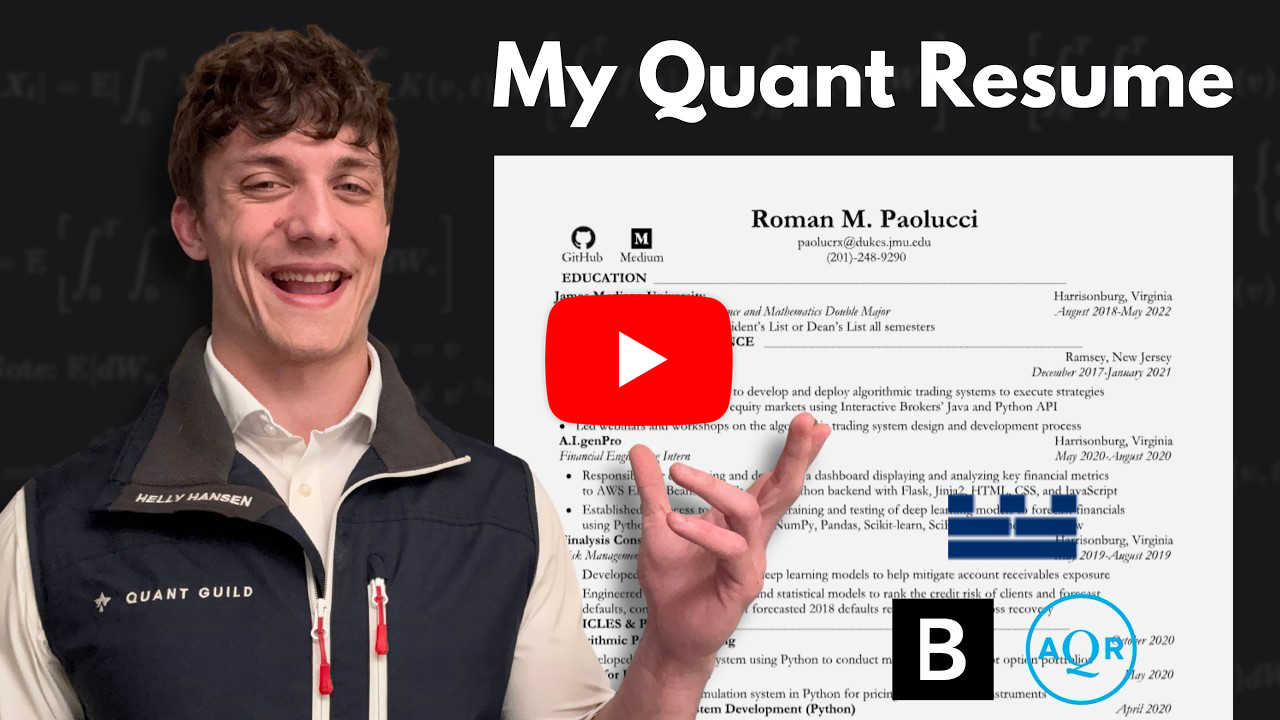
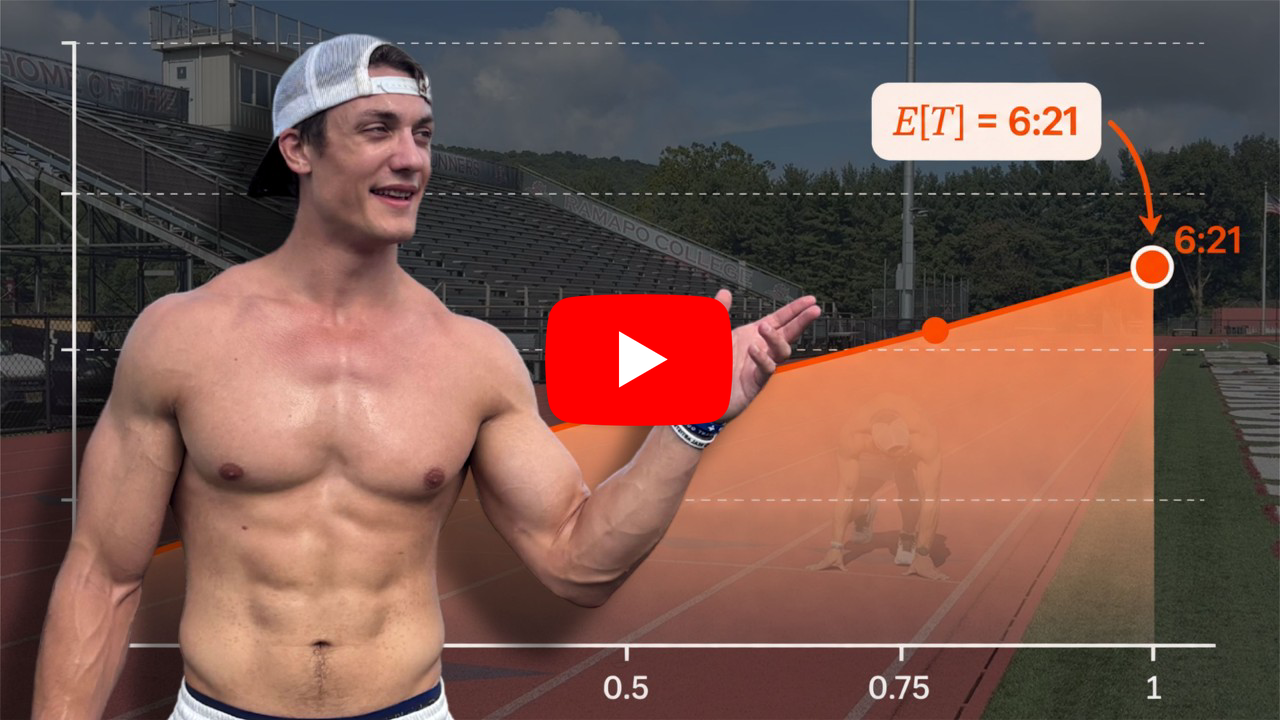
| | 🎲 The Resume The Got Me a Quant Job Without a Bachelor's Degree | In this video I break down the resume that helped me land my first quantitative research role and explain the philosophy behind building a resume that actually drives meaningful interview conversations. Rather than treating a resume as a checklist of credentials, I view it as a roadmap that highlights the projects, research, and experiences I want to discuss with hiring managers. I walk through each section of the resume, explaining why I emphasized technical writing, open source projects, algorithmic trading, and research over traditional internships or certifications. I also discuss how my resume evolved after working in industry and how I would structure it differently for today's job market. Here's a link to the full video 👇 | | | 📊 Quant Makes a Market on His 1 Mile Run | In this video I use my one mile run to demonstrate how market making actually works. Using historical running data, I estimate the fair value of my finishing time, incorporate relevant information to improve that estimate, and quote a bid and ask price around it, effectively acting as the market maker. After running the mile, I calculate the resulting P&L for both buyers and sellers. Even though my prediction was accurate, both traders lose because of the bid ask spread, while the market maker earns the spread for providing liquidity. Here's a link to the full video 👇 | | |
|
|
|---|
🧮 Quant Model of the Week |
| | | Pricing an option is only half the problem. The other half is deciding how to hedge it. Classical models derive optimal hedging strategies analytically under idealized assumptions. Real markets are noisier. Transaction costs exist, volatility changes, and perfect replication is impossible. Reinforcement learning approaches the problem differently. Rather than prescribing the hedge from a mathematical model, it learns a policy through experience, repeatedly interacting with a simulated market and improving its decisions over time. At the heart of this framework is the policy function. Given the current state of the market, it determines the action the agent should take, how much to buy, sell, or hedge. Instead of solving for the hedge directly, the agent learns it by maximizing long-run performance. | | 📚 Model Definition | Let's observe the structure of a policy function... | | A policy function tells the agent what action to take in a given market state. The state, s, represents everything the agent currently knows, such as the underlying price, implied volatility, time to maturity, inventory, or any other information included in the environment. The action, a, is the decision the agent makes. In a hedging problem, this might be how many shares to buy or sell, how to rebalance the portfolio, or whether to leave the hedge unchanged. The policy, π(a | s), assigns a probability of taking action a when the system is in state s. Rather than hard-coding a hedging rule, the agent learns this mapping from experience, gradually improving its decisions as it interacts with the market. | | 📈 Model Applications | In practice, policy functions are used to learn optimal decision rules in environments where analytical solutions are difficult or impossible to derive. In quantitative finance, they have become particularly important for dynamic hedging. Rather than following a fixed replication strategy, a reinforcement learning agent learns how to rebalance a portfolio while accounting for transaction costs, market impact, and other real-world frictions. This idea has been championed by Hans Buehler and collaborators through Deep Hedging, where neural networks learn hedging policies directly from simulated market interactions. Instead of optimizing a single hedge at each instant, the agent learns an entire decision-making strategy that adapts as market conditions evolve. | | 🎓 A Little Story | I've said this before, but since it's relevant once again, one of the cooler moments of my career was seeing Hans Buehler present at the Bachelier Conference. I remember sitting there thinking, this is the guy behind Deep Hedging. At the time he was at JPMorgan, and Robert Merton was there as well. It was a pretty surreal reminder that quantitative finance is constantly evolving, from the pioneers who built the theory to the researchers pushing the next generation of ideas. | | 💡Takeaway | Policy functions are a reminder that not every optimal strategy has to be derived. Classical finance begins with a model and solves for the hedge. Reinforcement learning begins with experience and learns the hedge. Both seek the same goal, but from opposite directions. | | 🏆 Quant Question of the Week |
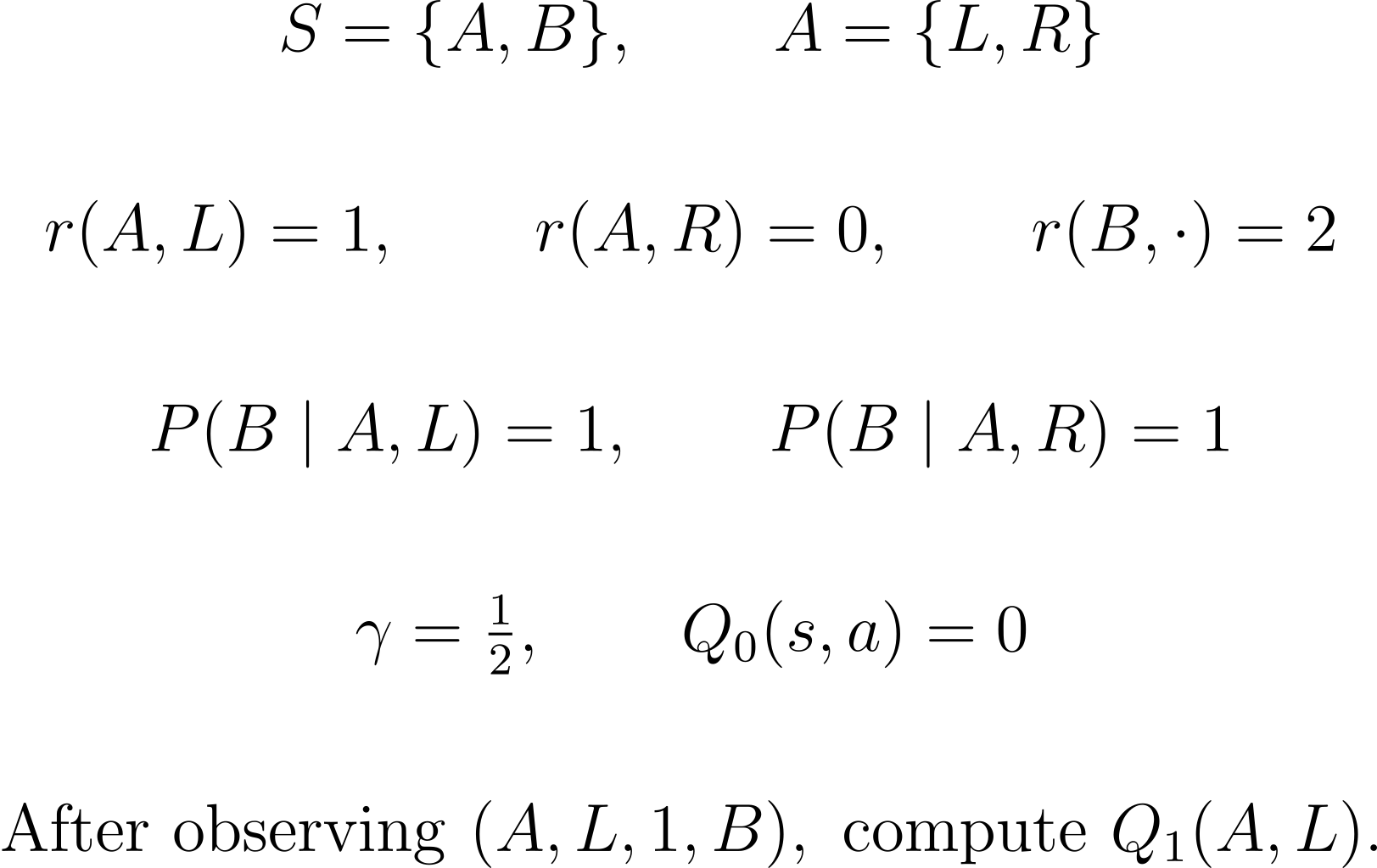
| Solution at the Bottom of this Email 👇 |
| | | Need to study up on topics in math, probability, and finance? 👉 Learn to solve problems like this on Quant Guild — the platform I wish I had when I was studying to become a quant. |
|
|
|---|
| I'm in QR preparing for interviews and your practice helped me brush up on probability, thanks | | |
| |
|
| | I learned more here in two days than an entire semester of college | | |
| - Guy on Discord Who DM'd Me |
|
|
|
|---|
|
| ✅ Quant Question of the Week |
| | | | |
|
|
|---|
|

 Roman Paolucci