 | | 📜 A Note from the Guild Leader |
| | Hey pal, if you're reading this, you should've gone for the head. |
| |  | | | Life is a game of managing unhedgable tail risk. The market attempts to price what is fundamentally unknown, and we live with the consequences regardless of pricing efficacy. We exist in the 99.99% of the time, what is comfortable and expected, but the 00.01% unforeseen event can dictate, forward looking, what the 99.99% of the time looks like. We can't live in fear of tail events that we can't hedge, so what should we do? This past week a moderator I've known for quite some time decided he hated me enough to betray my trust. He deleted 6 years of channels, threads, tens of thousands of posts, papers, drafts, code, images, conversations - not just my own, but thousands of Quant Guild members'... On the way out he created a thread to slander me and my dying dog who I could not afford surgery for. A classy move. I have shed my tears over this, and my formal stance is that I forgive him for the damage he did to me (I can not speak to the damage he did to thousands of people), hatred is not my cross to bear. He may have even already joined the server again under an alt-account, I will never know. But one thing is for certain, with newfound awareness of tail risk to hedge, this will never happen again. I've been asked how I press on with this degree of betrayal and slander. This is my response: Peace be a lottery to the man seeking the outcome at the expense of the experience. The experience is a cost paid upfront to his measure of success. But the man that desires only the experience? That is a man unburdened by the world who can watch his castle burn eagerly knowing the experience that awaits him atop the ashes. My garden will be more plentiful than he could have ever hoped to destroy. | | With that I will leave you to the Weekly Guild Letter. I hope you enjoy, and I hope you learn something! - Roman | |
|
|
|---|
|
📅 Quant Guild Week in Review |
| Market Neutral Strategies and the Discord Event |
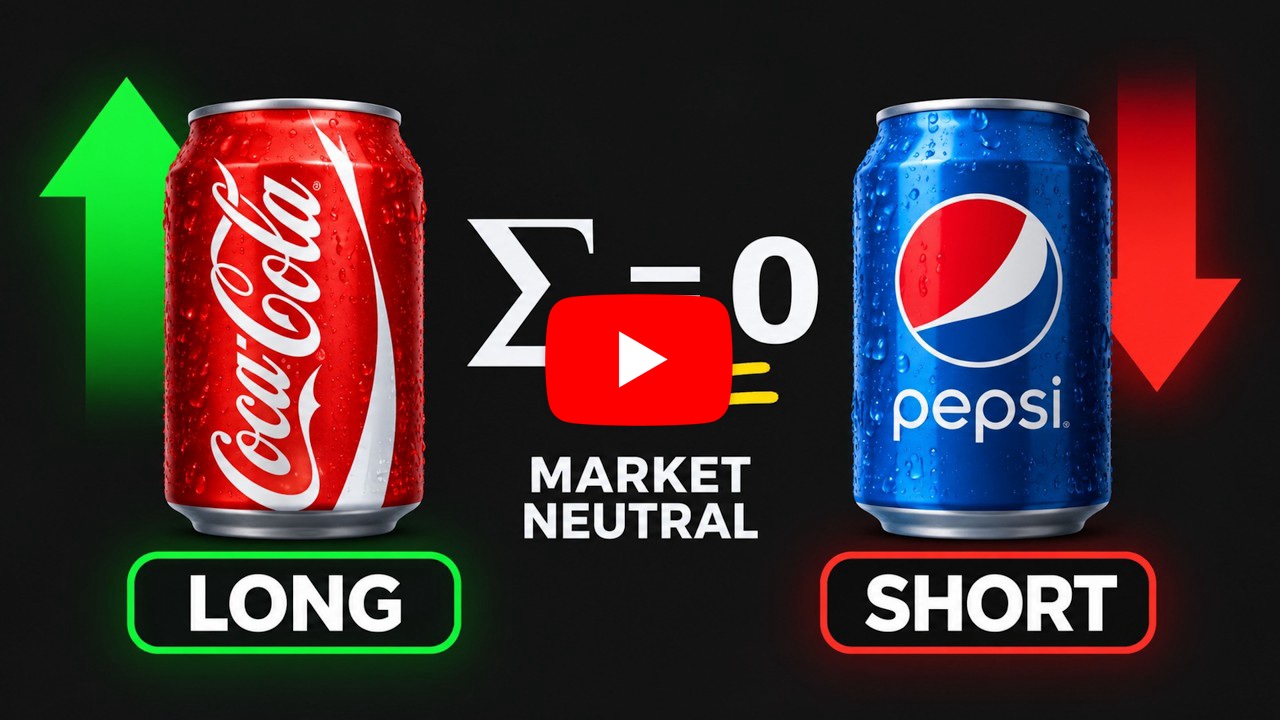
| | 🎲 Market Neutral Trading Strategies | In this video I explain the mathematics behind market neutral long short strategies by connecting concepts like diversification, factor models, principal component analysis, and CAPM into a single quantitative framework. Rather than simply defining these ideas, I show how they are used to isolate specific sources of return while hedging away unwanted market exposure. I demonstrate how systematic and idiosyncratic risk emerge in portfolios, why principal component analysis naturally identifies the dominant market factor, and how beta can be estimated and neutralized to construct portfolios whose performance depends on the trading signal rather than the overall direction of the market. Here's a link to the full video 👇 | | | 📊 6 Years of Data, POOF, Gone. | In this video I reflect on losing six years of community data after a trusted moderator deleted my Discord server, using the experience to discuss resilience, trust, and the challenges of building an online community. Rather than focusing on the loss itself, I explain how the incident changed the way I think about security, leadership, and protecting what I have built. I also share why I continue teaching despite criticism and setbacks, emphasizing that Quant Guild has always been driven by a passion for mathematics rather than financial gain. While rebuilding the community will take time, I argue that meaningful work is worth defending, even when it comes with unexpected adversity. Here's a link to the full video 👇 | | |
|
|
|---|
🧮 Quant Model of the Week |
| Variational Autoencoders (VAEs) |
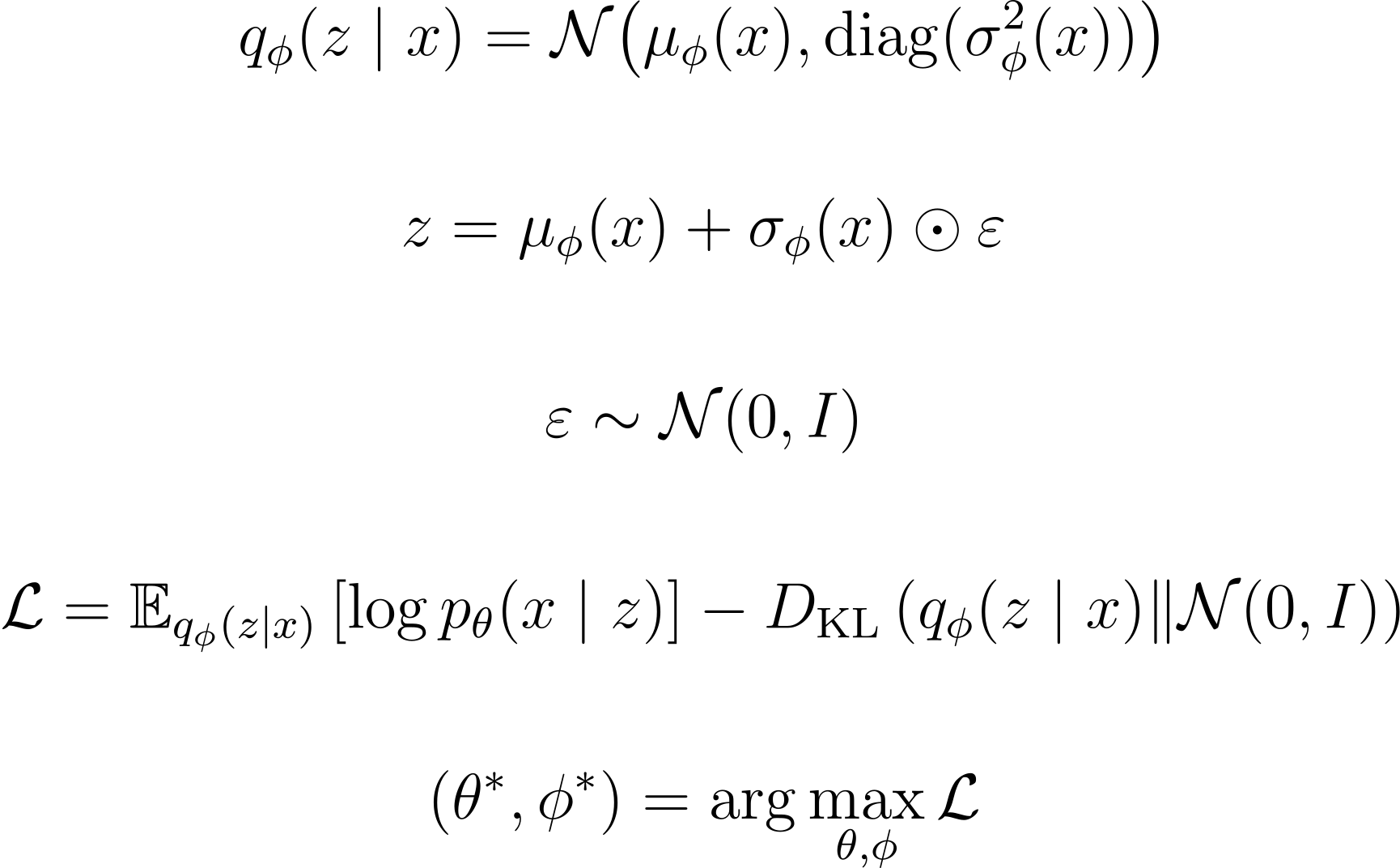
| | Variational Autoencoders are about learning the hidden structure behind complex data. Traditional dimensionality reduction methods compress observations into a smaller set of features, this goes for deterministic autoencoders as well which are typically referred to as non-linear PCA. Variational Autoencoders (VAEs) go further. They learn a probabilistic latent space where similar observations are represented by nearby hidden variables, while still allowing new observations to be generated from that space. | | 📚 Model Definition | Let's observe the structure of a VAE... | | A Variational Autoencoder learns to compress complex data into a simpler probabilistic latent space and then reconstruct the original data from that representation. The encoder takes an observation and maps it to a probability distribution in the latent space. Instead of assigning each observation to one fixed point, it learns a mean and uncertainty around where that observation should live. We then sample from that distribution by introducing standard Gaussian noise. This is known as the reparameterization trick, and it allows randomness to enter the model while still letting the neural network be trained with gradient descent. The objective balances two competing goals. The reconstruction term encourages the decoder to reproduce the original data accurately from the latent variables. The KL divergence term regularizes the latent space, encouraging its distribution to remain close to a standard normal distribution. The encoder and decoder are then trained together to maximize this objective. The VAE is learning more than compression. It is trying to construct a smooth, structured, probabilistic latent space that captures the important features of the data while remaining organized enough to sample from and generate new observations. | | 📈 Model Applications | In quantitative finance, VAEs are useful whenever we have high-dimensional market data that may be driven by a much smaller number of hidden factors. One natural application is volatility surface modeling. Instead of describing an entire surface using hundreds of individual option quotes, a VAE can compress it into a small latent representation capturing features such as the overall volatility level, skew, curvature, and term structure. VAEs can also be used for scenario generation. By sampling from the learned latent space and passing those samples through the decoder, we can generate new market scenarios that resemble the historical structures the model has learned. This makes them interesting for stress testing, simulation, and risk management. Another application is anomaly and regime detection. Market observations that reconstruct poorly or occupy unusual regions of the latent space may indicate abnormal conditions or changes in market structure. More broadly, VAEs provide a framework for learning latent market factors rather than specifying them by hand. Instead of assuming beforehand which variables drive markets, we allow the model to discover a compressed representation directly from the data. | | 🎓 A Little Story | I first started studying VAEs because I was fascinated by their ability to compress and reconstruct complex structures like arbitrage-free volatility surfaces. At Bloomberg, I ended up experimenting with them as a deep learning approach to fine-tune the MCA. This was before throwing deep learning at every quant problem became the cool thing to do. What stuck with me was the idea that you could take something as high-dimensional and structured as a volatility surface, compress it into a handful of latent variables, and then reconstruct it while preserving the financial structure you actually cared about. | | 💡Takeaway | VAEs are a reminder that the real objective is not simply to jam data into a smaller space. It is to learn a meaningful latent distribution. That representation is only as useful as the stability and structure of the latent space. If small movements in that space produce unstable or unrealistic outputs, the compression itself has little value. The broader lesson is that representation matters more than compression. A good latent space should capture the underlying structure of the data in a way that remains stable, interpretable, and useful when we actually move through it. | | 🏆 Quant Question of the Week |
| Solution at the Bottom of this Email 👇 |
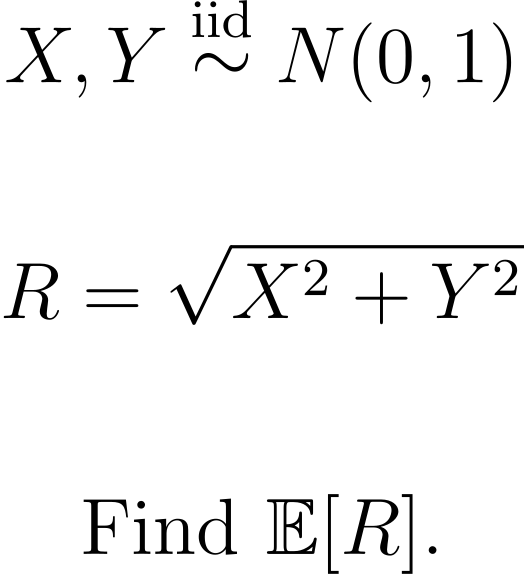
| | | Need to study up on topics in math, probability, and finance? 👉 Learn to solve problems like this on Quant Guild — the platform I wish I had when I was studying to become a quant. |
|
|
|---|
| I'm in QR preparing for interviews and your practice helped me brush up on probability, thanks | | |
| |
|
| | I learned more here in two days than an entire semester of college | | |
| - Guy on Discord Who DM'd Me |
|
|
|
|---|
|
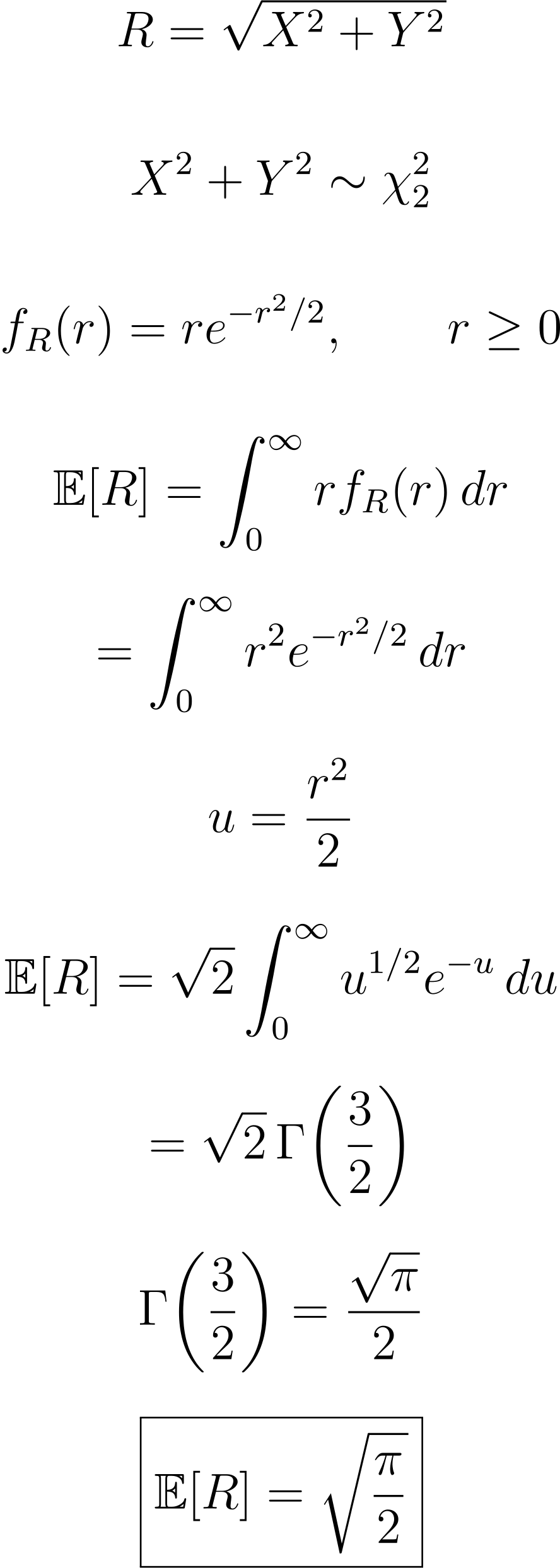
| ✅ Quant Question of the Week |
| | | | |
|
|
|---|
|

 Roman Paolucci