 | | 📜 A Note from the Guild Leader |
| | Let's discuss information compression, because it is one of the chief issues of the world. Language is means of expressing, via lossy compression, your biological state and path taken to get here. Contemporaneously, we are all a compression of our path walked to this point. In fact, words are already a compression of meaning. Anger means different things to different people unconditionally. Sometimes miscommunication stems simply from the terminology used. Other times, there are no words capable of conveying the experience. I can't experience what you have, and you neither me, do you believe a few syllables can accurately depict what you intend it to? Some turn to art, some turn to writing, others theatre, the list goes on... No wonder the world can't get along... Does it matter? Maybe. It can certainly explain what would otherwise seem like potentially erratic behavior. But what's the punchline? Understanding. Your ability to make positive EV decisions depends entirely on your understanding of the environment you operate in, just in real time. If you don't understand, how can you make good decisions? You might as well guess. If I told you to draw a time series of how you felt YTD what would it look like? Everyone's got one. But nobody can see what it looks like. Below is mine YTD. |
| | 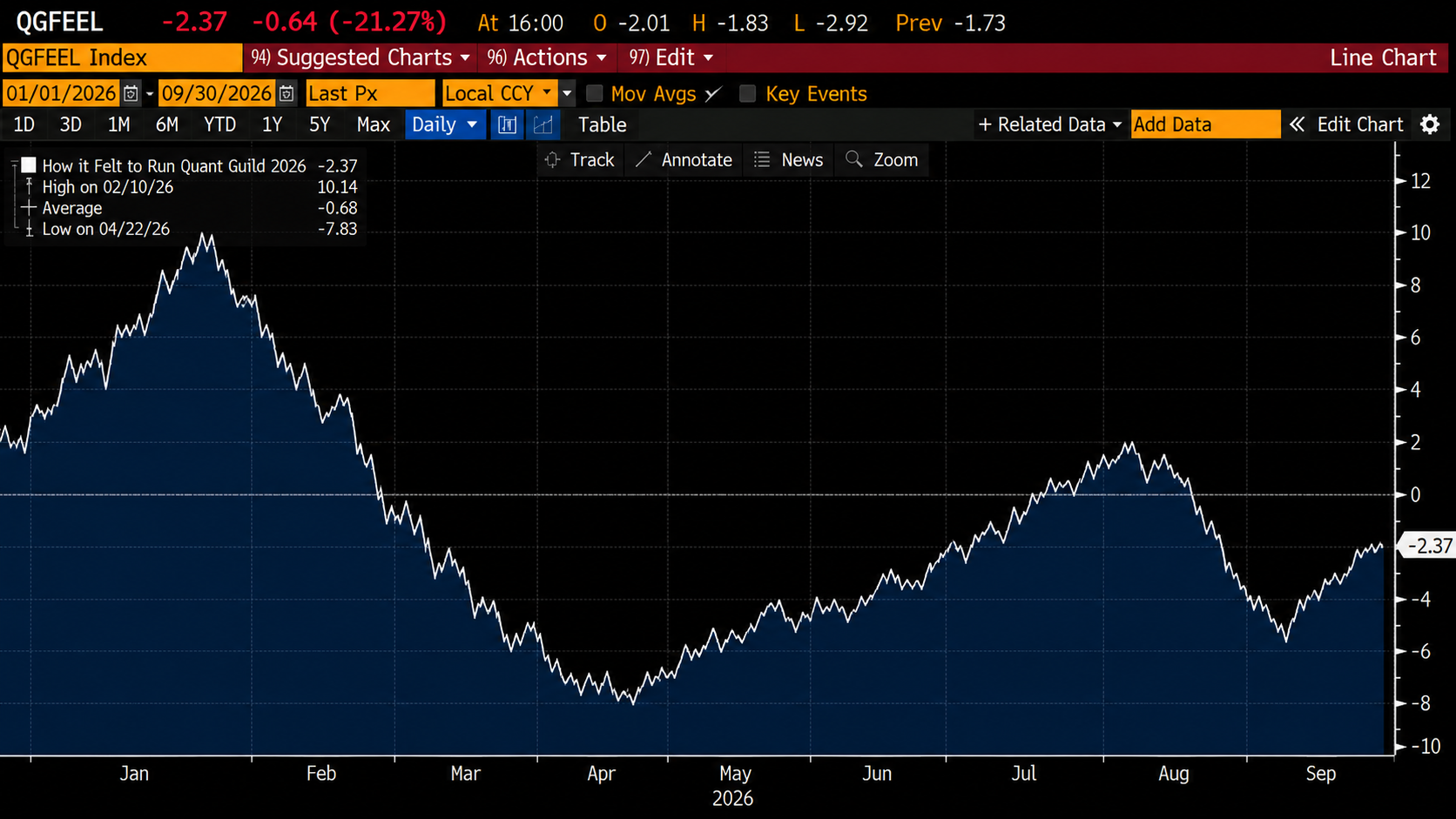 | | Your folks have one. Your siblings have one. Your aunts and uncles. Your cousins. Your kids have one. Your friends, they have one. Your boss... An interesting thought experiment that is helping me understand. I've been better, and one of the more interesting consequences of sharing so much with the world, building so much in public, is I assume that everyone has a proxy for Roman of Quant Guild and how he's doing conditionally before they speak harm toward me in writing on YouTube, X, Reddit, the likes... A bit of a why are they kicking me while I'm down? I, rather naively, didn't realize that some don't want me to get up. I assumed they understood the intent behind my creations. And how foolish of me, as someone who knows The Death of the Author. It's not mine anymore... I don't have a team, it's just me, and it's been difficult building independently. I do somewhat miss the camaraderie of mutual understanding and shared experience. Last I had that was in university, quite some time ago. You know, misery loves company and all that... So now an interesting question in this context of suffering: is it wise to share when you are well and when you are not well? You are giving ammunition to the world. Those that hate you will use any means to destroy you. It's never "cool" to care, and everyone holds their insecurities close to the vest. But I wonder what I'd like to see in the ideal Guild Leader... I'd want to see that they are human. That they have hardships. I'd want to see that they don't let those hardships destroy them. That everyday is a choice. Not a choice that is conditioned on how effectively you operated yesterday, but an opportunity to act, right now. Action in any season, right now. Whether it is peak grind time, whether things are and have been rather slow, or if it's time to prioritize survival. Progress is violently non-linear, never mistake prioritizing survival as anything other than another form of progress. | | 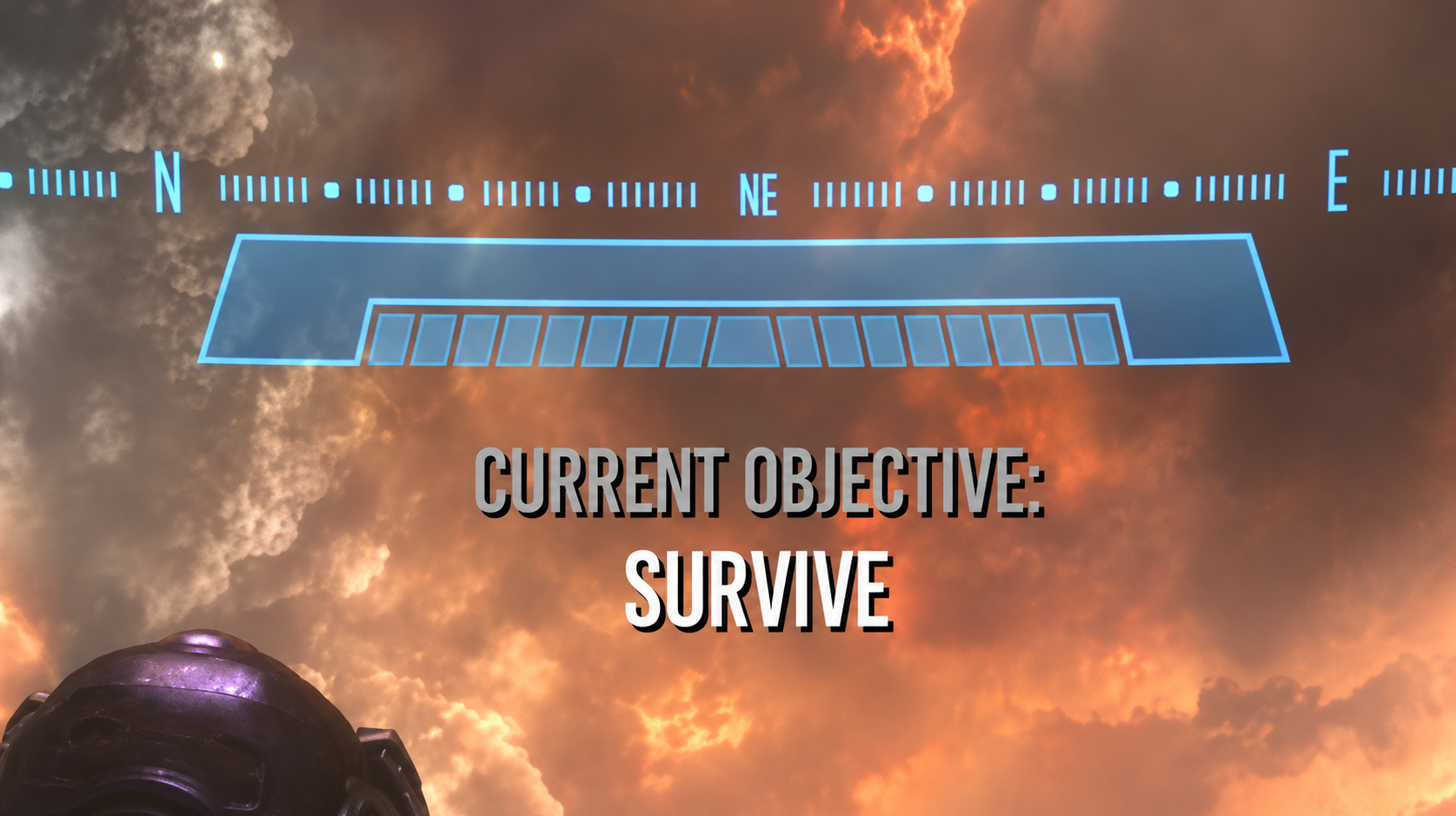 | | And so recently for me, it has been about survival. Sometimes that has to be the mission. You must avoid the absorbing state of quitting, true failure, at all costs. How many times have I wanted to quit? How many times have I wanted to delete my entire online presence? How badly does it hurt to see my creations twisted, misinterpreted, slandered, me personally defamed? Survive. Love is suffering. It is a result not an election. I hold that you only love as a result of the path that has been walked, not an arbitrary phrase that you mutter. Words mean nothing, if you love and walk away, by definition, you've never loved. I love what I do, I will suffer for it, and I prove that I love it by never walking away. Love is the biproduct of the path I walk, not the words I speak. I talk about convexity. I talk about what it looks like to achieve a payoff that looks like luck, or that looks impossible to achieve. Skill looks like luck to those that never had any skill. Thanks for that one Hormozi. He preaches that passion is suffering, and it is required for arbitrary success, and many would prefer not to suffer... | | I'll leave you with this. I wanted to build a castle deep in the woods to study math independently. That's all. And so I started building. Stage left, in come the wanderers. "Whose castle is this? It's beautiful!" "This place is vile, who would create this?" "I wonder if there is treasure to take in there." And how naive of me to assume that the barbarians wouldn't come for me. That nature wouldn't try to destroy the castle I'm building. It's even more naive for them to assume I wouldn't fight back, that I didn't understand what I was getting myself into, and that in the war of attrition, they don't have a leg to stand on. They want to destroy a man with nothing to lose? Willing to rebuild from nothing in perpetuity? Hahahahahahahahaha. Good luck with that one. | | With that I will leave you to the Weekly Guild Letter. I hope you enjoy, and I hope you learn something! - Roman | |
|
|
|---|
|
📅 Quant Guild Week in Review |
| The ULTIMATE Quant Math Class Tier List, Quant Solves a Problem from Every Level of Probability and Statistics |
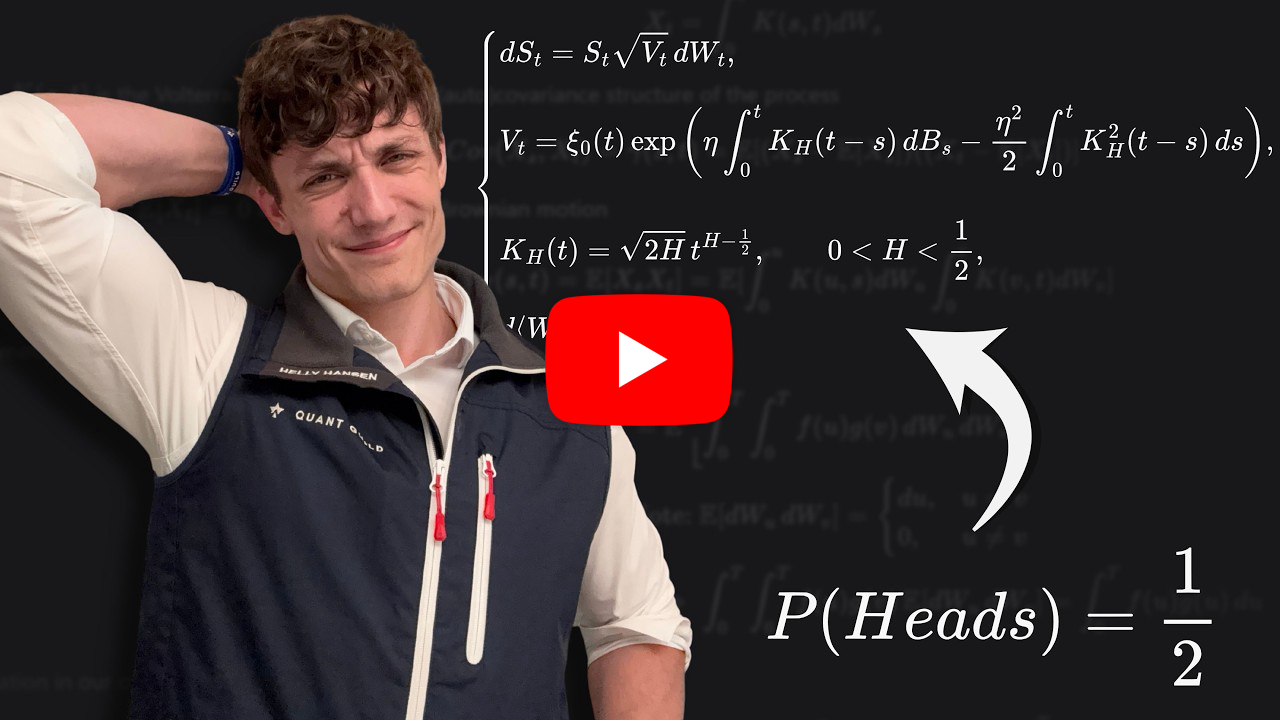
| | 🎲 The ULTIMATE Quant Math Tier List | In this video I rank the mathematics courses that I believe are most valuable for a career in quantitative finance, explaining not only how difficult each subject is, but how often I have found myself using it in research and industry. Rather than ranking classes purely by academic rigor, I evaluate them through the lens of practical relevance to quantitative research, trading, pricing, and machine learning. I argue that algebra, calculus, and especially linear algebra form the foundation of modern quantitative finance, while more specialized subjects like partial differential equations and functional analysis become increasingly important for derivatives pricing and advanced research. I also explain why some traditionally difficult proof-based courses, despite their mathematical beauty, have had relatively little impact on my day-to-day work. Here's a link to the full video 👇 | | | 📊 Quant Solves a Problem from EVERY Level of Probability & Statistics | In this video I solve probability and statistics problems spanning every level of difficulty, from introductory concepts like summary statistics and counting through Bayesian inference, stochastic processes, stochastic calculus, and quantitative finance. Rather than simply presenting formulas, I explain the intuition behind each solution and show how seemingly unrelated topics build on one another. As the problems become more advanced, I connect classical probability to real applications in financial modeling, parameter estimation, time series analysis, Brownian motion, and option pricing. The progression illustrates how the same mathematical principles underpin increasingly sophisticated quantitative models. Here's a link to the full video 👇 | | |
|
|
|---|
🧮 Quant Model of the Week |
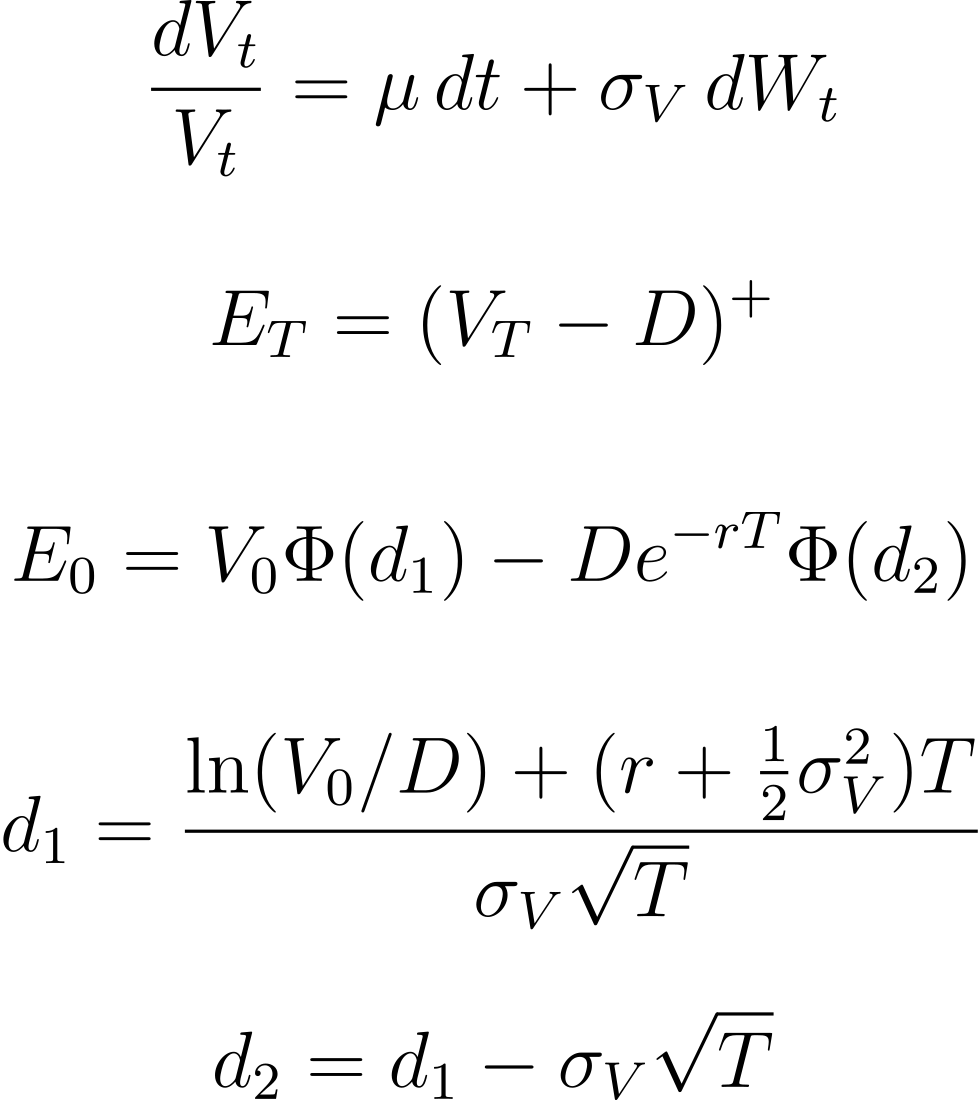
| Merton Model for Firm Valuation |
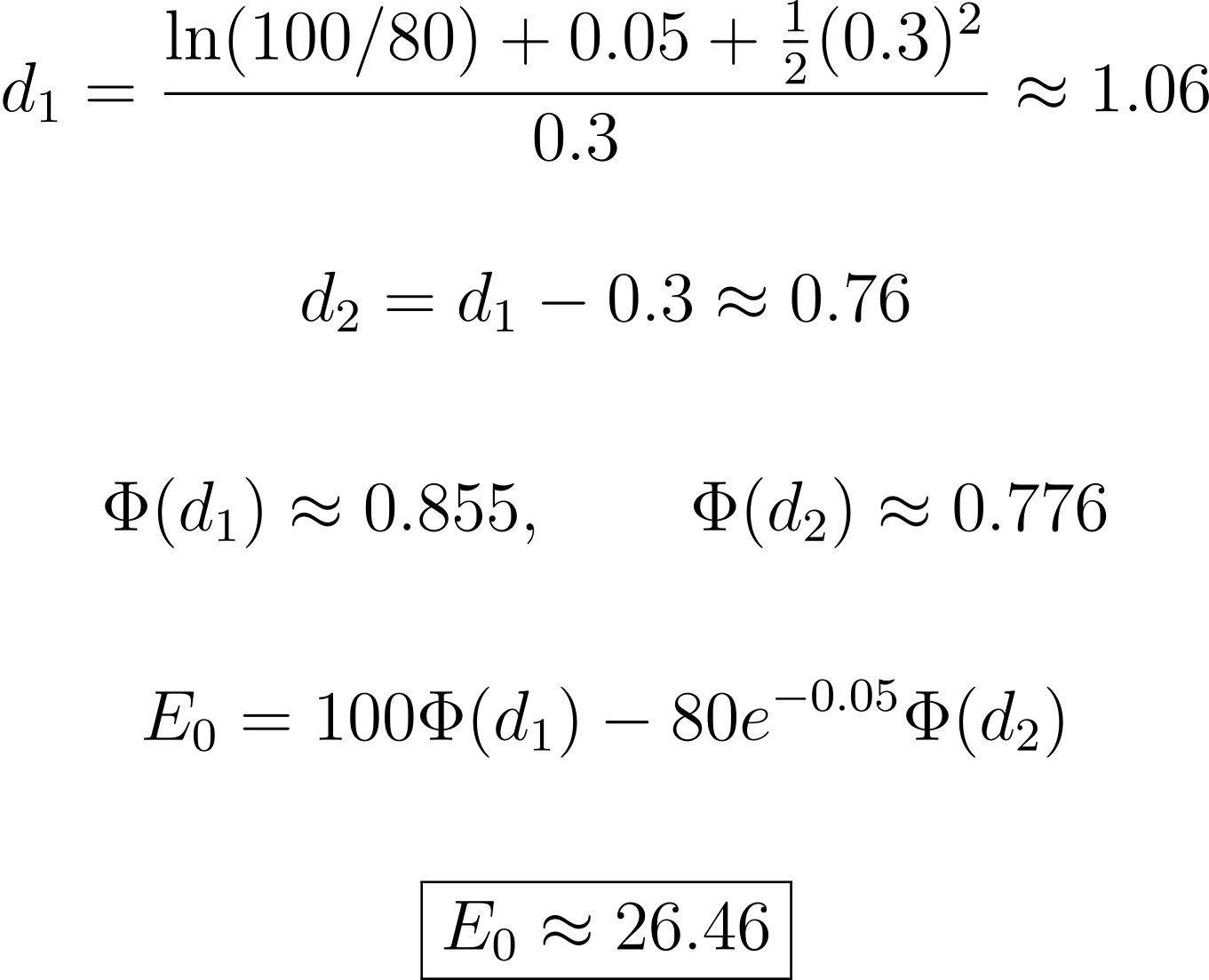
| | The value of a firm's equity is deeply connected to the value of its assets and the debt it owes. The Merton Model turns that relationship into an option pricing problem. Rather than treating default as an unpredictable event, it models the firm's assets as a stochastic process and views equity as a call option on the firm's assets. If the value of the firm's assets exceeds its debt at maturity, shareholders receive the residual value. If assets fall below the debt obligation, the firm defaults and shareholders can walk away with limited liability. This simple insight connects option pricing, capital structure, and credit risk, providing a powerful framework for estimating firm value, default probabilities, and the value of risky corporate debt. | | 📚 Model Definition | The idea of the Merton Model is simply a call option on equity value... | | The Merton Model treats the value of the firm as the underlying asset and the firm's equity as a call option on that asset. The firm's asset value follows a geometric Brownian motion, meaning it evolves randomly through time with an expected growth rate and an asset volatility. The key variable is therefore not the stock price itself, but the total value of the firm's assets. At maturity, the firm owes debt with face value D. If the firm's assets are worth more than the debt, shareholders repay creditors and keep the difference. If the assets are worth less than the debt, the firm defaults and shareholders receive nothing because of limited liability. This payoff is exactly the same as a European call option with the firm's assets as the underlying and its debt as the strike price. That connection allows us to use the Black-Scholes framework to value equity. The terms d1 and d2 play the same mathematical roles they do in option pricing, describing where the firm's asset value sits relative to the default threshold after accounting for time, interest rates, and asset volatility. Put together, the Merton Model reframes capital structure as an options problem. Equity is a call option on the firm's assets, while default occurs when the value of those assets is insufficient to repay the debt at maturity. | | 📈 Model Applications | In quantitative finance, the Merton Model provides a structural framework for understanding credit risk through the economics of the firm itself. One of its primary applications is estimating default probabilities. By comparing the firm's asset value with its debt obligations, we can measure how far the company is from the point where it can no longer repay creditors. The model is also used for valuing risky corporate debt and credit spreads, since debt can be viewed as risk-free debt minus the value of the default option available to shareholders. More broadly, the Merton framework connects equity markets and credit markets. Changes in equity value and equity volatility contain information about the underlying health of the firm, making the model useful for credit analysis, capital structure modeling, and risk management. Its biggest contribution is conceptual: default risk becomes an option pricing problem rather than an isolated probability of failure. | | 🎓 A Little Story | The first time I heard about the Merton framework being extended to real options, I thought it was incredibly cool. Geometric dynamics seemed entirely reasonable to me in the context of amorphous value compounding anyways... I've found over the years everyone likes to punch holes in models. This doesn't work for that reason and this is left out... In reality, it's about how much variation you can capture and the means of explaining via the models construction and parameterization that actually matter. Yeah, congrats Sherlock, all models are wrong. But some are certainly useful. | | 💡Takeaway | The Merton Model is a reminder that capital structure can be understood through the language of options. Once we recognize equity as a call option on the firm's assets, default, debt, and shareholder value become different pieces of the same framework. The broader lesson is that powerful models often come from recognizing familiar mathematical structures in unexpected places. Sometimes the option is not a traded contract at all. It is embedded in the economics of the firm itself. | | 🏆 Quant Question of the Week |
| Solution at the Bottom of this Email 👇 |
| | | Need to study up on topics in math, probability, and finance? 👉 Learn to solve problems like this on Quant Guild — the platform I wish I had when I was studying to become a quant. |
|
|
|---|
| I'm in QR preparing for interviews and your practice helped me brush up on probability, thanks | | |
| |
|
| | I learned more here in two days than an entire semester of college | | |
| - Guy on Discord Who DM'd Me |
|
|
|
|---|
|
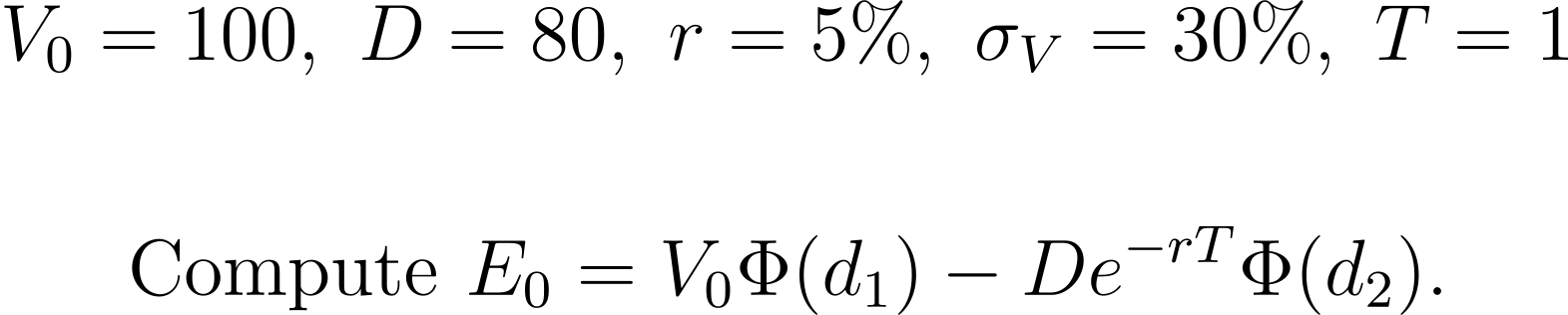
| ✅ Quant Question of the Week |
| | | | |
|
|
|---|
|

 Roman Paolucci